Librarian should be chosen by Congress, House panel agrees
‘What is rightfully Congress’ should be Congress’,’ bill sponsor says
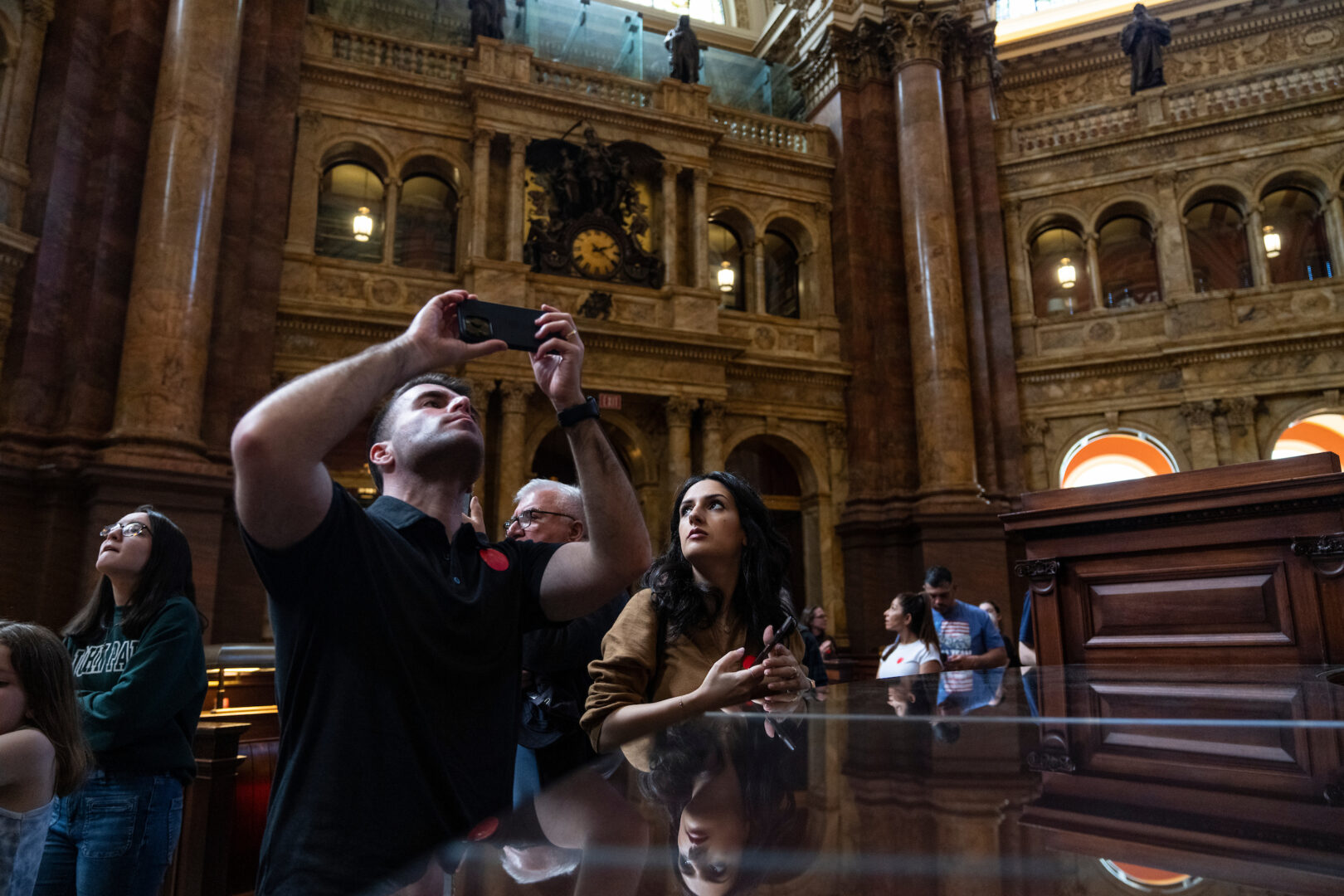
One year after President Donald Trump fired the librarian of Congress, support is growing for a bill that would prevent it from happening again.
The heads of both the Library of Congress and the Government Publishing Office should be appointed not by the president but by a congressional commission, lawmakers on the House Administration Committee agreed Thursday.
The panel easily advanced, 11-0, a proposal that would make that switch while also overhauling the U.S. Copyright Office.
While the unexpected firing of Librarian Carla Hayden last May caused an uproar, Rep. Morgan Griffith, R-Va., said he was taking a longer view.
“I feel like doing that disclaimer at the end of a movie: This has nothing to do with any current or former librarians of Congress, or any current or former members of the White House,” said Griffith, the lead sponsor of the bill.
But “what is rightfully Congress’ should be Congress’,” he said. “I have long been troubled by the fact that some functions and agencies that truly belong with the legislative branch are actually controlled by the executive.”
Lawmakers pushed through a similar change in 2023 for another legislative branch agency, revoking the president’s power to appoint the Architect of the Capitol and handing it to Congress instead. But that bill was an easier lift, earning widespread support as scandal engulfed former Architect J. Brett Blanton.
This time, Republicans are treading carefully to avoid angering Trump, even as they frame the effort as a way to shore up Congress’ Article One powers. To become law, the bill would now need to pass both chambers before heading to the president’s desk.
Another sticking point has been how the bill handles the U.S. Copyright Office, which is currently housed within the Library of Congress but has long drawn debate over its proper place.
“In all fairness, the Copyright Office performs executive-like functions, such as administrating copyright registrations and issuing regulations,” Griffith said at the markup.
Right now, the register of copyrights is chosen by the librarian of Congress. But the bill would make the register of copyrights a presidential appointee, aligning it more firmly with those executive functions.
Whether the Copyright Office is a legislative or executive branch entity is one question at the heart of an ongoing lawsuit. Days after he fired Hayden, the president also fired Register of Copyrights Shira Perlmutter, who then sued the Trump administration, arguing he did not have the authority to do so.
Members of the House Administration panel have spent “several weeks” hashing out the details of the Copyright Office section of the bill, according to ranking member Joseph D. Morelle, D-N.Y.
“The Library of Congress and the Copyright Office have operated in partnership for more than 150 years,” he said at the markup. “Weakening that relationship would harm both institutions.”
While the panel had initially hoped to mark up the bill in March, Morelle said the extra time produced a product he could support. The amended version “establishes a transition period and allows the Copyright Office … to continue using library support services,” he said.
It would also require the register of copyrights to consult with the librarian of Congress before establishing regulations affecting the library’s access to copyright deposits.
Still, Morelle warned of “a deeper structural problem at play that this bill alone cannot fix.”
“For too long, Congress has allowed its own authority and capacity to atrophy,” he said.
Election bills
The panel also on Thursday approved five bills related to administration of federal elections or foreign interference in them.
Some earned bipartisan support, like a bill that would prohibit contributions and donations by foreign nationals in connection with state or local ballot initiatives and referenda and another that would require the name on a credit or debit card to match the name of the donor.
“Many of these requirements are standard fraud prevention measures used every day in commerce in the United States, yet they’re not used for many online campaign finance donation portals,” said House Administration Chair Bryan Steil, R-Wis.
It comes after Steil and House Republicans have spent years probing whether ActBlue, the Democratic online fundraising platform, knowingly accepted political donations from foreign nationals.
But not every bill was bipartisan. One introduced by Rep. Stephanie Bice, R-Okla., would convert the public funding program for presidential elections into grants for states to acquire new voting equipment and update cybersecurity, among other things. States would be required to certify that noncitizens are prohibited from voting in any election for public office in order to receive the funds. That proposal was approved on party lines.
“These upgrades will help further instill a sense of trust and faith in our election process, one of the most important systems we have in place as Americans,” Bice said.
While noncitizens are already barred from voting in federal elections, Republicans have made the issue a central part of their messaging ahead of the midterm elections this fall. Their marquee voter ID package, backed by Trump and known as the SAVE America Act, remains stalled on the Senate side.