Cornyn’s loss proves election rules still apply
Cornyn may have winnowed down Paxton’s lead, but he couldn’t build enough support to go the distance
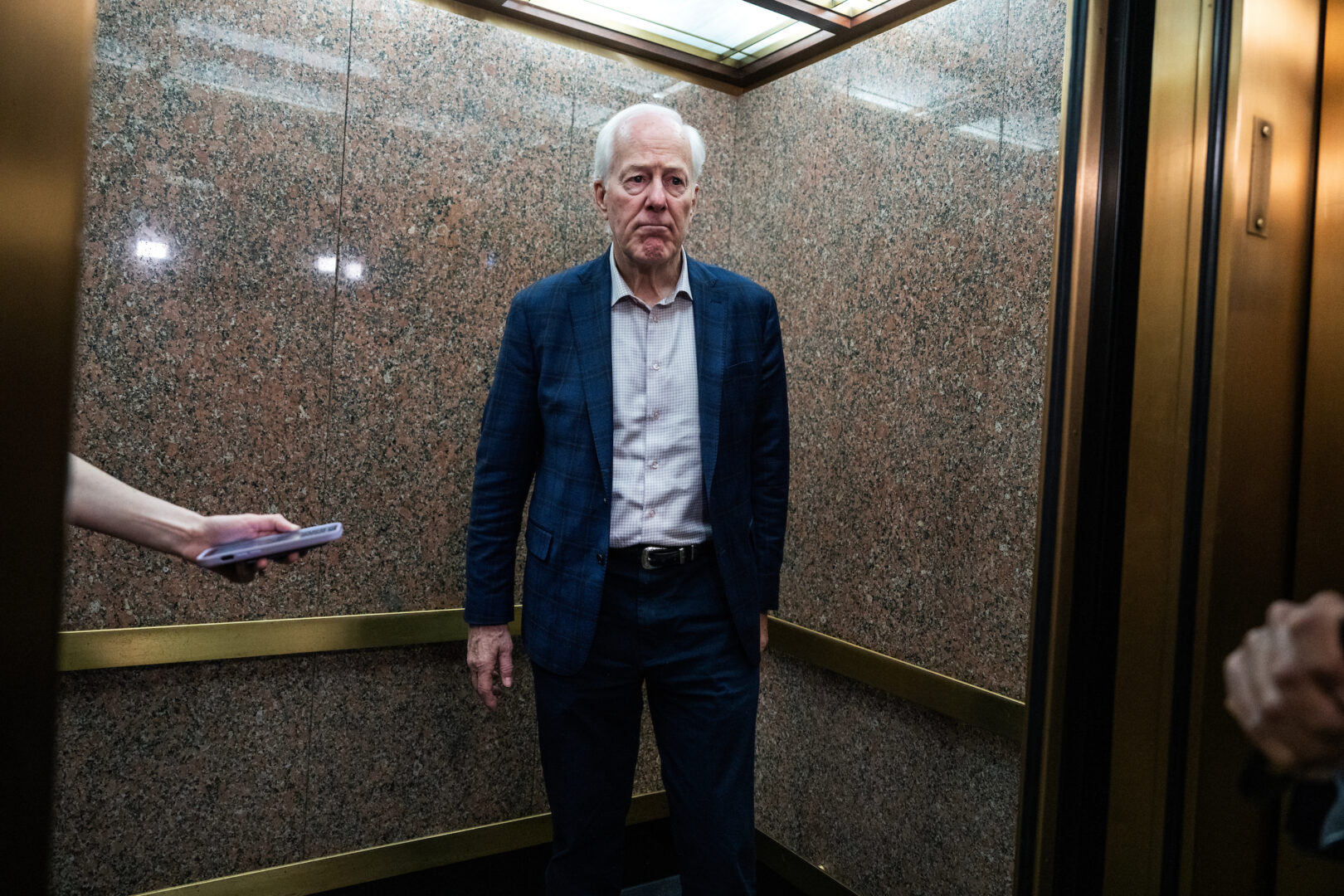
ANALYSIS —After Donald Trump’s election in 2016, there was a narrative that the typical rules about elections were extinct. But Texas Sen. John Cornyn’s recent fate has proved that many of the political laws of gravity still apply.
Last fall, national Republicans were excited that Cornyn had closed the initial gap between himself and state Attorney General Ken Paxton in the Republican primary. But, as I wrote in October for Roll Call, there still should have been plenty of concern around the senator’s reelection prospects.
“Despite being in office for more than two decades and benefiting from millions of dollars in positive TV ads, the senator’s support among GOP primary voters has improved only at a glacial pace. While Paxton’s initial lead has dissipated, Cornyn’s vote share has not improved dramatically, even according to data from allies,” I wrote. “Even if Cornyn secures a spot in the runoff, he’s back to the fundamental challenge of needing to boost his standing to win.”
That’s exactly what happened.
Cornyn’s first-place finish in the March 3 primary was a mirage. His 42 percent was narrowly ahead of Paxton (40.5 percent) and Rep. Wesley Hunt (13.5 percent), but right in line with where he’d been polling consistently for months. Cornyn’s support was not dramatically changing and I wrote in February that he was still in significant electoral danger.
What’s remarkable is that the GOP poll that kicked off the Cornyn panic was stunningly similar to the final runoff result. In spring of 2025, the pro-Cornyn Senate Leadership Fund released an April 27-May 1 survey which showed the senator trailing Paxton 56-40 percent. Almost a full year later, Paxton defeated Cornyn in the primary runoff, 64-36 percent.
Even though we were told that millions of dollars in friendly spending and the tremendous spending advantage would boost Cornyn’s standing, it simply didn’t work. We were told that there was no comparison between the 2026 race and 2012, when Texas Lt. Gov. David Dewhurst finished ahead of Ted Cruz in the first round of the GOP Senate primary with 45 percent and lost the runoff to Cruz, taking 43 percent.
But that’s almost exactly what happened. After tens of millions of dollars in spending, Cornyn lost support from the initial primary to the runoff. It is fundamentally difficult for longtime incumbents to dramatically change voter opinion about themselves.
Cornyn’s performance fell in line with previous senators, including Richard G. Lugar of Indiana and Thad Cochran of Mississippi, who failed to dramatically outperform their preelection primary polling. Cornyn’s polling average according to FiftyPlusOne (41 percent), RealClearPolitics (41 percent), 270toWin (43 percent), DecisionDeskHQ (39 percent) and Race to the White House (39 percent) all pegged Cornyn’s support as slightly higher than his final percentage, but none of them had the senator anywhere near the necessary majority. (Cochran was able to survive because he only had to improve by a couple of points to win.)
While fundraising is important, the Texas Senate primary shows that the candidate with the most money doesn’t always win, particularly when there are prevailing political conditions working against a candidate. In this case, Cornyn had fallen too far out of favor with the most influential person in his party (Trump) and was running against a candidate more in line with the temperament of the primary voters.
Looking ahead, Texas was on the Senate battleground before and after the primary result. The state is competitive more because of Trump’s weak political position nationwide than because of Paxton being the nominee.
But a key difference will be the necessary spending. Paxton is a fundamentally weaker fundraiser than Cornyn and will need outside help to compete with Democrat James Talarico’s impressive ability to raise money.
We didn’t change the Inside Elections rating from Likely Republican to something more competitive immediately after the primary because Cornyn’s loss was not a surprise. While some of the conditions are in place for a potential Democratic upset, it’s still not clear Talarico can get over the finish line. As my colleagues Jacob Rubashkin and Bradley Wascher have written, a hypothetical composite of the best-performing Democratic candidates in recent history barely gets a Democrat to victory.
But, at a minimum, Texas is an expensive headache for Republicans and could develop into a more serious problem.
Nathan L. Gonzales is an elections analyst for CQ Roll Call.