Tulsi Gabbard out as DNI but Trump doesn’t tee up a confirmation fight
Former Democratic lawmaker clashed with members over Iran
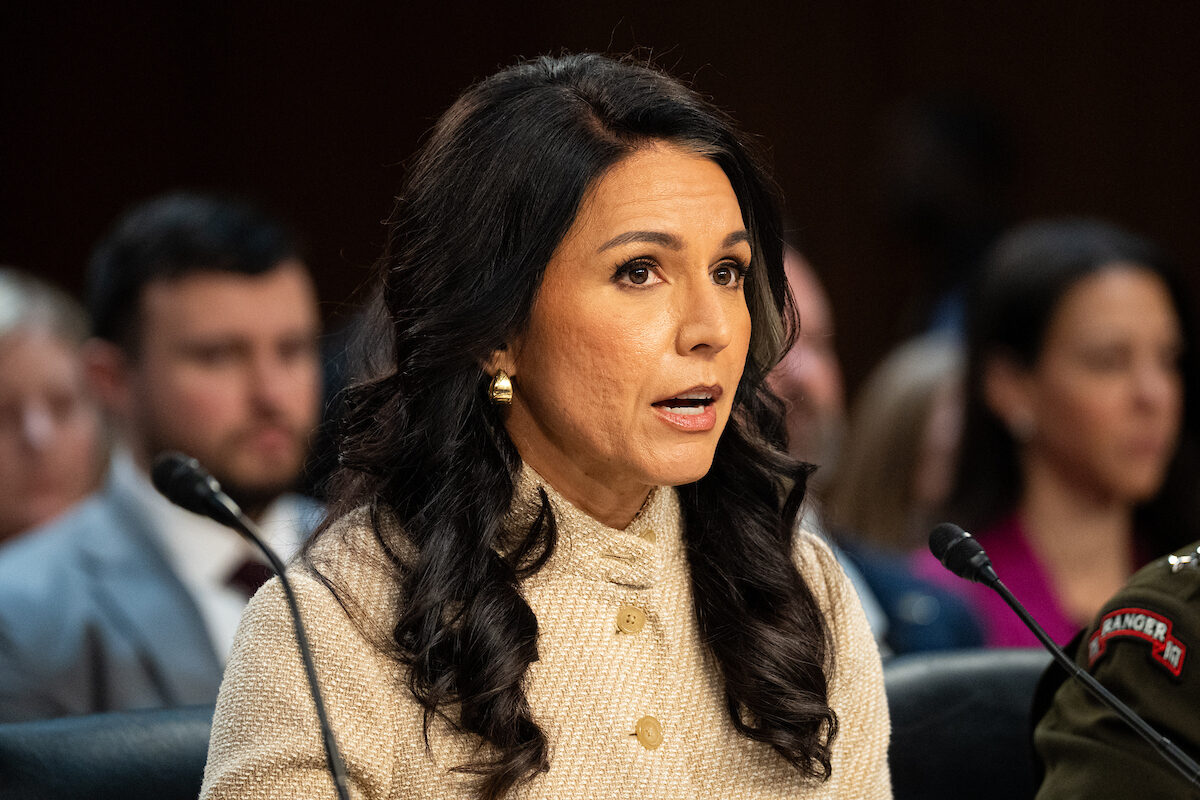
Former Democratic Rep. Tulsi Gabbard is resigning from her post as director of national intelligence because of her husband’s cancer battle, President Donald Trump announced Friday.
The commander in chief said Principal Deputy DNI Aaron Lukas would take over after Gabbard departs on June 30. Trump described Lukas as “highly respected.”
Trump made the personnel announcement on his social media platform a few minutes before Reuters reported that the White House forced her to step down. The White House slammed that report, which was attributed to “a source familiar with the matter.”
“As the President said, she is stepping aside to ensure that her husband becomes better than ever before,” White House spokesman Davis Ingle wrote on X. “Any suggestion that the White House forced her to resign over her husband’s health is slanderous.”
Trump cited her spouse’s poor health as the reason behind her exit.
“Her wonderful husband, Abraham, has been recently diagnosed with a rare form of bone cancer, and she, rightfully, wants to be with him, bringing him back to good health as they currently fight a tough battle together,” he wrote on Truth Social.
“I have no doubt he will soon be better than ever. Tulsi has done an incredible job, and we will miss her. Her highly respected Principal Deputy Director of National Intelligence, Aaron Lukas, will serve as Acting Director of National Intelligence,” the president added.
Gabbard, in her own comment on X, echoed Trump’s reasoning. “My husband, Abraham, has recently been diagnosed with an extremely rare form of bone cancer,” she wrote. “He faces major challenges in the coming weeks and months. At this time, I must step away from public service to be by his side and fully support him through this battle.”
Should Trump eventually nominate Lukas or another individual as DNI, the Senate would face a truncated midterm election-year calendar as it processed the nomination, held hearings and moved toward floor votes. The chamber is scheduled to be out all of August for its annual summer recess and in October to campaign.
Gabbard, a former Hawaii congresswoman, has had a bumpy ride leading the intelligence hub.
She drew criticism from Democratic lawmakers earlier this year after she appeared at a federal raid of an election facility in Georgia. Administration officials said Trump had tasked her with looking into possible foreign threats to voting systems and U.S. elections.
Gabbard told lawmakers she had the authority to be present at the raid of the Fulton County elections warehouse as the nation’s top intelligence official, given the administration’s worries about the alleged foreign threats.
But Senate Intelligence Committee Vice Chairman Mark Warner said in a Feb. 10 statement that it was curious for any national intelligence director to be present at a raid on American soil.
“So why was the Director of National Intelligence there? When the nation’s top intelligence official inserts herself into a matter with no connection to a foreign threat, it’s hard to escape the conclusion that the objective was political — namely, getting back into Donald Trump’s good graces — and that her presence was meant to lay the groundwork for baseless claims of foreign interference,” the Virginia Democrat said.
“Americans should be deeply concerned about what someone with sweeping authority over the country’s intelligence apparatus might do to achieve that,” Warner added.
Her handling of the matter in testimony to Congress reportedly irked top White House officials, as did her comments about Trump’s rationale for joining Israel to strike Iran and her management of Joe Kent’s resignation as National Counterterrorism Center chief in protest of the war in Iran.
Gabbard’s written statement for a March 18 Senate Intelligence Committee hearing contradicted Trump’s description of Iran’s nuclear weapons program.
“Iran’s nuclear enrichment program was obliterated. There has been no efforts since then to try to rebuild their enrichment capability,” according to her prepared testimony.
The president and other senior administration officials, however, had used Iran’s alleged return to trying to field a nuclear weapon as part of their still-evolving and expanding justification for the military operation. Trump this week has repeated the line, which contradicts his own assessment after last June’s U.S. strikes as having “totally obliterated” Iran’s nuclear program.
During the same hearing, Georgia Democratic Sen. Jon Ossoff pressed Gabbard on the threat posed by Iran’s nuclear ambitions. The DNI said only Trump, as commander in chief, could decide what was an imminent threat to national security.
“False,” Ossoff replied. “You’re evading a question because a candid statement would contradict the White House.”
Gabbard’s nomination by Trump in 2025 was among a number of controversial ones. After a rocky vetting process, the Senate confirmed her on Feb. 12, 2025, on a 52-48 vote.
Gabbard’s departure follows those of former Attorney General Pamela Bondi; former Homeland Security Secretary Kristi Noem; Kari Lake, who led the U.S. Agency for Global Media; and former Labor Secretary Lori Chavez-DeRemer.