American foreign policy should reward transparency, not silence
Former Reps. Stewart, Moran cite the Ebola outbreak
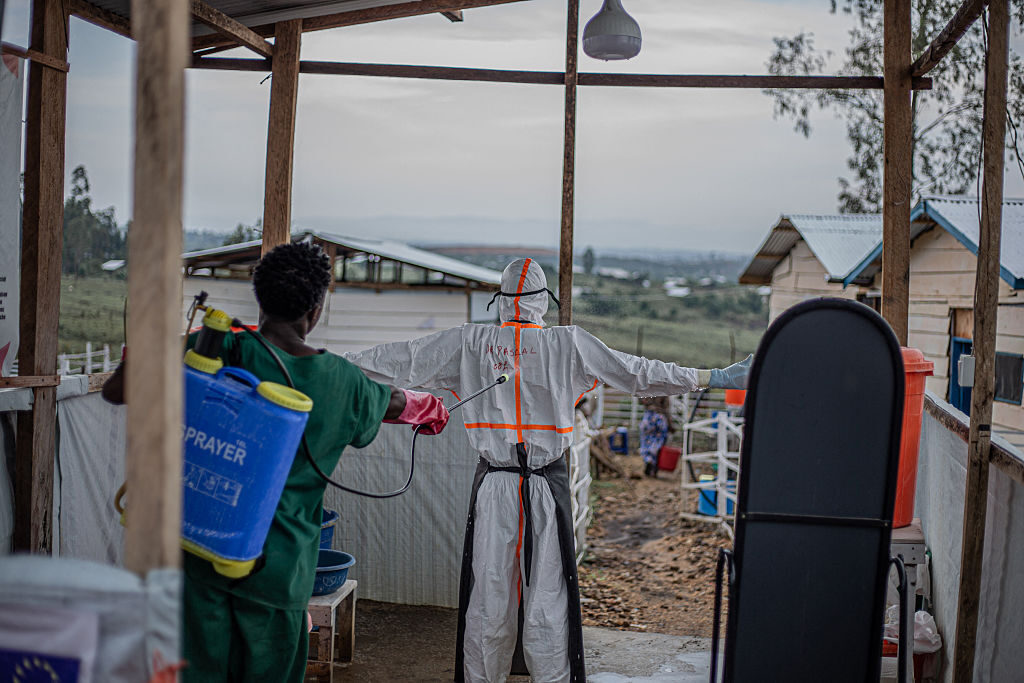
Ebola deaths in the Democratic Republic of Congo surpassed 1,800 last week, the latest milepost in what marks the fastest-growing outbreak in the disease’s history.
The immediate challenge is containing the virus. The longer-term challenge is giving governments every reason to report outbreaks quickly, share information openly and work with international health authorities. American policy should reward that behavior, not punish it.
Every government confronting an infectious disease outbreak faces competing pressures. Reporting cases promptly can disrupt tourism, discourage investment, strain diplomatic relationships and expose political leaders to domestic criticism. Delaying disclosure may seem like the easier political choice.
That is precisely why American policy matters.
The United States cannot control whether every government acts responsibly when a dangerous disease emerges. It can, however, shape the incentives those governments face. If countries believe transparency will be met with partnership and fair treatment, they are more likely to report outbreaks early. If they conclude that cooperation brings no meaningful benefit — or even prolonged penalties — the incentive to remain silent becomes far stronger.
That is not simply a public health concern. It is a matter of American national security.
Infectious diseases do not respect borders. The sooner governments identify an outbreak, share data and coordinate with international partners, the more time the United States has to strengthen surveillance, prepare hospitals, deploy medical resources and protect the American people. Every day gained through early reporting improves our ability to contain dangerous diseases before they become global crises.
America’s first line of defense often begins thousands of miles from our shores.
Uganda offers an important example of the behavior America should encourage.
Earlier this year, Ugandan authorities moved quickly after detecting Ebola. They reported cases, shared information with international health authorities, strengthened surveillance and aggressively contained the virus. Those efforts worked. Uganda ended its outbreak while helping prevent wider regional spread. It did exactly what the United States asks responsible governments to do during a public health emergency.
Yet Uganda remains subject to U.S. travel restrictions adopted during the outbreak, even though today’s Ebola emergency is centered in the neighboring Democratic Republic of the Congo. Whether those measures were appropriate when the outbreak began is no longer the central question. The question today is whether America’s policies reflect current realities — and whether they reinforce the behavior we hope to see when the next outbreak inevitably occurs.
Reconsidering and removing those restrictions would send an unmistakable message: Governments that report outbreaks honestly, cooperate with international partners and contain disease effectively will be recognized — not treated no differently than countries where outbreaks continue to spread.
This is not an argument for weakening America’s public health protections. The United States should continue taking every reasonable step to protect its citizens from infectious diseases. But protecting Americans also means distinguishing between countries that have demonstrated transparency and effective containment and those that have not. Good policy should reflect both the current public health situation and the incentives America wants to create.
That principle is entirely consistent with President Donald Trump’s broader approach to foreign policy.
This administration has argued that American engagement should create incentives for responsible behavior. Allies that invest more in their own defense strengthen the partnership. Countries that cooperate on border security build trust. Trading partners that treat American businesses fairly earn stronger economic relationships. Public health should operate under the same principle.
When countries act responsibly during a dangerous outbreak — reporting cases quickly, sharing information honestly and working alongside the United States and international partners to contain the threat — American policy should reinforce those decisions. Doing so is not a favor to another government. It is an investment in a system that better protects the United States when the next dangerous pathogen emerges.
Another outbreak is inevitable. Whether governments choose transparency or silence will depend, in part, on the incentives the international community creates today. By lifting travel restrictions that no longer reflect the facts on the ground in Uganda, the Trump administration can reward responsible behavior, strengthen an important partner and encourage the kind of transparency that makes Americans safer. That is good public health. More importantly, it is good American foreign policy.
Former Rep. Chris Stewart, R-Utah, was a member of the House Intelligence Committee, House Appropriations Committee and House China Task Force. He’s also a world record-setting Air Force pilot and New York Times best-selling author. He is the president of Skyline Capitol.
Former Rep. Jim Moran, D-Va., was a member of the House Appropriations Committee and its Defense Subcommittee. He was also co-founder and co-chair of the New Democrat Coalition, the largest Democratic Caucus in the House. He is the president of Moran Global Strategies.