Cornyn, Tillis could create ‘wild card situation’ on Judiciary
Republicans who lost primaries to Trump-backed challengers may no longer be constrained by party loyalty
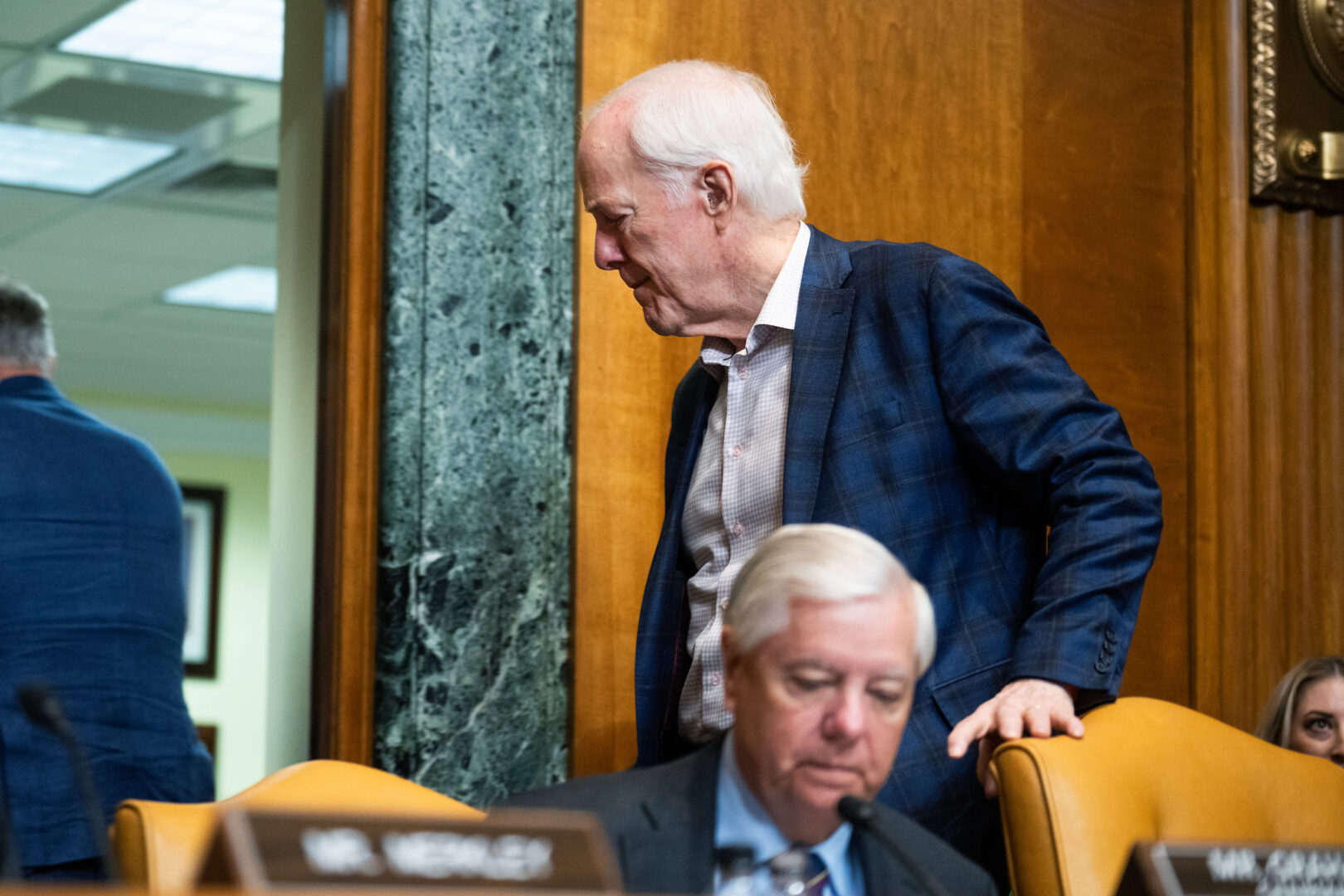
Sen. John Cornyn’s loss to Trump-backed Ken Paxton in a primary last week means the Senate Judiciary Committee will have two Republican members who may feel less obligated to stick with President Donald Trump.
Cornyn, R-Texas, joins Sen. Thom Tillis, R-N.C., as Judiciary Committee members no longer facing reelection. Tillis announced his retirement last year after opposing Trump’s first reconciliation law.
The committee presides over some of the most intense, highly partisan matters that Congress faces in the modern era, as well as processing judicial nominations and Justice Department officials. The current 12-10 partisan split allows one Republican defection to deadlock the panel.
A second potential defection “opens up even more of a wild card situation,” said Gregg Nunziata, former policy counsel to the Senate Republican Policy Committee and former general counsel and domestic policy adviser to then-Sen. Marco Rubio, R-Fla.
“I think we’re about to see something we haven’t seen in a generation, which is an unpredictable Judiciary Committee,” said Nunziata, now executive director for the Society for the Rule of Law.
The change in dynamic comes as the Justice Department is lacking a Senate-confirmed attorney general, as well as an assistant attorney general for antitrust and 20 federal judicial vacancies that currently do not have nominees.
Plus, there’s the prospect of a Supreme Court vacancy if a justice were to retire at the conclusion of the current term at the end of June.
Lee Holmes, a former Senate Judiciary Committee chief counsel and staff director for then-Chairman Lindsey Graham, R-S.C., said Cornyn and Tillis are “committed conservatives” and can be expected to largely back the administration’s picks for judicial spots.
“What will be more interesting is whether the administration puts forth an Attorney General nominee and to a lesser extent an AAG Antitrust nominee in the waning days of this Congress. An Attorney General that satisfies Cornyn, Tillis, and the President might be hard to find,” Holmes said in an email.
Holmes said the Republican Party generally finds ways to come together for the important things, such as a Supreme Court vacancy.
“Cornyn and Tillis might have outsized influence on who the nominee is, but they will want to get a nominee confirmed,” Holmes said. “Cornyn and Tillis will have a life after the Senate, and it won’t be as a Democrat.”
Nunziata said he doesn’t see “how the president can nominate anybody who would meet his requisites to serve as Attorney General and get through this Judiciary Committee.”
Case-by-case
Cornyn, addressing reporters Tuesday, said he doesn’t see a change in how he approaches his work in the committee or the Senate more broadly.
“No, I intend to try to be as constructive and productive as I always have, but I’ll be making decisions on a case-by-case basis,” Cornyn said.
The next question brought up such a case: Trump’s pick to be acting director of national intelligence, Bill Pulte, who is director of the Federal Housing Finance Agency. Cornyn sits on the Senate Permanent Select Committee on Intelligence, which would handle Pulte’s nomination.
“I see no evidence of any qualifications for that job,” Cornyn said.
Tillis said Tuesday the growing caucus of lame-duck senators — including Sen. Bill Cassidy, R-La., who lost a primary after Trump backed another candidate — “creates a little bit of uncertainty” as any one of them can effectively veto committee work.
“To be fair, I think Cassidy, Cornyn, and I want the president to succeed. But you have more latitude in taking exception to what they’re doing without the trappings of a campaign hanging over your head. So that could change the dynamic, yeah,” Tillis said.
Tillis said their situation also may make the administration take the advice-and-consent role of the Senate for nominees more seriously.
“The whole concept of advice and consent is to talk about the ones in the pipeline ahead of time, so you got a better idea of who can get confirmed, where the coalition of votes would come from, and all that,” Tillis said. “I think if the admin engages members like me and Cornyn, it could go very well. And if they don’t, it may not.”
Sen. Chris Coons, D-Del., a member of the Judiciary Committee, said last month that Trump’s endorsement of primary challengers in his party “creates both political openings for us and real grievance in the other caucus about how Trump’s political malpractice is costing them seats.”
Coons pointed to Democratic Sens. Raphael Warnock and Jon Ossoff of Georgia as examples of how Trump’s electoral meddling could help Democrats.
“I didn’t think we’d have two Democratic senators from Georgia in my lifetime, but they’re both great senators, my two Democratic colleagues, and it was the direct result of President Trump’s engagement in those campaigns,” he said.
Coons said that with Cornyn’s loss in the primary, Trump may see a different relationship with Congress.
“I think it’s important that the White House learn that they need to consult with Congress and work with Congress, and some of the lessons of the last 15 months, where they haven’t, are going to come home to roost for them,” Coons said.
Last month, Senate Majority Leader John Thune, R-S.D., acknowledged that Trump’s endorsement of Paxton and a challenger to Cassidy put the party in a rough position.
“Obviously, there’s always a consequence associated with taking on incumbent United States senators,” Thune told reporters.
“He obviously has his favorites and people he wants to endorse, and that’s his prerogative, but what we have to deal with up here is moving an agenda,” Thune said. “Obviously, that can become slightly more complicated.”
Stepping out
Nunziata said that if both Cornyn and Tillis sided with Democrats on the Judiciary Committee they could vote to advance oversight measures, such as subpoenas, over the objections of Chairman Charles E. Grassley, R-Iowa.
Tillis himself demonstrated that power earlier this year on the Senate Banking, Housing and Urban Affairs Committee. He threatened to block any nominees to the Federal Reserve after the Justice Department opened an investigation into Fed Chairman Jerome Powell’s oversight of renovations on the central bank’s headquarters.
The Senate only proceeded with confirming Powell’s replacement, Kevin Warsh, after the DOJ publicly dropped its investigation into Powell.
Casey Burgat, legislative affairs program director and associate professor at George Washington University, said senators will be aware of that leverage.
“We’ve seen with Tillis and others that when their name’s not on the ballot, they have a different incentive structure. The party loyalty is less of a factor, and it’s more that a conscience vote starts coming out,” Burgat said.
Savannah Behrmann contributed to this report.