Transportation safety technology drawing interest in Congress
Lawmakers wrestle with how to balance desire to innovate with maintaining safety
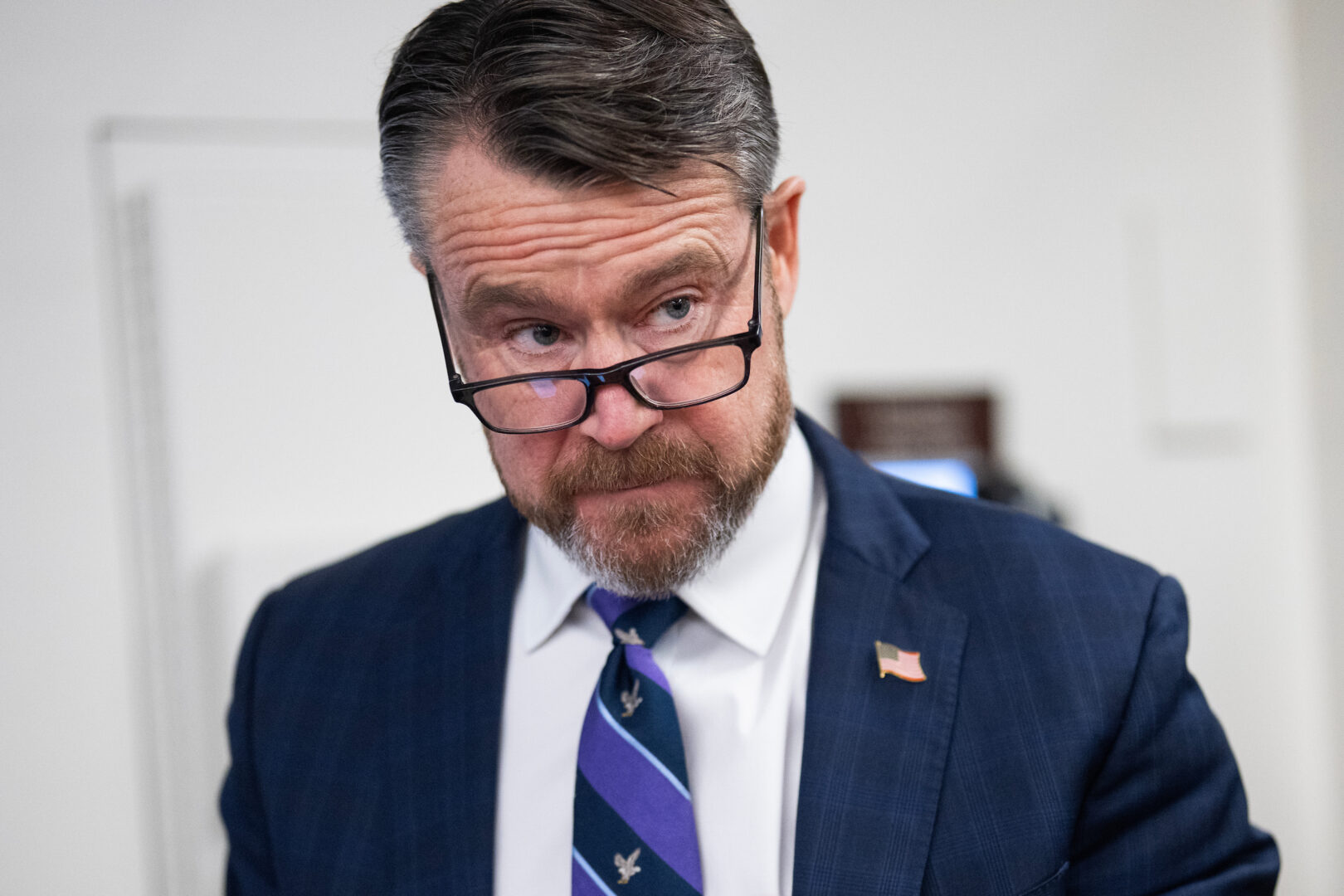
As advanced safety technologies reach new stages of development across the transportation sector, Congress has been grappling with how to legislate such innovations, trying to balance industry needs against calls to prevent tragic accidents.
A subcommittee hearing of the Senate Commerce, Science and Transportation Committee took up the issue of transportation safety technology Tuesday as Congress works on vehicle, rail and aviation safety bills.
“Over the past decade, we’ve seen a rise in innovative technologies that require us to reimagine how our transportation networks operate,” Sen. Todd Young, R-Ind., the chairman of the Surface Transportation, Freight, Pipelines and Safety Subcommittee, said in his opening remarks.
He noted examples of recent innovations, including autonomous vehicles, train inspection portals that analyze images of trains for defects and repair needs and “vehicle to everything”, or V2X, technology that allows vehicles to receive data from and adjust for their surroundings. These technologies and others, which Young said “were only a pipedream a short time ago,” offer the potential to increase transportation safety.
Ranking member Gary Peters, D-Mich., agreed, saying, “Every year, 40,000 Americans die on our highways and nearly 1,000 die on our railways, and these aren’t just numbers — they’re families that will never be whole again. We must take action, and we know that technology is certainly part of that solution.”
Still, Young said, “we’re often slow at the federal level when it comes to expanding proven technologies past the pilot program stage” and development of these technologies requires flexibility in rules and legislation as well as certainty for the private sector. Stagnation of domestic development for these technologies could give foreign adversaries an advantage, he added, a concern mentioned by his colleagues on the panel.
Witnesses before the subcommittee included Association of American Railroads president and chief executive officer Ian Jefferies, American Trucking Associations president and CEO Chris Spear, ITS America president and CEO Laura Chace and Cole Scandaglia, deputy director for the department of political and legislative action for the International Brotherhood of Teamsters. The witnesses agreed broadly upon a need for congressional action to help regulate some of the new technologies coming to market in an effort to encourage innovation while upholding safety.
The hearing was held against the backdrop of current work on a five-year surface transportation reauthorization measure, which would include key safety provisions related to technologies for motor vehicles and rail carriers.
Surface transportation reauthorization
The House Transportation and Infrastructure Committee marked up its highway bill last month, but the measure still needs input from Ways and Means before it can be brought to the floor.
The Transportation panel approved the bill by a bipartisan 62-2 vote, but fireworks did erupt over a rail safety amendment introduced by Rep. Troy Nehls, R-Texas.
The Nehls amendment largely mirrored another House bill containing language that had been authored by now-Vice President JD Vance in response to the East Palestine train derailment in 2023, when Vance was a senator from Ohio. The measure would require freight rail carriers to adopt new safety measures, including the addition of trackside “hot box” detectors to monitor wheel-bearing temperatures.
The amendment was adopted 54-11 even with strong opposition from some Republicans, including Chairman Sam Graves of Missouri, who said the measure’s provisions would increase costs for freight rail companies and American consumers.
It’s unclear whether enough opposition exists in the rest of the House to affect the underlying bill’s passage from the chamber, but the subject of Vance’s “Railway Safety Act” did come up in the Senate subcommittee hearing Tuesday.
Sen. Cynthia Lummis, R-Wyo., asked Jefferies of the railroad industry group about RSA requirements, including a mandate for two-person crews on each train, and how they could effect the movement of energy products such as coal.
“I think that leads to a bigger question about locking in current operating requirements without any evidence to prove that those requirements result in a higher safety outcome,” Jefferies said.
“If we can’t draw a direct line to a positive safety outcome, we shouldn’t be doing things, and I think that’s why so many different groups outside of railroads, such as the coal industry, such as the ag industry, have expressed serious concerns about some of these proposals,” he added.
Autonomous vehicle title?
During Tuesday’s hearing, full committee Chairman Ted Cruz, R-Texas, said his panel was “hard at work” on moving a surface transportation measure “this year.” A Senate bill has not yet been released.
“One of the important elements of that bill, I hope, will be an AV title,” Cruz said, referring to autonomous vehicles. “I think AV is probably the most important automotive trucking innovation that we are facing.”
Cruz said there had been initial discussions about focusing such a title on automobiles, rather than trucks, but that he’d heard the Teamsters were advocating for trucks to be included, drawing agreement from Scandaglia.
The House bill includes a section on autonomous commercial vehicles that would require the Transportation Department to develop a “performance-based safety standard” for commercial vehicles with AV technology. Those provisions could be expanded in the Senate, where Cruz’s committee has jurisdiction over the vehicle and rail safety elements.
Members of the committee have expressed a desire to use the surface transportation bill to codify a national framework for autonomous passenger vehicles, which are currently regulated through a patchwork of state laws.
Those calls were echoed Tuesday by Sen. Ben Ray Luján, D-N.M., who delivered passionate remarks about the potential of autonomous vehicles as well as other technologies to help prevent drunk-driving accidents.
“In the early 1990s, I was hit head-on by a drunk driver less than half a mile from my house, and I walked away from the damn thing. Not all my constituents can say that,” Luján said. “It might make things a little more expensive to purchase a vehicle, but what happens if there’s technology in the car that saves your kid, saves your mom or dad, saves your brother or sister. We can do that in America today.”
Luján also took aim at an amendment adopted 33-26 during a House Appropriations Committee markup last week of the fiscal 2027 Transportation-HUD spending bill. The amendment, offered by Rep. Michael Cloud, R-Texas, would prohibit funding for “kill-switch” technology that can prevent a car from operating if it detects the driver is impaired. Funding for the technology was authorized as part of the 2021 infrastructure law.
During an almost hourlong debate, Cloud and his supporters argued that the mandated use of such technology could violate Americans’ privacy and limit their use of their vehicles. Luján said Tuesday the issue was not about privacy.
“That’s not what this is about. Let’s find a way in America where we can drive innovation and save people’s lives. I don’t know why this is so hard. I’m beside myself this morning as we come together,” Luján said. “Let’s find a way to do something, man. Let’s save some people.”
Valerie Yurk and Mark Schoeff Jr. contributed to this report.