A data center caused an uproar in Utah. Congress is watching (and waiting)
Bills around water and energy are starting to emerge, but many lawmakers want to keep it local
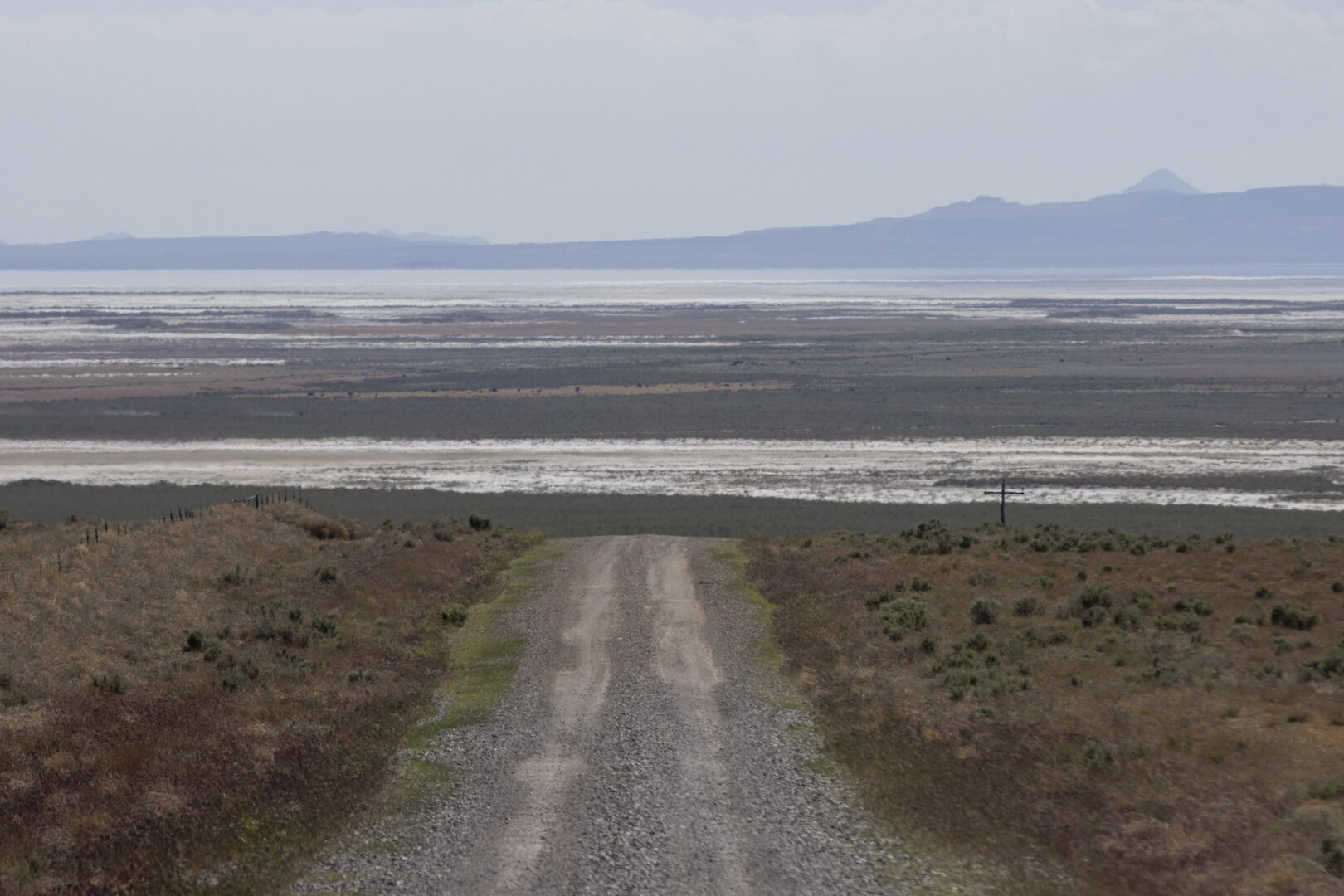
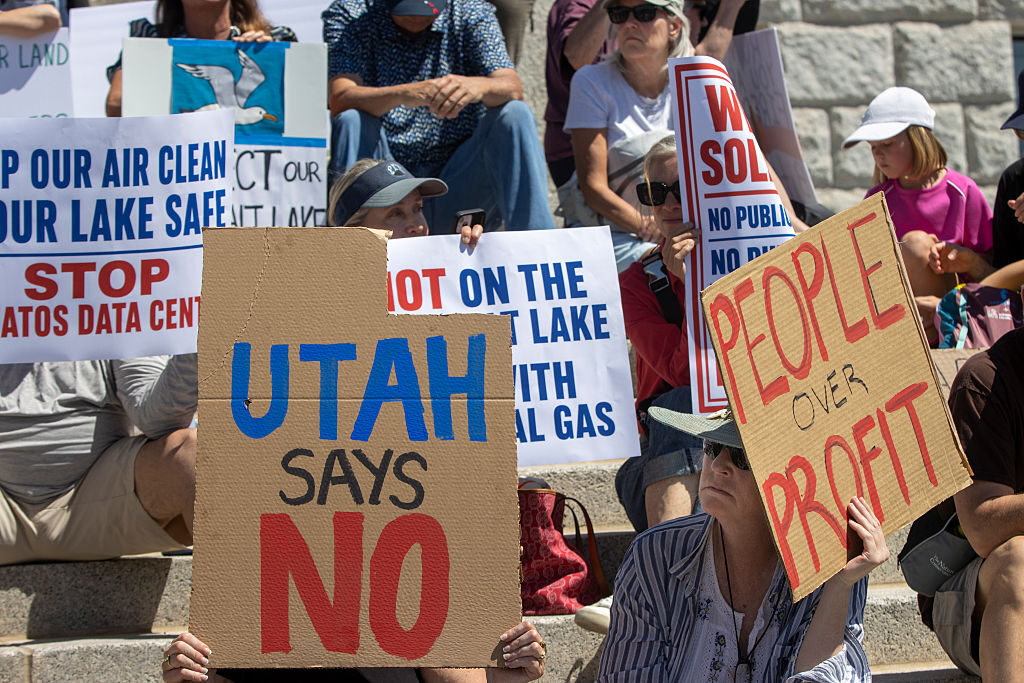
ST. GEORGE, Utah — Residents from a state starving for water have become the face of local struggles against Big Tech, locked in protests against a proposed data center that at one point was set to sprawl thousands of acres larger than its infamous Bryce Canyon.
Some are looking for federal guardrails to protect against encroachment on natural resources. But the saga that has unfolded in Utah highlights how far Congress is from legislating on the issue.
So far, lawmakers are mostly leaving it to localities to figure it out.
Investors in the Stratos Project in Box Elder County say its closed-loop cooling system won’t further exacerbate a drought emergency — a recurring problem for one of the nation’s driest states — but residents, activists and some politicians fear that’s wrong.
While the project has been dramatically scaled back after public outcry, it earned national headlines as protesters went viral. Even before that, lawmakers have been watching as more data centers pop up around the country, pushed by worries of keeping up with China and the promise of new jobs.
“If we want to lead the world on technology while preserving our values … we will listen to the people who feel like they are being handed the bill for Big Tech’s dystopian future,” Sen. Josh Hawley, R-Mo., recently wrote in a Free Press op-ed. “Families are watching the construction trucks roll in and asking the obvious questions. Will my electric bill double? Will my well run dry?”
Hawley is one of the few Republican senators pushing for congressional action on those concerns, saying that while many decisions should be driven at the local level, federal laws could help ensure more accountability and transparency from data centers.
“Local voters have got to have control over who comes in,” he said Tuesday. “Let’s say that local voters say, ‘OK, yeah, we’re willing to have the data center.’ Well then, there ought to be federal regulations about that.”
“I just think that that’s commonsense stuff. Nothing I’ve said here is controversial in the real world. It’s controversial in this building, because there’s so much AI money around this building,” Hawley said.
‘This home identifies as a data center’
For Utahns, the announcement of the data center was like throwing gasoline on a raging fire.
In May, Gov. Spencer Cox issued a statewide state of emergency due to extreme drought conditions, exacerbated by low snowfalls and rising temperatures. “We can’t control the weather, but we can control the tap,” Cox said.
Residents in the Beehive State — which politically leans as crimson as the ruby red cliffs that adorn its southern belt — are being asked to conserve water.
“The governor goes on and tells us to pray for snow and to pray for rain, and that we all need to do everything we can, and in the next breath is partnering with Kevin O’Leary to fast-track this data center under the guise of national security,” said Caroline Gleich, an environmentalist from Park City, referring to the celebrity investor.
One resident even created yard signs: “This home identifies as a data center and will use whatever amount of water it wants.”
Gleich, who ran against GOP Sen. John Curtis as a Democrat in 2024, noted the shrinking of the state’s Great Salt Lake and concerns about leaving “behind this dry lake bed.”
“And when the wind picks up, it blows toxic dust into the air,” she said.
Curtis recently toured the lake via boat with Environmental Protection Agency Administrator Lee Zeldin to focus on immediate threats posed to the ecosystem and the area’s watersheds. “That’s one of the reasons that Great Salt Lake’s in trouble,” Curtis said of the state’s water crisis.
But he called the data center “a local issue.”
“I have almost no data on the water usage. I’ve heard it’s closed-loop, but I don’t know that. I don’t know anything about the water rights. I just don’t have enough information,” Curtis said when asked last week.
Data centers require water for direct onsite cooling, though how much can vary depending on the local climate and the type of technology used, like closed-loop that is planned for Stratos. As centers have rapidly expanded across the country, so have worries that other water users may face driven-up rates and deteriorating quality.
On Wednesday, Zeldin said it would be hard for the EPA or federal government to set nationwide standards.
“You can’t, across the board, act as if every data center project is equal,” Zeldin said at the Politico Energy Summit. “I’m not going to sit inside of an agency building in Washington, D.C., and say that we know that local community in Georgia or Florida or Arizona or elsewhere, better than everyone there locally.”
While developers say Stratos wouldn’t rely on Utah’s existing electric grid — it was once proposed to use more than double the electricity currently consumed by the entire state — they seek to build the center its own power plant, likely using gas from the Ruby Pipeline that crosses the region. This could still require massive amounts of water; the developers were originally seeking 13,000 acre-feet of rights to groundwater in Utah.
Despite the water concerns, the data center was greenlit and full-steam ahead until local protests grew too loud for state officials to ignore.
Cox signed an executive order establishing a statewide “data center framework” that aims to protect water resources and consumption, saying “those concerns must be carefully considered.”
And Utah’s Senate President J. Stuart Adams — also chairman for the Utah Military Installation Development Authority, which approved the original Stratos development — came to an agreement with O’Leary, the television personality and “Shark Tank” show investor, after asking him to scale back the project by 75 percent.
The reversal was somewhat unexpected; O’Leary had been, without evidence, likening the protesters to paid foreign agents and called Adams’ ask “outrageous.” But he later told ABC4 TV in Salt Lake City that he and Adams “really screwed this up initially” by not listening to local constituents and “made huge mistakes. We made some assumptions that were just not right.”
“We pissed off a lot of people, and that’s not the way I do business,” he said.
Federal vs. local action
Lawmakers in Washington, D.C. have been watching AI-fueled data centers brew debates back home for at least a few years, but legislation is only starting to percolate.
Among the bills introduced so far, some seek an answer on energy usage questions, saying tech companies can afford to foot the bill. In February, Hawley and Sen. Richard Blumenthal, D-Conn., unveiled what’s known as the GRID Act, which would require new data centers to use power sources that are separate from the grid.
Hawley said Tuesday that Congress should say “no more data centers” unless the tech companies agree they will build their own power supplies.
“We ought to write that into law,” he said.
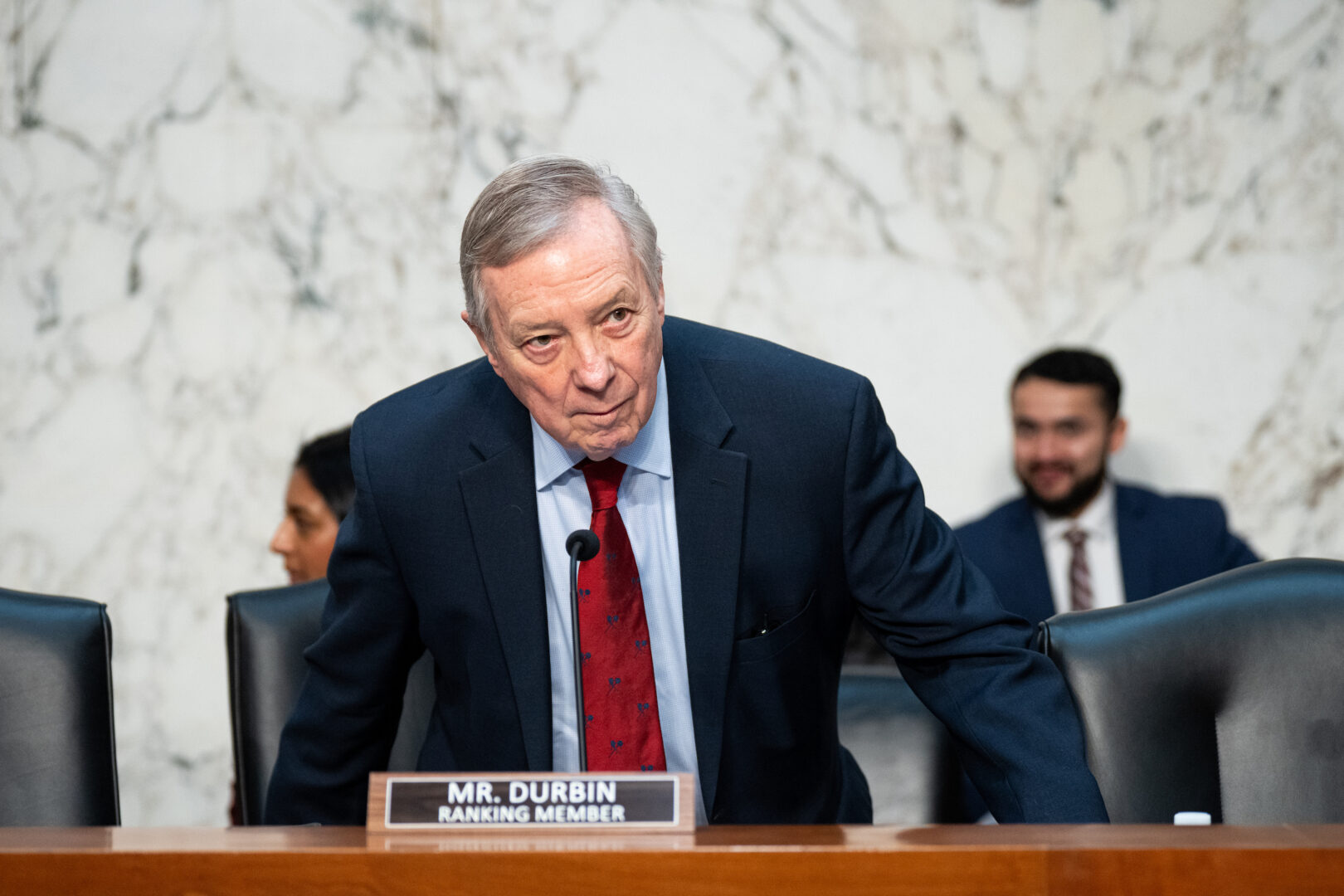
After introducing a bill in March that would require data centers to disclose their energy and water usage, Sen. Richard J. Durbin, D-Ill., said last week he has since heard back from some industry experts about the self-cooling units — like the one proposed for Stratos — and was told that “water is not the major concern.”
He still thinks Congress “ought to explore” guardrails via legislation. “That still leaves the question of electricity, and I have some strong feelings about that as well,” he continued.
Other lawmakers are working on bills focused on water accessibility concerns but not explicitly tied to data centers exacerbating the issue.
Curtis recently proposed legislation with Democratic Sens. Jacky Rosen of neighboring Nevada and Lisa Blunt Rochester of Delaware aimed at protecting drinking water infrastructure when faced with extreme heat or cold by expanding eligibility for the EPA’s Midsize and Large Drinking Water System Infrastructure Resilience and Sustainability Program.
Blunt Rochester is also working on a proposal that would collect information on the environmental impacts of data centers, though timing for the bill is unclear.
“As AI becomes more prolific in our lives, I am working on legislation to better understand the impact data centers will have on our environment — including on water consumption,” she said in an emailed statement.
The question of water cleanliness has continued to make headlines after Rep. Alexandria Ocasio-Cortez, D-N.Y., held up jars of brown liquid at a congressional hearing last month, saying they were drawn from a tap in Georgia.
Last week, Ocasio-Cortez said, “People should not have their health compromised because of AI data center construction, and this idea that this industry should have absolutely no oversight, and then just cite China as the reason for that, I don’t think holds water.”
Ocasio-Cortez has joined Sen. Bernie Sanders, I-Vt., in calling for a pause on construction and upgrades of data centers until the enactment of federal laws to regulate AI, including around energy costs and environmental effects.
It comes as Democrats in Congress disagree over the best lane to legislate on the topic of AI more broadly, with Sanders and other progressives floating big ideas like creating a sovereign wealth fund and having the federal government take a 50 percent stake in major AI companies.
Most lawmakers say more data is needed about data centers before Congress can start legislating.
“Most of these decisions are local,” Curtis said when asked about regulating data centers amid water crises.
“Water is so different in even different parts of the state. I do think there’s a potential role for Congress in certifying certain classes of AI. So, if we do a LEED gold or elite platinum building, I think a system like that would really help both the AI builders and the communities, because right now they don’t trust what the AI developers are saying,” he said.
But “I wouldn’t give up on” congressional action, Durbin said, while predicting local and state governments aren’t “going to wait around for the federal government to solve this.”
“There’s a lot of local concern about it. So, I think unless we get a move on, they’re going to move without us.”
David Jordan contributed to this report.