Trump soft pitches take-home pay message
'I love the inflation' line gets attention from Democrats who want control of Congress
Buried deep inside President Donald Trump’s typical campaign trail stump speech have been brief mentions about boosting voters’ take-home pay, which could boost Republican congressional candidates in November.
But there are worries in GOP circles that the president is not focused enough on his economic stewardship, amid sagging poll numbers, conflict with Iran and a slow start to the kind of “robust” campaign schedule promised late last year by White House Chief of Staff Susie Wiles.
GOP strategist Doug Heye said heading into the midterms, “the No. 1 issue is affordability.”
“Time not spent on that is a missed opportunity, at best,” Heye said. “At worst, when it’s Trump-centric honorifics, Trump is essentially telling voters, ‘I don’t care what’s important to you, here’s what’s important to me.’”
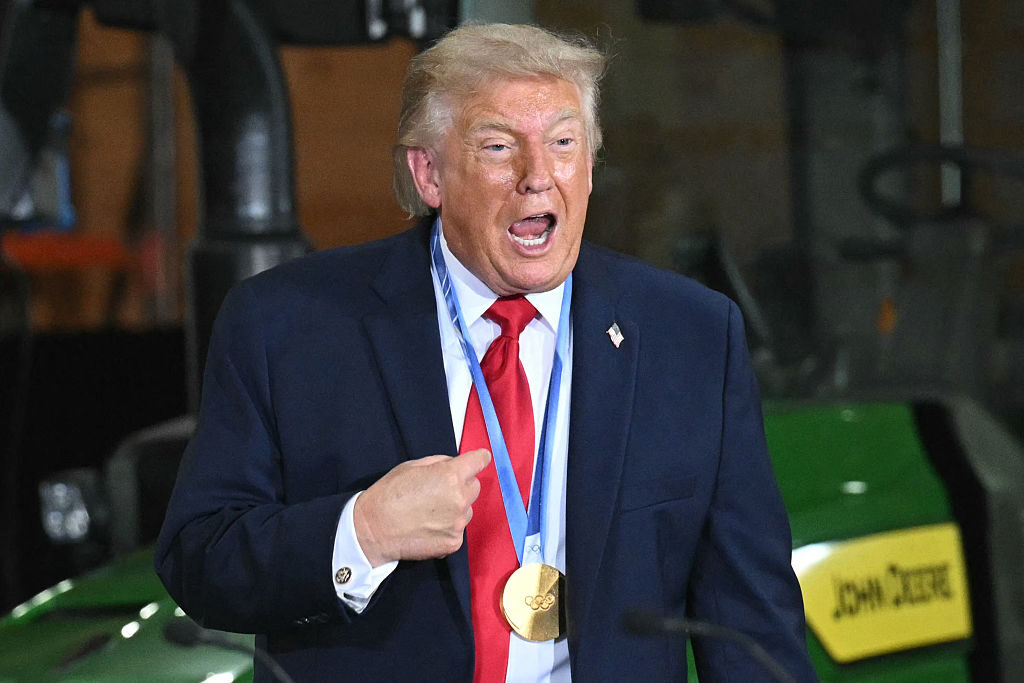
Trump raised eyebrows again last week when he responded to a question about inflation rates by saying, “I love the inflation” — a line congressional Democrats injected into their political messaging.
Senate Minority Leader Charles E. Schumer, in a floor speech last week, connected Trump’s line to his tariffs policy and the Iran war.
“What we’re seeing from Trump isn’t just benign neglect or blind indifference — Trump is actively rooting for the financial demise of the American people when he says ‘I love the inflation,’” Schumer said. “Well, we’ll see how much Trump and the GOP love inflation come November.”
The Democratic National Committee, in a press release Monday, pointed out that inflation data revealed prices in May surged to 4.2 percent, “the highest in three years, swallowing Americans’ hard-earned paychecks.”
The president’s early midterms campaign stops have featured his usual bouncing among tens of topics, including boasts about his unpopular projects at the White House and around Washington, D.C., and his focus on global affairs — even though his take-home pay message could offer GOP candidates something to latch onto.
Trump told a group of New York state supporters during a May 22 event in Rockland County for GOP Rep. Mike Lawler that they were “lucky to have him in this community” because he helped pass Republicans’ 2025 domestic tax and spending bill, known as the One Big Beautiful Bill Act.
The president pointed to provisions on the state and local tax deduction, also known as SALT.
“With the help of your great congressman, it’s what happened. We got your taxes — cut not only from the standpoint of SALT — but your taxes were cut, your take-home pay has soared,” Trump said. “I cut tremendous amounts of taxes in my first term.”
The campaigner in chief also made the same point while touting his “no tax on overtime” policy during a March 11 stop in the Kentucky congressional district of Rep. Thomas Massie, an intraparty rival who recently lost his primary fight with a Trump-backed opponent.
“That means every extra hour you work, your overtime pay is now 100 percent tax free. You have no tax,” Trump said. “Remember that when you go and vote, because the Democrats want to end it.”
Even while trying to sell his economic policies to a friendly audience, Trump could not resist making a joke about take-home pay possibly being used for questionable activities outside the household.
“So you take home 20 [percent] or 30 percent more to those beautiful children or whoever the hell you’re bringing it home to, okay? I don’t know who you’re bringing home to. I don’t want to know. That’s not my business, although it could be interesting,” he quipped to chuckles before returning to his point. “After so many years of politicians who sold out the working men and women of our country, we finally have a president who puts American workers first.”
At the New York state and Kentucky events, Trump soon was off on other a number of unrelated topics as polls show many voters are most concerned about the economy, an example why some Republicans doubt Trump can focus enough on voters’ wallets.
Retiring North Carolina GOP Sen. Thom Tillis clashed — again — with the president late last month, warning Trump that he needed to refocus his governing approach ahead of November’s elections.
“We need Republicans to do well in November, but the stupid stuff is killing our chances!” Tillis wrote on the social platform X, responding to Trump blasting him over his critiques of the administration.
Tillis pointed to Trump echoing Massachusetts Democratic Sen. Elizabeth Warren’s call for 50-year housing mortgages, using taxpayer monies to give the U.S. government stakes in private companies, among others.
Another GOP strategist, granted anonymity to be candid, said he could not even “form a coherent thought” about Trump’s early midterms messaging.
Trump and Iranian officials over the weekend announced an agreement to end fighting and reopen the Strait of Hormuz, a critical hub for oil tankers. But Heye warned it will take time for voters to feel any possible relief.
“Higher prices will remain on a lot of products for a long time — beef, for example. A lot of the higher prices are here to stay. That makes it even more important for Republicans to demonstrate what they’ve done and what they still want to do to lower prices,” Heye said. “But it’s harder for Republicans to stay on message when Trump eagerly takes the party off message.”
Brad Bannon, a Democratic strategist, said Trump’s sagging poll numbers and habit of making campaign stops mostly about himself could make the president an anchor for some GOP candidates.
“The national anti-Trump tide will drown many GOP hopefuls this November,” he said. “So Republican candidates should try to localize their elections.”