Georgia Republican leaders won’t pursue redistricting during special session
Several Southern states have already approved new maps after Supreme Court ruling
Georgia Republicans pulled back on plans to redraw the state’s congressional map during a special legislative session that began Wednesday, the day after primary runoffs set up high-stakes fall races for Senate, governor and other statewide offices.
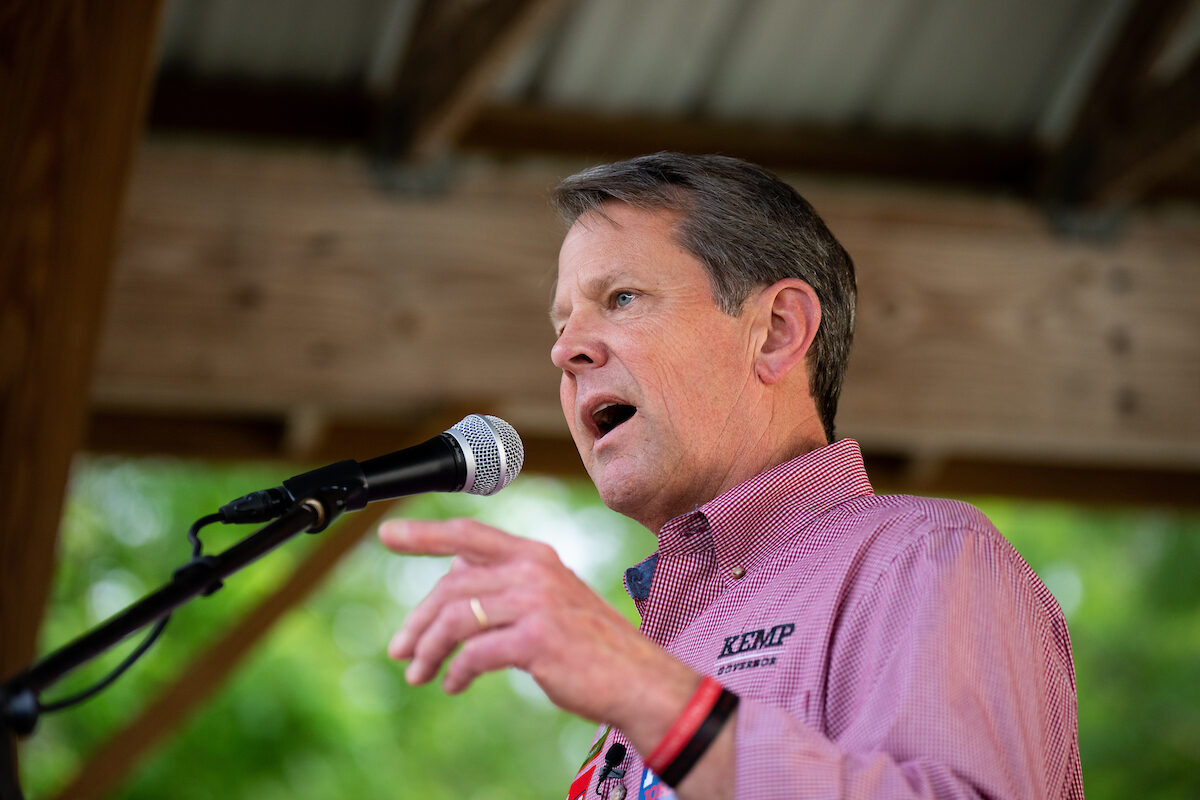
Republican Gov. Brian Kemp last month called a special session to address the state’s congressional boundaries, with an eye on making changes ahead of the 2028 elections. The move came as several states are reconsidering their House maps after a Supreme Court ruling that limited the use of race in drawing congressional districts.
But Republicans in the Georgia legislature said that as litigation to the state’s prior and current maps remains ongoing, they would not take up redistricting in this month’s special session.
“Changes to Georgia’s maps should take place only when members of the General Assembly and citizens have been given ample opportunity to gather the facts, provide input, and engage in meaningful discussion,” Republican state House leaders wrote in a Wednesday letter to Kemp.
This fall’s race to replace Kemp, who is term-limited, will feature wealthy health care executive Rick Jackson, who won the GOP nomination in a runoff Tuesday, and Democrat Keisha Lance Bottoms, the former Atlanta mayor. Democratic Sen. Jon Ossoff, meanwhile, is set to face GOP Rep. Mike Collins in a crucial Senate race.
Both contests are poised to be competitive and expensive affairs.
Mid-decade redistricting across the country has turbocharged this year’s fight for control of the House. Texas, North Carolina, Missouri and California all took steps last year to redraw their maps, while Ohio and Utah will also use new lines after legal challenges or for constitutional reasons.
Several states, including Florida, Tennessee and Louisiana, approved new maps after the Supreme Court issued its Louisiana v. Callais ruling in late April.
Additional states, including ones led by Democrats, are likely to reconsider their maps ahead of the 2028 elections.