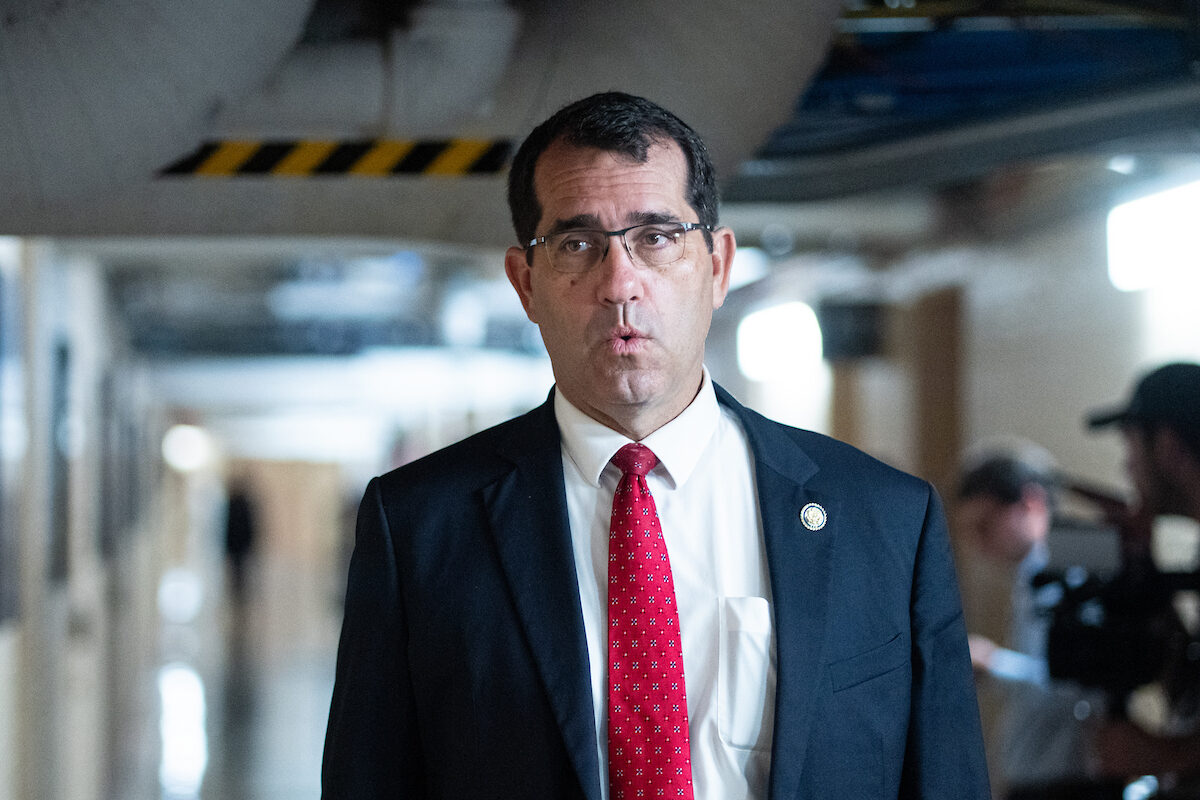
How Crank got a stack of political cartoons and a ‘great name’
It was a long journey back to the Hill for the Republican freshman
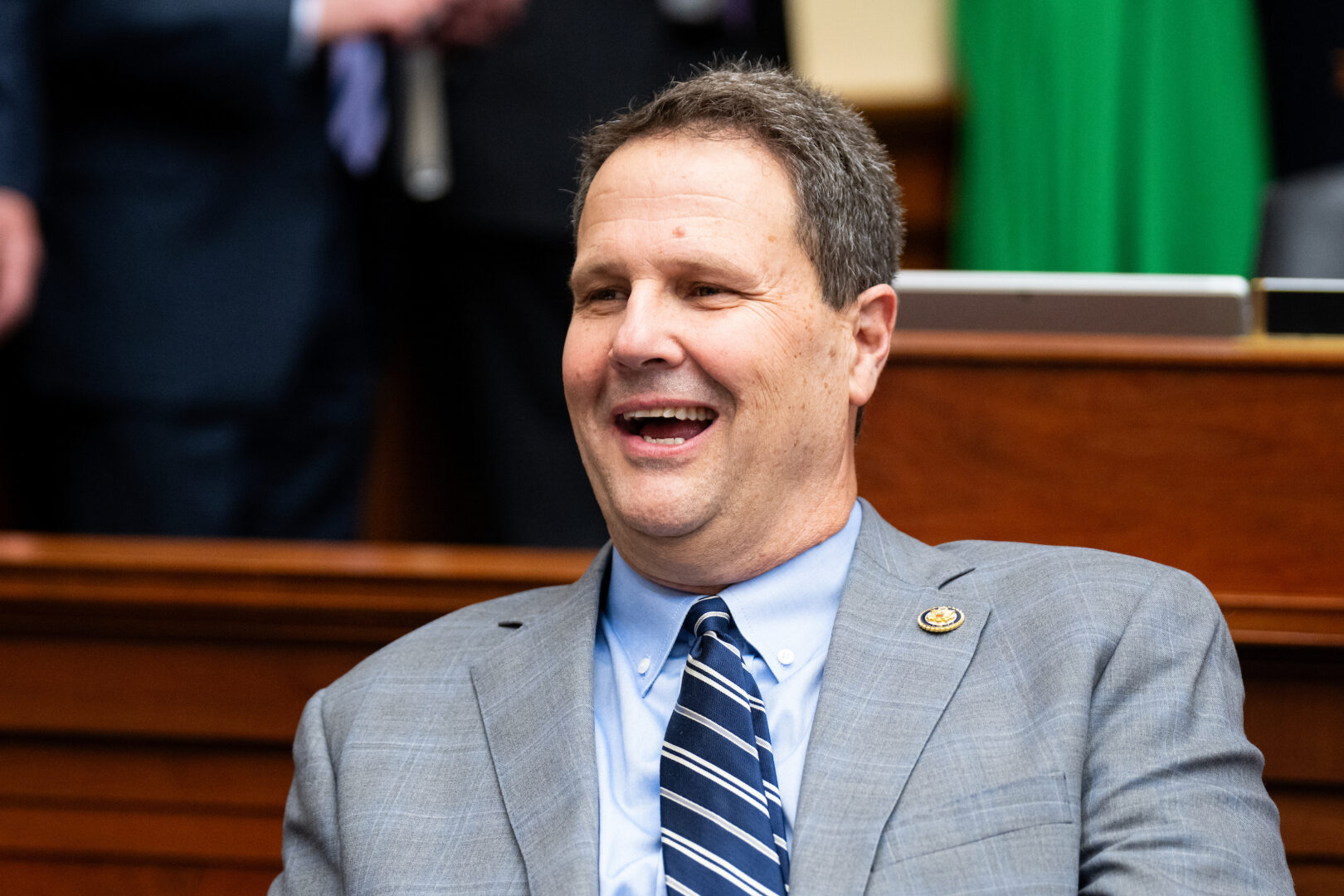
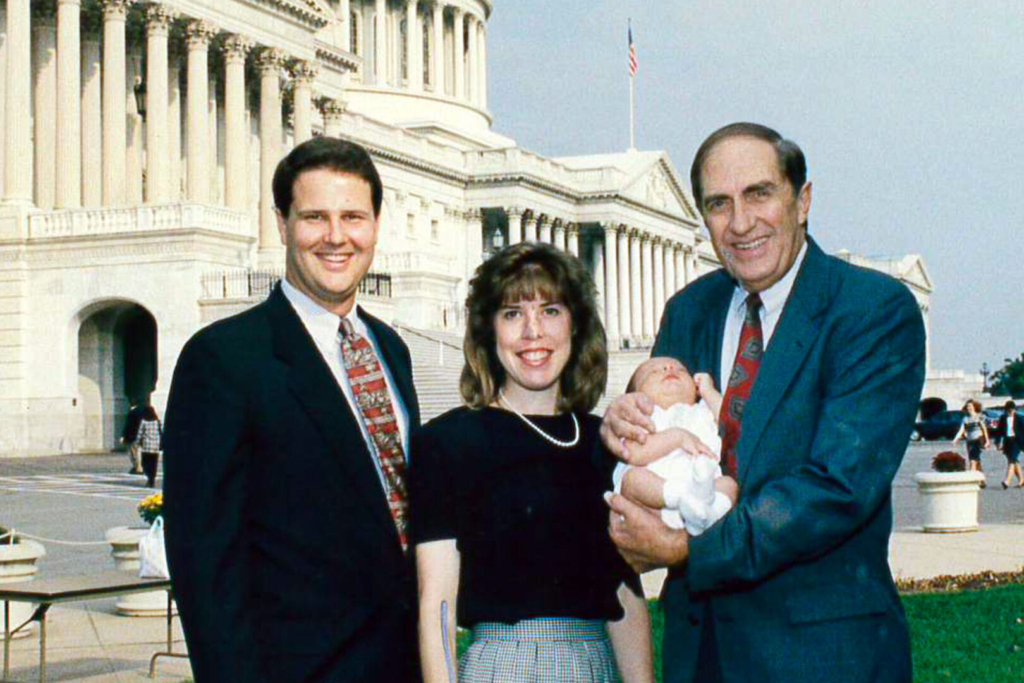
Jeff Crank points to a framed photo hanging in his office, signed by his boss at the time. “Great baby! Great name! Great family!” wrote then-Rep. Joel Hefley in silver ink.
In the photo, Hefley is holding Crank’s son — also named Joel — in front of the Capitol. He wasn’t named entirely after the congressman, Crank clarifies, though it didn’t hurt.
“I had an uncle Joel as well, who I love, but I also respected Joel,” he says. “And we liked the name Joel. I always told him, ‘If your first name was Maurice, we probably wouldn’t have named the kid Maurice.’”
The picture was taken in 1997, toward the end of Crank’s time as a congressional staffer. It took almost three decades, but now the Colorado Republican is back at the Capitol as a member himself.
“It’s a pretty special moment,” he says of walking onto the House floor last year.
Crank first ran for Congress in 2006 in an attempt to succeed the retiring Hefley but fell short in the primary despite his former boss’ backing. After another campaign defeat, he paused his electoral ambitions but kept his foot in politics, working for the Koch brothers-aligned advocacy group Americans for Prosperity.
He also hosted a conservative talk show — experience that shows as he rattles off stories from his staffer days with a podcaster’s ease.
When his onetime primary foe Doug Lamborn announced he wouldn’t run for reelection in 2024, Crank tried again and won in Colorado’s 5th District. It’s the same seat Hefley once held, though it may not be as ruby red as it used to be; the Democratic Congressional Campaign Committee added it to their target list this cycle.
In his office in the Longworth Building, Crank keeps reminders of his early jobs on the Hill, including three bronze figures of Union soldiers sculpted by Hefley, who was also known to pass the time in committee hearings by scrawling out political cartoons.
“He’s like a real artist,” Crank says. “He’s the real deal.”
This interview has been edited and condensed.
Q: You majored in political science. How did you get your first job on the Hill?
A: I remember printing my resume on gray paper and walking around to most of the 175 Republican offices at the time. I laugh now, because I would talk to the person at the front desk and say, “I’m looking for a job, legislative correspondent or whatever,” and I’d give them my resume. But I’m sure they were an intern trying to get the same job I was trying to get, so they probably just threw it in the trash can.
I don’t remember exactly why [then-Oregon Rep.] Denny Smith said, “Yeah, we’ll take you,” but I ended up getting an internship with him. I was engaged at the time, or very close to it, and my future father-in-law was stationed here with the Army. They were out by Fort Belvoir, and so I lived in their basement.
Q: Next you worked for Joel Hefley for several years, rising to become his top aide.
A: I think I got paid $17,000 a year at first, and my job was literally to stamp the mail when it came in. Eventually I handled his defense issues, and then ran his Washington office.
The most important thing in that whole experience was who Joel Hefley was. When I started working for him in 1991, I used all of my vacation on my wedding. And then one month to the day after I got married, my dad passed away very suddenly. I couldn’t reach his chief, so I called the congressman at home.
Here’s a guy who I barely knew, right? I’d been in the office like five months. He goes, “First of all, don’t worry about your job. Take as much time as you need.” And as I was putting the phone down, I heard him go, “How are you getting back to Colorado for the funeral? I have some frequent flyer miles that are personal, they’re not official, but I’m just going to give those to you and Lisa.”
Working for somebody like that will shape your life. If I’d worked for a jerk, I probably would have been like, “I’m going to go do mortgages or build a house or something.” But Joel became chairman of the Ethics Committee. I mean, he didn’t cuss, he didn’t drink, he was a paragon of virtue. He’s just a good and decent person.
Q: I understand he was a political cartoonist, too.
A: He’s an amazing artist. He would take a little House of Representatives pad, and he would sit in committee and draw.
Sometimes he would draw the witnesses, or he drew Bill Clinton a lot, and he’d accentuate his big nose and paunchy belly. They were like political cartoons, and they got to be so popular that when he’d get up and leave, his colleagues would go over and rifle through.
One time he drew one of John McCain. He was not a big fan — he thought he was arrogant, and McCain was the chairman on the Senate side of the subcommittee that Hefley was chairing, so they did battle sometimes on stuff.
I thought, man, I don’t want McCain to get a hold of that, so I grabbed it. So after that, every time he’d walk out of the room, I’d run up to the dais and grab all of them. I kept them, and I probably have 100 drawings in a folder at home.
Q: You first ran for Congress two decades ago — and your campaign manager back then was a certain Jim Banks, now Indiana’s junior senator.
A: At the time he worked for Focus on the Family, which is headquartered in Colorado Springs. I decided to run, and I hired him, and Jim did a great job. He tells everybody I would have been in Congress in 2006 if I’d had a better campaign manager, but that’s not true.
Jim and I are very close, and when I was running for Congress again in 2024, he was super helpful in getting me here. He was still in the House, and so I’d ask him if he could talk to leadership or whatever, and he would always do that for me, and helped out raising money for me.
Q: Now that you’re back on the Hill, how have things come full circle?
A: The most amazing thing for me was when I first got here for new member orientation after my election. I had spent eight years here as a staff member, and I’d been gone for a long time.
They brought us from the hotel, and as we got off the bus and started to walk into the Capitol, I started reaching in to get my keys and all that. But the cop looks at me and was like, “Just come on through. You don’t have to go through the metal detector.”
It was surreal. My wife was with me, and I was like, “Can you believe this, Lisa? We worked here.” My wife worked at HHS back when I was a staffer, so we would meet in the park near the Rayburn Building for lunch. We went through it together.