McClain Delaney defeats predecessor Trone in Maryland primary
Republicans Blake Moore and Celeste Maloy also win renomination in Utah
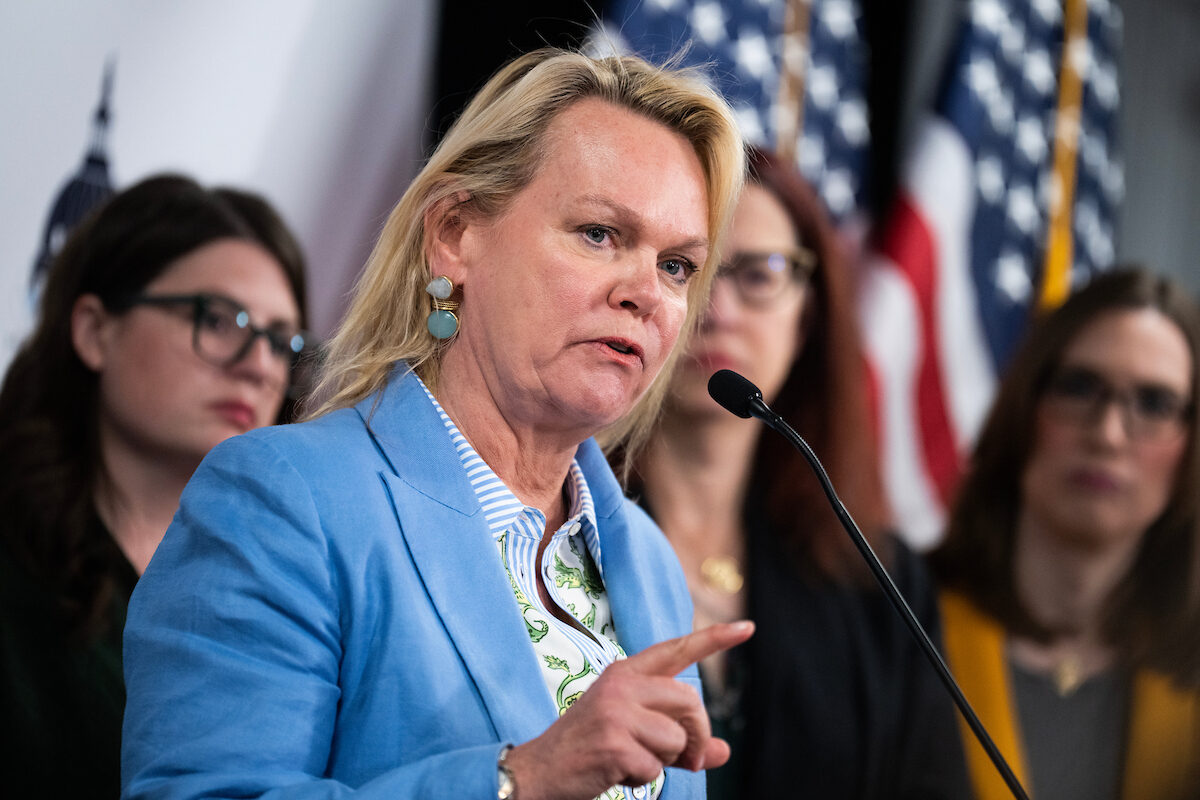
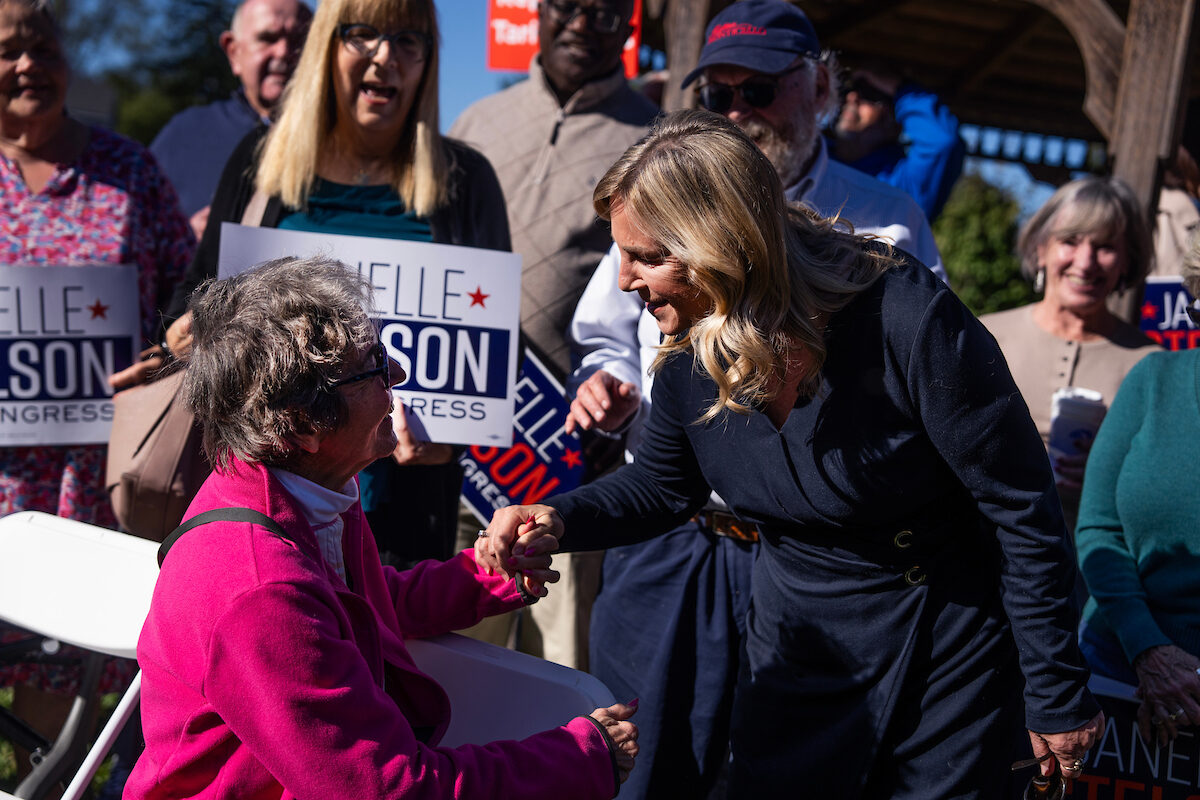
Maryland Rep. April McClain Delaney fought back a challenge from her predecessor Tuesday, joining two Utah Republicans in holding on to their House seats on a night that saw two Democratic colleagues from New York lose their bids for renomination.
McClain Delaney was leading former Rep. David Trone 44 percent to 37 percent in the Democratic primary for Maryland’s 6th District when The Associated Press called the race at 11:38 p.m. Eastern time. Six other candidates split the remainder of the vote.
Trone, who gave up the seat in 2024 for an unsuccessful Senate run, poured $25 million through June 3 into his bid to reclaim the district, which stretches from the Washington suburbs into rural Western Maryland. For her part, McClain Delaney, whose husband held the seat before Trone, loaned her campaign $7.4 million.
It was the second House primary this year to feature an incumbent being challenged by an immediate predecessor who had run for Senate. In Texas, Rep. Julie Elizabeth Johnson lost a Democratic primary runoff last month to former Rep. Colin Allred.
The Maryland primary was bitter and expensive. While both Trone and McClain Delaney largely self-funded their campaigns, Protect Progress, a group with ties to the cryptocurrency industry, waded into the race to support the incumbent. McClain Delaney’s campaign in April sent Trone’s team a cease-and-desist letter, arguing he shouldn’t refer to himself as “Congressman” while asking voters to reelect him when he wasn’t an incumbent officeholder.
Trone criticized his opponent for voting in early 2025 for an immigration bill known as the Laken Riley Act, which she has since said she regrets.
Trone, who was first elected to the House in 2018, is no stranger to making eye-popping personal loans to his campaign. He spent more than $30 million on past House races before pouring in nearly $63 million into his 2024 Senate bid, which he lost to fellow Democrat Angela Alsobrooks.
Elsewhere in Maryland, state Del. Adrian Boafo looks poised to succeed former House Majority Leader Steny H. Hoyer after winning the Democratic primary for the 5th District.
Boafo was leading a 24-way field with 32 percent of the vote when the AP called the race at 9:28 p.m. Eastern time Tuesday. Businesswoman Quincy Bareebe, who largely self funded her campaign, was in second with 19 percent, while former Capitol Police officer Harry Dunn, who rose to national prominence after speaking out about his experience defending the Capitol during the Jan. 6 attack, was in third with 14 percent. This was Dunn’s second consecutive House bid after losing a race for the 3rd District in 2024.
Boafo was backed by Hoyer, his onetime boss, as well as Alsobrooks and Gov. Wes Moore. He also drew millions of dollars in outside support from the cryptocurrency industry and the political arm of the American Israel Public Affairs Committee, which drew criticism from other candidates who urged him and his supporters to reject the spending.
Utah
Like McClain Delaney, two House Republicans in Utah overcame primary challenges Tuesday.
In the 2nd District, third-term Rep. Blake D. Moore, a member of House GOP leadership, was leading state Rep. Karianne Lisonbee 58 percent to 42 percent just after midnight Wednesday, the AP reported. And in the 3rd District, Rep. Celeste Maloy turned back former state Rep. Phil Lyman, whom she led 67 percent to 33 percent with 76 percent of the vote in, according to the AP.
Both Moore and Maloy had President Donald Trump’s endorsement.
The Utah elections took place under a new court-picked congressional map, which gives Democrats a rare opportunity to pick up a seat. Former Rep. Ben McAdams appears poised to return to the House after winning the Democratic primary for the redrawn 1st District, anchored in heavily blue Salt Lake City.
McAdams, a moderate, was leading the field with about 60 percent around 12:30 a.m. Wednesday, the AP reported, with three progressive candidates splitting the remaining vote. State Sen. Nate Blouin, who had Vermont Sen. Bernie Sanders’ backing, was in second place with 24 percent, followed by tech policy expert Liban Mohamed (12 percent) and tax attorney Michael Farrell (4 percent).
South Carolina
State Attorney General Alan Wilson, the son of Rep. Joe Wilson, triumphed over Lt. Gov. Pamela Evette in the Republican primary runoff for governor. He was leading 69 percent to 31 percent with more than 95 percent of the vote in, according to the AP. Evette picked up Trump’s endorsement and narrowly finished ahead of Wilson in the first round of voting on June 9. But on Friday, Trump announced he was backing both candidates.
Wilson will next face Democratic state Rep. Jermaine Johnson in a state where Democrats haven’t won a gubernatorial race since 1998.
The November match-up was also set in South Carolina’s 1st District, with Republican Jenny Costa Honeycutt, a Charleston County councilmember, and Democrat Nancy Lacore, a retired Navy admiral, winning their respective primary runoffs.
Inside Elections with Nathan L. Gonzales rates the race to succeed GOP Rep. Nancy Mace as Solid Republican. But Democrats are hopeful Lacore, who was removed from her post as chief of the Navy Reserve last year by Defense Secretary Pete Hegseth, will make the race competitive.