Judge blocks Trump order to restrict mail voting
Constitution does not grant the president any specific powers over elections, ruling states
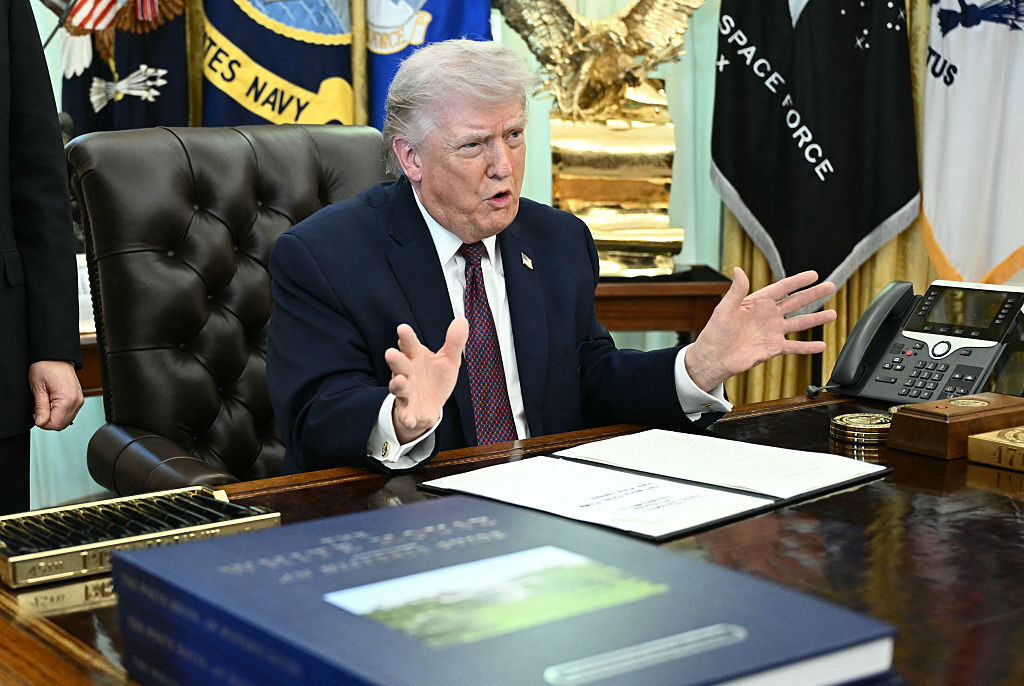
A federal judge in Massachusetts on Thursday blocked President Donald Trump’s executive order seeking to restrict mail voting in federal elections in the states that challenged it, finding the executive branch and mail service did not have the power to do so.
Judge Indira Talwani of the U.S. District Court for the District of Massachusetts wrote in a 37-page opinion that the Constitution gives states the primary power to determine election rules, with the opportunity for Congress to make some changes.
Talwani wrote that Congress did not authorize the steps outlined in Trump’s March order, and directed the administration not enforce the order in the more than one dozen states that challenged it.
“The Constitution does not grant the President any specific powers over elections,” Talwani wrote.
In the March executive order, Trump cited an “unavoidable duty” of federal officials to prevent election fraud and directed several steps for the executive branch to curtail mail voting. The order directed federal officials to work with states to create a list of “individuals confirmed to be United States citizens” who were eligible to vote.
The order also directed the U.S. Postal Service to adopt a new rule restricting the delivery of election mail to only the people who states identified as eligible voters.
The order also sought to have the Justice Department investigate officials who did not comply and pull funding from localities that did not do so. The order built on years of evidence-free claims by Trump and his allies that mail voting had led to voter fraud, including Trump’s loss in the 2020 election.
Several states, led by California, challenged the order in Massachusetts federal court arguing that it exceeded Trump’s authority under the Constitution.
The states included Arizona, California, Colorado, Connecticut, Delaware, Illinois, Maine, Maryland, Massachusetts, Michigan, Minnesota, Nevada, New Jersey, New Mexico, New York, North Carolina, Oregon, Pennsylvania, Rhode Island, Vermont, Virginia, Washington and Wisconsin.
Thursday’s ruling directed the administration to take no steps to implement the creation of state voter lists or targeting officials in the challenging states.
The Constitution gives states the primary authority to administer elections, and the laws cited by the administration, like the Help America Vote Act, do not give Trump the power claimed by the order, Talwani wrote.
“Notably, nowhere in HAVA does Congress prescribe who should be included on State voter lists. Further, neither in HAVA nor any other federal statute does Congress authorize the federal government to create their own voting database. Instead, Congress, consistent with the Constitution, has left that authority to the States alone,” Talwani wrote.
Talwani also wrote that while the president does have authority to direct investigations of potential federal crimes, he does not have the authority to define them on his own for the possible criminal prosecutions of officials who do not use the approved voter lists created by the order.
“Accordingly, to the extent the EO attempts to intimidate local election officials to use the necessarily incomplete Confirmed Citizenship Lists as a resource, lest they face criminal prosecution, such efforts fall outside the Presidents’ Article II and otherwise-delegated authority,” Talwani wrote.
Earlier this month the U.S. Postal Service proposed a rule that would implement the executive order and require states to comply with new rules on election mail. During a Senate hearing Wednesday, U.S. Postmaster General David Steiner said mail officials would not deliver mail unless states provided voter lists under the rule.
In Thursday’s order, Talwani found that federal law did not give the USPS authority to restrict election mail. Talwani ordered the administration not to implement the rule for the challenging states for the November election.
“Accordingly, USPS lacks statutory authorization to promulgate any binding regulations on mail-in voting,” Talwani wrote.
Last month, a federal judge in Washington declined to block the EO, stating that the challengers — national Democrats in that case — could not prove they had been harmed yet by it.
The order was the latest in a series of efforts by the Trump administration seeking to assert more federal power over the elections process. That includes dozens of lawsuits against states seeking sensitive voter data that have been turned aside by every court that has ruled on the effort.
In addition, last year, Trump sought to unilaterally implement a proof of citizenship requirement for voter registration in another executive order, which has also been blocked.
Earlier this week, two judges issued permanent injunctions against portions of last year’s order.