Fiscal 2027 State Department spending bill passed by House
Passage of the bill merges it with voter ID legislation
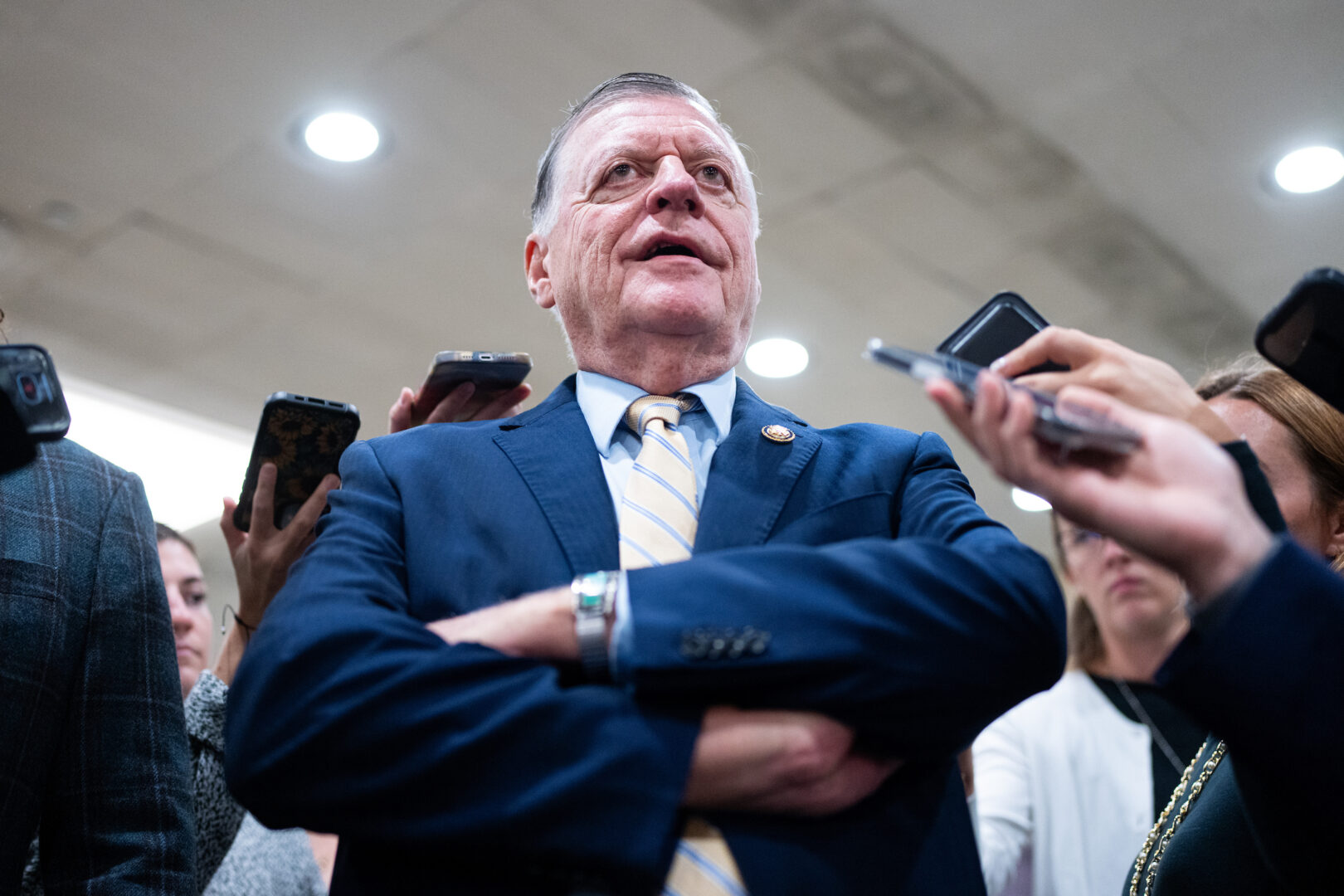
The House on Wednesday passed the fiscal 2027 State Department spending bill shortly after rejecting an amendment that reignited Democratic fissures over Israel.
In a mostly party-line 217-209 vote, the House passed the $47.3 billion National Security-State appropriations bill. That vote came on the heels of a vote earlier in the afternoon against an amendment from Rep. Thomas Massie, R-Ky., to cut off U.S. aid to Israel.
Passage of the bill also officially merged it with voter ID legislation that became the focus of a standoff among Republicans that recently paralyzed the House floor. While the inclusion of the voting bill unlocked the spending bill in the House, it complicates the measure’s path forward in the Senate.
Overall, the spending bill’s $47.3 billion for the State Department and other related agencies would represent a decrease of about $2.7 billion from the fiscal 2026 enacted level. But it would be about $11.7 billion more than what the Trump administration requested for fiscal 2027.
Democrats have largely opposed the funding bill because of the cuts, which include a $902 million year-over-year drop in funding for global health, humanitarian and other economic assistance programs.
“It undercuts humanitarian assistance, undermines global health programs, threatens women’s health and breaks promises to our partners and our allies while surrendering influence to our adversaries,” Rep. Rosa DeLauro, D-Conn., the ranking member of the House Appropriations Committee, said Wednesday on the House floor.
Republicans have defended the bill as saving taxpayer dollars while still addressing the most important U.S. national security needs.
The bill “makes a clear statement about American leadership,” House Appropriations Chairman Tom Cole, R-Okla., said on the House floor Wednesday. “We will engage where it matters, we will invest where it counts, and we will demand accountability for every dollar spent.”
The bill would also provide $1.5 billion for the so-called America First Opportunity Fund, a catchall account that Democrats have accused of being a slush fund. While that would be $650 million more than the fiscal 2026 enacted level, it’s $3.5 billion less than the Trump administration requested for 2027.
But it was the Israel amendment that caused the most friction.
Massie’s amendment would have prohibited any of the funding in the bill from being used for Israel. The amendment would have also cut $3.3 billion included in the bill for Israel from the Foreign Military Financing program.
The amendment split Democratic leadership, opening up simmering wounds within the party over Israel. Opponents of the amendment, such as Minority Leader Hakeem Jeffries, D-N.Y., argued it was overly broad and would restrict humanitarian aid, while supporters, such as Minority Whip Katherine M. Clark, D-Mass., said it was important to send a message that the status quo is unacceptable.
Ultimately, the amendment was rejected 104-314.
In addition to the Israel amendment, the House rejected another Massie amendment to prohibit funding for Jordan in a 6-421 vote and one from Rep. Chip Roy, R-Texas, to ban funding for the United Nations in a 136-291 vote.
One amendment from Rep. Greg Steube, R-Fla., that was approved by voice vote would withhold 100 percent of funding for Nigeria until the State Department certifies that the country is “taking effective steps to prevent and respond to violence and hold perpetrators accountable,” among other criteria.
While the amendment itself did not specify the nature of the violence, Steube posted on social media that it was intended to address anti-Christian violence. Republicans have claimed that sectarian violence in the country is targeting Christians, but experts say the reality is more complicated.
The House had originally planned to vote on the spending bill last month but was forced to scrap that plan when the floor became frozen over an unrelated fight among Republicans on the voter ID bill and immigration policies.
House GOP leadership resolved the standoff this week by adopting a rule for debate on the spending measure that merges the voting bill with the State Department bill and promising to hold a markup on a hardline immigration bill.
The Senate could strip the voting bill from the State Department bill when it takes up the spending measure.
But beyond the voting bill issue, the Senate’s appropriations process is at a standstill amid the absence of Sen. Mitch McConnell, R-Ky., the death of Sen. Lindsey Graham, R-S.C., and a partisan stalemate on spending levels.