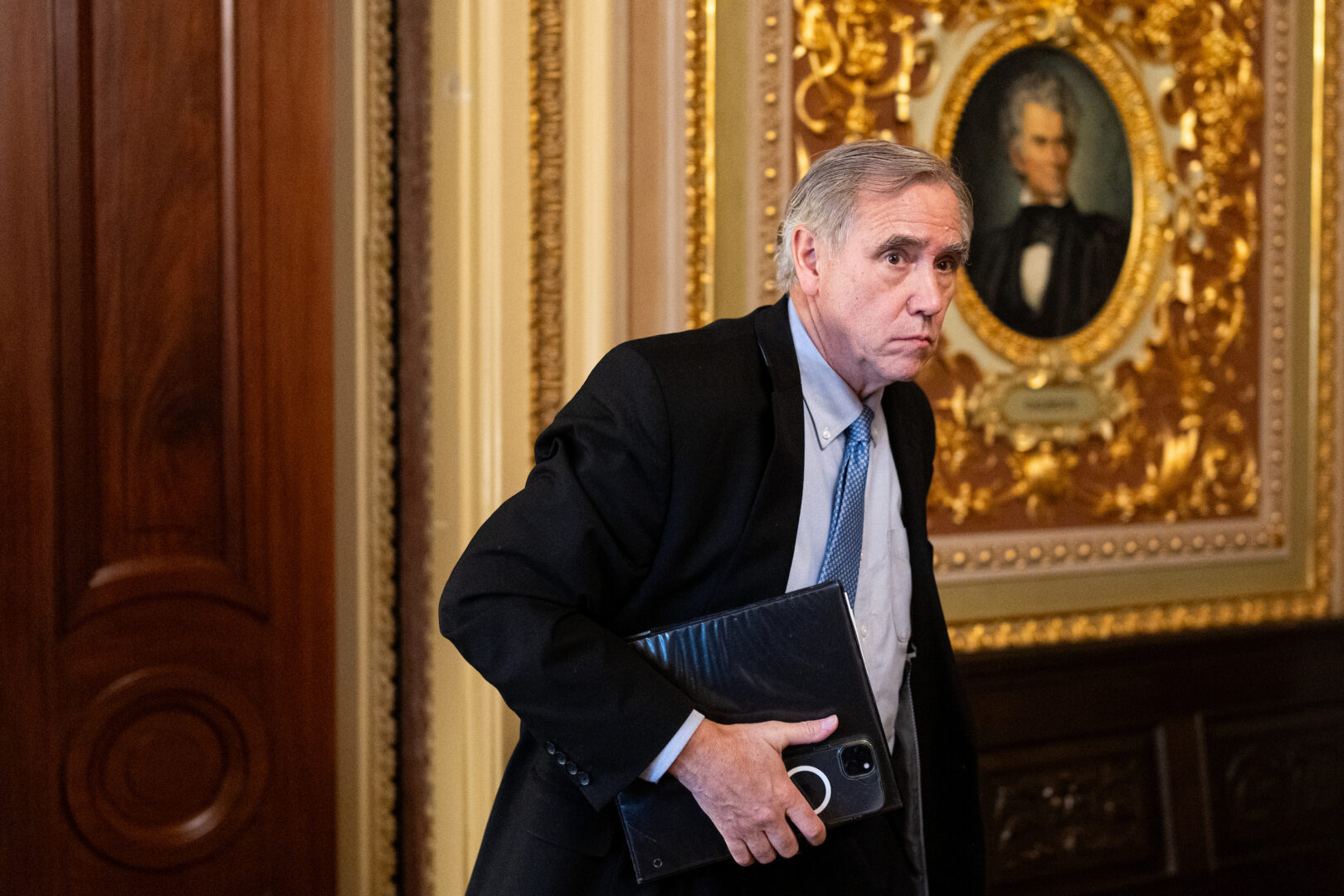
No Graham heir apparent to help shape Trump’s foreign policy
‘Nobody’s going to have all the relationships Lindsey had,’ Sen. Rick Scott says
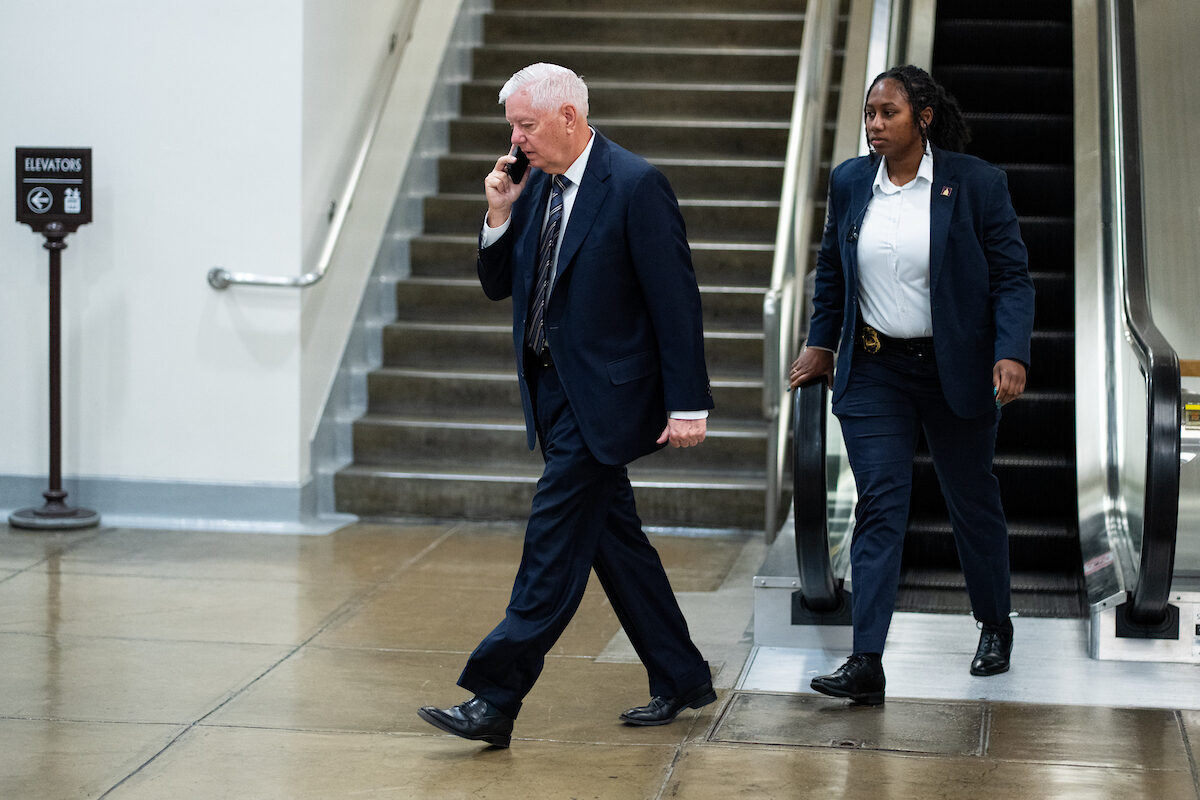
Some Senate Republicans and Democrats actually agree on one thing: It could take years for another lawmaker to become as big of a voice in any president’s ear on foreign policy as Lindsey Graham was in Donald Trump’s.
In fact, as Trump on Wednesday delivered his first major national security remarks since his informal adviser’s sudden death, some senators wondered aloud whether anyone could truly fill the void created by the South Carolina Republican’s unexpected passing.
Graham used long weekends and recesses to jet around the world, meeting privately and developing relationships with prime ministers and presidents, defense and foreign ministers, parliament members and ambassadors. His Rolodex impressed Trump, and helped him gain influence with the 45th and 47th diplomat in chief, senators said.
“I think Lindsey will be hard to replace. Lindsey had spent an unbelievable amount of time traveling the world and building relationships,” Sen. Rick Scott, a Florida Republican who serves on the Foreign Affairs and Armed Services committees, said Tuesday. “A lot of us will have relationships, but nobody’s going to have all the relationships Lindsey had. It’s going to take a long time for anybody to do that.”
Sen. Ron Johnson, a Wisconsin Republican who is slated to take over the Budget Committee that Graham had chaired, said the void left by his death showed “how hard he worked.”
“I certainly do not want to put that time and effort into it. I mean, Lindsey and John McCain, those were two unique individuals who did that, who built those relationships,” Johnson added, referring to the late Arizona GOP senator. “That’s why he is irreplaceable.”
To that end, Trump on Monday dubbed his late “friend” a “total workaholic politician,” before later noting Graham’s global reach.
“We lost a great man,” Trump told Fox News. “And you know who really lost? Israel, Ukraine, a lot of countries that he really fought for and they lost somebody who was very special. But the real loser was the United States of America.”
Connecticut Sen. Richard Blumenthal, a Democrat who worked closely with Graham on a Russia sanctions bill that Trump endorsed on Tuesday, said, “I think that there are potentially others who can pick up the mantle,” adding: “My general feeling is that his shoes are pretty much impossible to fill because of his unique personality and drive and interests.”
Asked which Republican senators he would call if he needed help on a foreign policy matter, Blumenthal pointed to Senate Armed Services Chairman Roger Wicker of Mississippi and Alabama Sen. Katie Britt, a member of the State-Foreign Operations Appropriations Subcommittee that Graham had also chaired.
‘Better behave’
On the other end of Pennsylvania Avenue, Trump stumbled early in his first week without Graham in his ear, insisting Monday the U.S. would charge a 20 percent fee to a handful of countries for protection traversing the Strait of Hormuz. A day later, speaking to reporters in the Oval Office alongside his Iraqi counterpart, Trump explained why he backed down hours earlier in a social media post.
“I was called by different people, different countries — kings and emirs, and all of the people that we all know and we all love. … And they said, ‘We’d love to do it a different way. We’d love to invest in the United States with billions and billions of dollars.’ … I think it’s actually much better.”
Perhaps those calls to talk Trump off the fee-for-protection ledge could have been headed off by an earlier one with Graham. So, too, might have been Trump’s Monday contradiction of Vice President JD Vance and Secretary of State Marco Rubio, also White House national security adviser, who had said for months that no country should charge a toll for Hormuz passage.
By Tuesday, Trump was contradicting himself.
“And I like that, actually, because I don’t think anybody should be able to charge a fee for … the strait or for any other strait relationship, in terms of other sections of the world. I don’t think anybody should be really in that position.”
Trump on Wednesday headlined a conference at the U.S. Army War College in Carlisle, Pa., announcing the administration would invest $10 billion into Pentagon projects involving companies in the key swing state that he said would create more than 4,000 jobs.
The remarks were his first major remarks on national security and foreign policy since Graham died suddenly on Saturday night. At times, he sounded as hawkish about the Islamic Republic as Graham had, at times, during his final months.
“If the radical cleric in Iran had a nuclear weapon, he would use it just as certainly as Hitler were to use it. He would kill all the Jews, and we’re next,” Graham said in March. “I’ll put my efforts to make sure the military has what they need to win the wars we’re in, ahead of anybody in the United States Senate.”
Yet, in the weeks before he died, Graham, who was seeking reelection, seemed open to a peace deal.
Trump told reporters as he arrived in Carlisle that Iranian officials “better behave.”
During his remarks at the conference, he said “the Islamic Republic of Iran is not happy right now,” adding: “Other presidents didn’t do what was right. They should have done it a long time ago. Would have been much easier.
“They want to settle so badly,” he claimed, referring to Iranian leaders before issuing another hawkish threat about the Middle Eastern country’s future: “They don’t like what we’re doing, and they do want to settle. We’ll find out whether or not we settle with them — or we just finish it off.”