Where has all the FISA fire gone?
Clayton hearing was supposed to reignite hopes of a bipartisan renewal, but the urgency has cooled
Congress let a key spy power lapse over a month ago. In the few legislative days left ahead of August recess, lawmakers don’t appear to be in any rush to change that.
Discussions in the House have stalled as they wait for the Senate to move — even though Speaker Mike Johnson, R-La., once warned that “roughly 65 percent” of President Donald Trump’s daily security briefing depends on keeping the authority humming.
Members of both parties had issued breathless warnings about what could happen if they didn’t act to extend section 702 of the Foreign Intelligence Surveillance Act before it expired June 12, calling it a make-or-break task.
While the surveillance reauthorization dominated debate in June, lawmakers have now shifted focus in July to other priorities, like the GOP’s new “reconciliation 3.0” bill.
The spy authority allows the U.S. government to collect digital communications of foreigners located outside the country. Without it, proponents say the intelligence community would be flying blind.
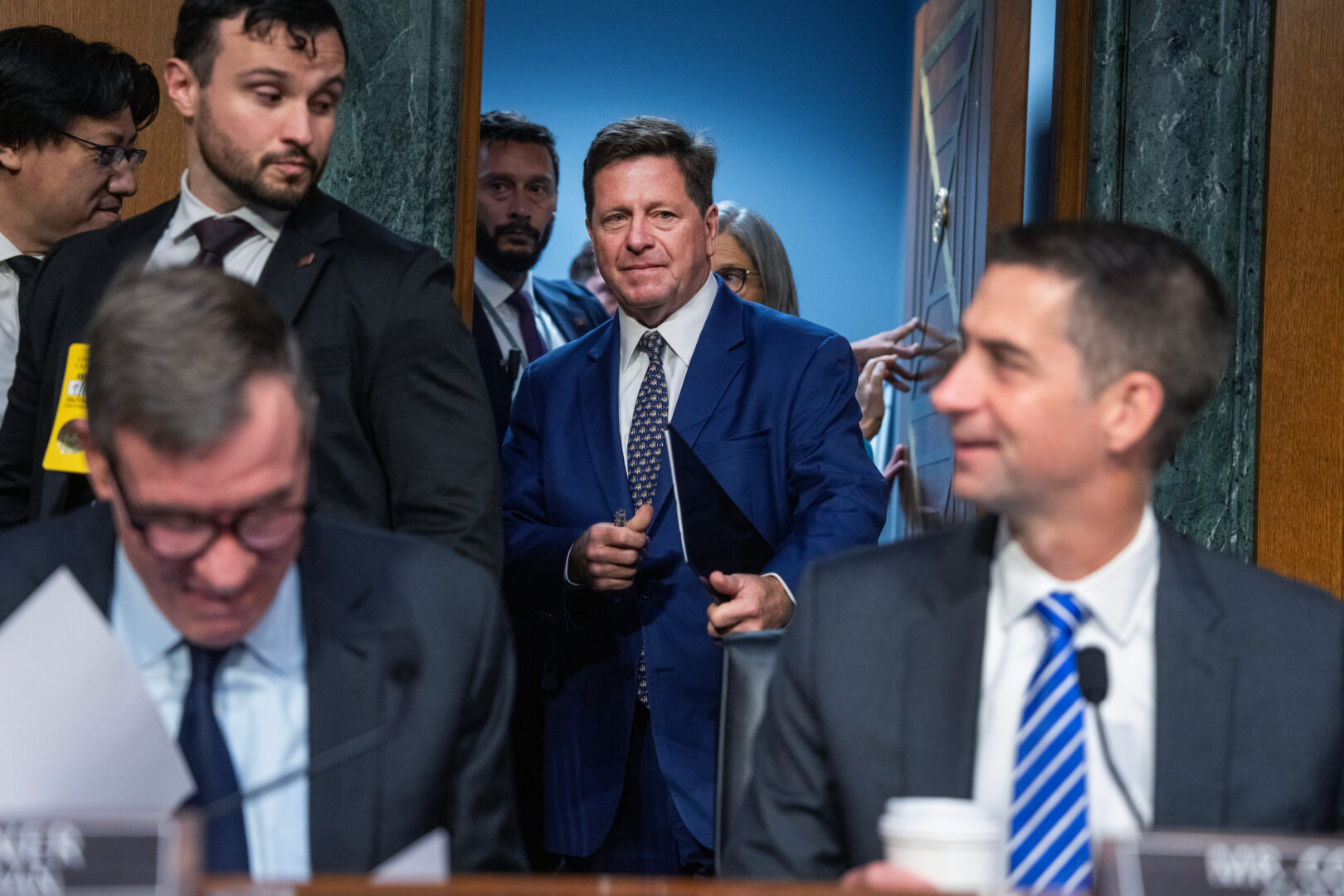
It looked like the Senate would take a small step toward a renewal Wednesday when Trump’s pick to head the intelligence community, Jay Clayton, showed up to his scheduled confirmation hearing. Following Trump’s orders, Clayton skipped the last one.
But Minority Leader Charles E. Schumer, D-N.Y., threw cold water on the idea of harmony shortly after the hearing.
“The performance of Jay Clayton in committee today was abysmal, and it makes it much less likely that he will get Democratic votes,” Schumer said.
Democrats in June said they could support renewal once a permanent director of national intelligence was confirmed. The demand came in protest of Trump’s controversial temporary pick, Bill Pulte.
According to Senate Intelligence Committee ranking member Mark Warner, D-Va., that demand remains. And now it’s not clear whether Clayton will meet the mark.
“I don’t think anything’s changed,” Warner said Wednesday after Clayton’s hearing. He added that concerns over FISA may “escalate” after Trump’s address to the nation scheduled for Thursday night, which is supposed to touch on election security.
House Minority Leader Hakeem Jeffries, D-N.Y., said Monday things haven’t changed for House Democrats either. He added he has not had any discussions with the White House on the topic in the weeks since the statutory authority expired.
“It is irresponsible to expect the American people to trust Donald Trump, [FBI Director] Kash Patel and Bill Pulte with the privacy of the American people,” Jeffries said. “Under no circumstances is that in any way a logical thing to expect House or Senate Democrats to sign off on.”
Part of the fading urgency is likely due to the fact that intelligence collection continues. The Foreign Intelligence Surveillance Court, which reviews the program’s compliance record and approves certifications, in March gave the green light for the program to operate for another year, as the New York Times reported.
“I would say [FISA] is sort of dark, it’s not really dark,” said Rep. Derrick Van Orden, R-Wis., pointing to the court certification.
But some lawmakers said the theory that the program can continue without reauthorization because the intelligence court has certified it for a year has yet to be tested, though at least one group points to a 2008 ruling by that court as a precedent.
“My point of view is, why roll the dice on something here which is truly a life-or-death issue?” House intelligence ranking member Jim Himes said in June.
For months before it lapsed, section 702 had been surviving on short-term extensions. GOP leadership had struggled to pass a long-term extension until April, when the House advanced a three-year authorization. But that stalled out in the Senate.
A group of privacy-minded Republicans, including Rep. Thomas Massie, R-Ky., have blocked attempts to extend the authority as-is, urging leadership to add a warrant requirement for searches of information from U.S. citizens swept up in the program. Without such a requirement, the intelligence community could use the Section 702 authority to spy on Americans, they argue.
Massie was among the 19 Republicans who voted against a short-term extension on June 11, the day before section 702 expired, joining all but seven House Democrats in opposing it.
Adding to the uncertainty, Trump has tried to pull renewal efforts into his unrelated bid to pass a sweeping voter ID and election bill.
“To add a slight bit of intrigue but, for the Good of the Nation, and the People of our Country, I will not approve FISA without THE SAVE AMERICA ACT going along with it,” he posted on June 17, referring to the election legislation, parts of which Republicans have since vowed to move in their third reconciliation package.
This report was revised to add additional context regarding a 2008 FISA Court ruling.