Voters are split as GOP focuses on fraud
Party affiliation is a good indicator of whether health costs are a top priority
Republicans in Congress have spent the past year sounding an alarm over waste, fraud and abuse in government health care programs with a midterm-focused message that cutting fraud will help lower consumers’ costs.
While many voters say that soaring health care costs are a top issue for the approaching elections, new polling shows they’re largely split along party lines on whether fraud is as important.
Republicans have spent a good portion of their limited legislative time on it, holding more than a dozen hearings or markups, including one this week. The issue rose to prominence during last year’s reconciliation process — GOP lawmakers pitched Medicaid spending cuts as eliminating waste of taxpayer dollars alongside a mission to tighten the government’s wallet in general.
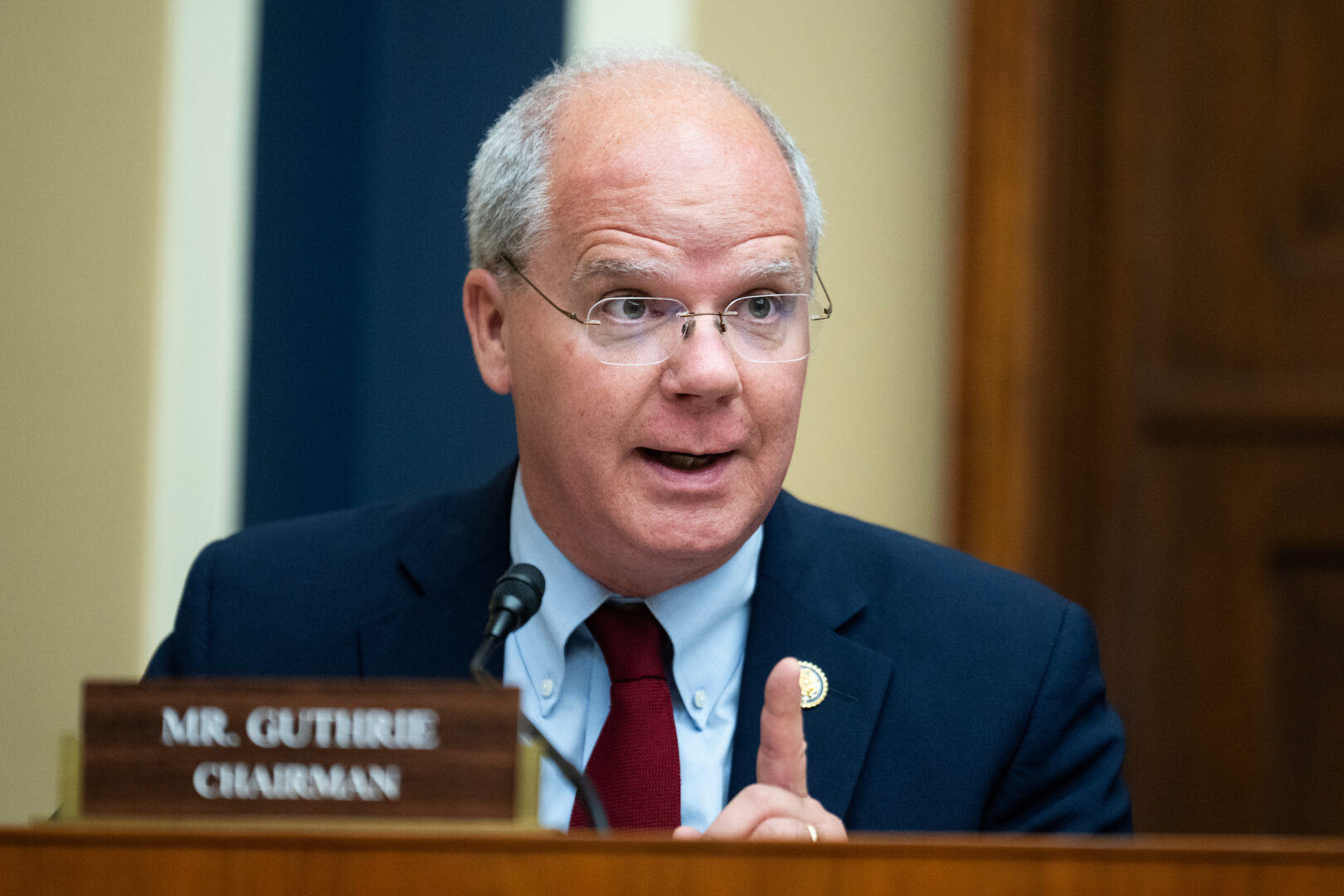
“The big thing is the fraud,” Brett Guthrie, R-Ky., chair of the House Energy and Commerce Committee, said in a brief interview earlier this month. “How do we give more tools to the executive branch to find more fraud, so we can actually go after people with fraud.” He said that the committee’s work on another issue, health care price transparency, dovetails with this effort by exposing practices that keep consumers in the dark.
Democrats on the whole have been critical, voicing concerns that the opposing party is using the issue as a basis to make cuts to health care programs.
That divide may be at the heart of the new polling by health policy research organization KFF, which found that 55 percent of Republicans say that it’s “extremely important” for candidates to talk about the issue of fraud in government health programs. That number drops to 34 percent for Democrats and 42 percent for independents.
As for health care costs in general, 60 percent of Democrats, 55 percent of independents and 37 percent of Republicans say the issue was “extremely important” for candidates to discuss. The results come as the Centers for Medicare and Medicaid Services estimates that national health care expenditures rose more than 7 percent last year.
The poll also found that voters, regardless of party affiliation, were more likely to perceive fraud as an issue in other government programs than those focused on health. Still, about 40 percent of voters perceived there to be a significant amount of fraud in Medicaid, 36 percent within Medicare and 29 percent in the Affordable Care Act marketplaces.
“Even though voters do believe that there’s fraud in Medicaid, most don’t want fraud prevention to come at the cost of access to care for people, and they don’t think that rooting it out would reduce their own costs,” Audrey Kearney, a senior survey analyst for the Public Opinion and Survey Research Program at KFF, said in an interview.
Democrats have seized on this as the Trump administration has cut off some funding to predominantly Democratic-led states.
“They’re just using that as an excuse to cut all health care programs for the average person,” Rep. Frank Pallone Jr., D-N.J., said in a brief interview earlier this week. “They’re being fake about it. They act like that’s the problem, that isn’t the problem.”
Guthrie said that the recent focus on fraud will “absolutely not” result in a cut to people’s health care, saying that people should be concerned with how their tax dollars are being used.
But the administration has charted its own path. Earlier this year, the Health and Human Services Department tried, then recanted, halting child care and family assistance grants to some states over fraud concerns, and CMS has withheld $259 million in Medicaid funding from Minnesota and $1.3 billion from California, which drew backlash from Democrats who said that the funding holds were politically motivated.
Hospice, medical equipment
In recent months, key health committees have marked up several bills seeking to give Medicare more tools to find and root out fraud.
The Ways and Means Committee marked up a slate this spring, including one that would allow Medicare to more frequently survey hospice centers, which advanced 27-16. Democrats on the panel argued that it doesn’t get at the root cause of fraud in hospice care.
Democrats largely voted against another bill that would give Medicare more tools to screen for improper claims for medical equipment, saying it mandates provisions like electronic claims filing that are already in practice. It advanced 25-19.
Other actions have been less focused on legislation, drawing an even more partisan divisions. Energy and Commerce in June held a hearing with the state Medicaid directors for New York, California, Minnesota and Ohio, where they were forced to defend their anti-fraud efforts amid the GOP crackdown.
“Unfortunately, this is a staged performance to target blue states, not a genuine fraud investigation,” Rep. Diana DeGette, D-Colo., ranking member of the panel’s Health Subcommittee, said during the hearing. “It’s exemplary of how this whole administration works and how hollow the administration’s focus on fraud really is.”
These hearings are expected to continue. On Tuesday, the House Oversight and Government Reform Health Care and Financial Services Subcommittee is holding one on possible fraud stemming from the rapid growth of skin substitute care.
Republicans’ efforts are moving forward in concert with moves by the Trump administration. The Health and Human Services Department’s inspector general said in a semiannual report that an investigation of fraud within Medicare led to potential savings of $5.6 billion and excluded more than 1,200 individuals and entities from the program.
Hard to pinpoint
Zach Gaumer, vice president for health policy at the Bipartisan Policy Center, said in an interview that it’s much more likely for health fraud to be committed by the health care providers themselves rather than individuals.
“It is not likely to be a single beneficiary patient who is the mastermind of fraud in a given state,” Gaumer said. “It is more likely to be the provider that is taking money from the payer inappropriately.”
The KFF poll found that voters are able to make that distinction, with about half attributing fraud to the providers. But about 30 percent of respondents said they don’t know which parties are primarily responsible.
Part of the challenge to address fraud, Gaumer said, is that it’s hard to pinpoint in the current U.S. health care system. That’s because payers like Medicare, Medicaid and commercial insurers are removed from the care delivery itself. Medicare in particular works with a large volume of providers to maximize the availability of care for beneficiaries, and that comes with a greater risk, Gaumer said.
“It’s very hard for a payer to know exactly what’s happening behind the scenes, and that’s at the crux of the problem here,” he said.
Many observers see the fraud push as a natural extension of efforts involving COVID-19 pandemic funds, in large part due to fraud schemes within the relief programs.
Ryan Long, the director of congressional relations and a senior research fellow at Paragon Health Institute, said in an interview that following the pandemic, policymakers were more attuned to making sure taxpayer dollars were going to the right place. “There was just so much that you couldn’t ignore,” Long said.
Gaumer added that anytime services are expanded, like they were during the pandemic, cases of fraud tend to rise.
“It’s a natural course of growth and retraction, I believe,” he said. “And that’s why we see this cyclically.”