Trump-Thune tensions boil, but GOP leader seen as safe — for now
White House mum on president's preference for Senate GOP leader next Congress
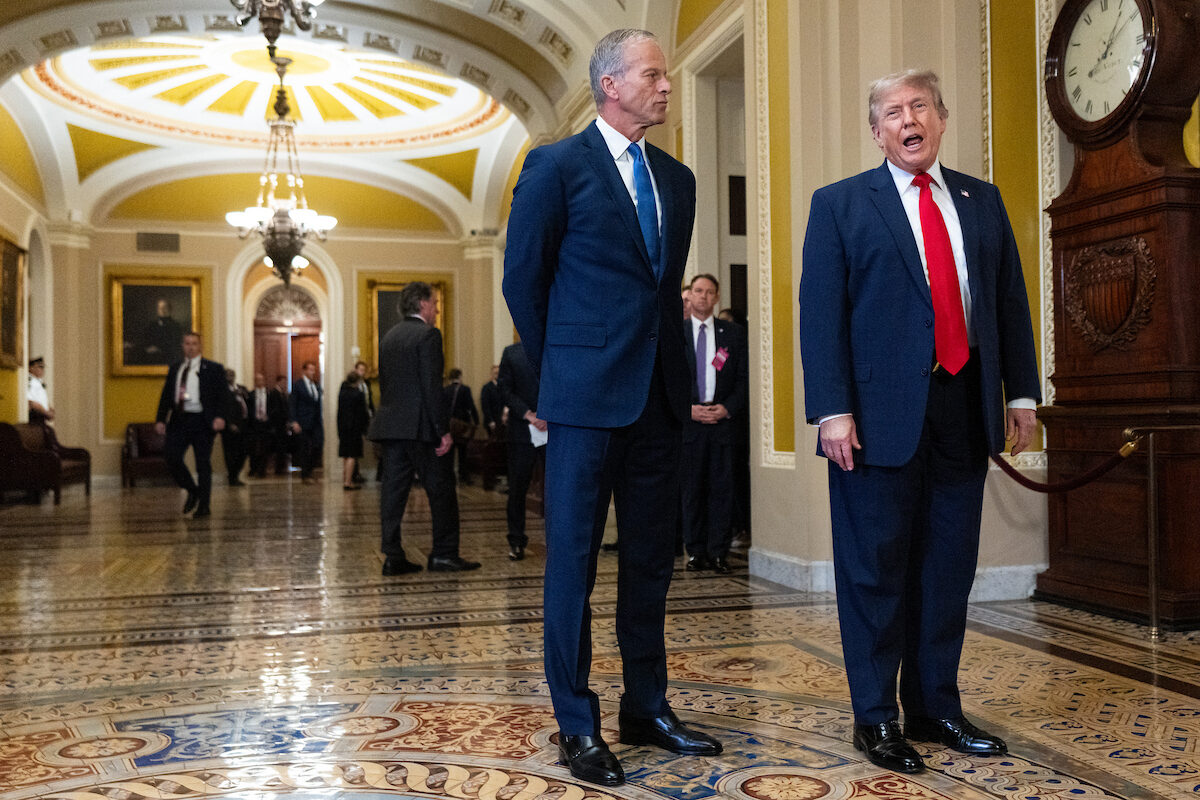
John Thune has yet to be branded with a derisive nickname from Donald Trump, but the president and his team have turned up the heat on the Senate majority leader. Yet, GOP sources are banking that the South Dakotan has the support of his caucus.
The latest Republican-on-Republican drama has yet to reach full-blown Washington feud level. But tensions are definitely picking up as the legislative days tick away and what’s left of Trump’s second-term agenda hangs in the balance. With the Senate slated to leave in the coming days for a monthlong recess, Thune has shown no signs of bringing Trump’s prized elections overhaul bill, dubbed the SAVE America Act, to the floor, angering the president.
One former senior GOP Senate aide, G. William Hoagland, now of the Bipartisan Policy Center, said Friday “the president should not and cannot be successful with his attacks on Thune,” adding: “Thune will survive because the Senate itself must and will survive.”
“I had the opportunity to meet with a couple of Republican senators recently, and they told me Thune had the complete support of his caucus — with a couple of outliers,” Hoagland said. “Ending the careers of Bill Cassidy and John Cornyn by the president was viewed by many as a direct attack on the body and members who had been supportive of the administration. It was an attack that Thune and many others will not long forget.”
Republican strategist Douglas Heye also sees Thune’s job as safe — for now, at least. That’s because “he’s doing the dual job of leading and protecting his members, which also involves math,” Heye said, adding: “And the [private] majority leader vote is nothing like the speaker vote,” which happens in public and involves Democrats.
“Thune has the support of well over half the Senate Republican Conference, in part, because he’s straight with the conference,” Heye said. “Trump doesn’t care about the conference or the party and just wants what he wants — math be damned.”
Trump often grew frustrated with previous GOP Majority Leader Mitch McConnell’s protection of Senate rules and procedures, and his talk of political realities. The same frustrations are seeping into public with Thune, a former Senate GOP whip who was a McConnell mentee. Trump has never seemed to quite understand nor respect the Senate’s core framework.
Hoagland, who worked for then-Senate Majority Leader Bill Frist, R-Tenn., said “being the majority leader of the Senate is one of the more thankless jobs in the Congress.”
That’s because “the majority leader’s responsibilities to enforce the Senate’s rules and procedures, combined with its deliberative processes, can be viewed by some as archaic and inefficient. Thus, creating the opportunity for … the president to find ample opportunities to criticize the Senate and its leaders,” Hoagland said. “Sen. Thune is protecting the prerogatives and independence of the Senate, just as the Constitution requires.”
Still, Trump’s “patience is running out,” White House press secretary Karoline Leavitt said during a Thursday briefing. “He wants to see as much of the SAVE America [Act] passed as possible by the August recess.”
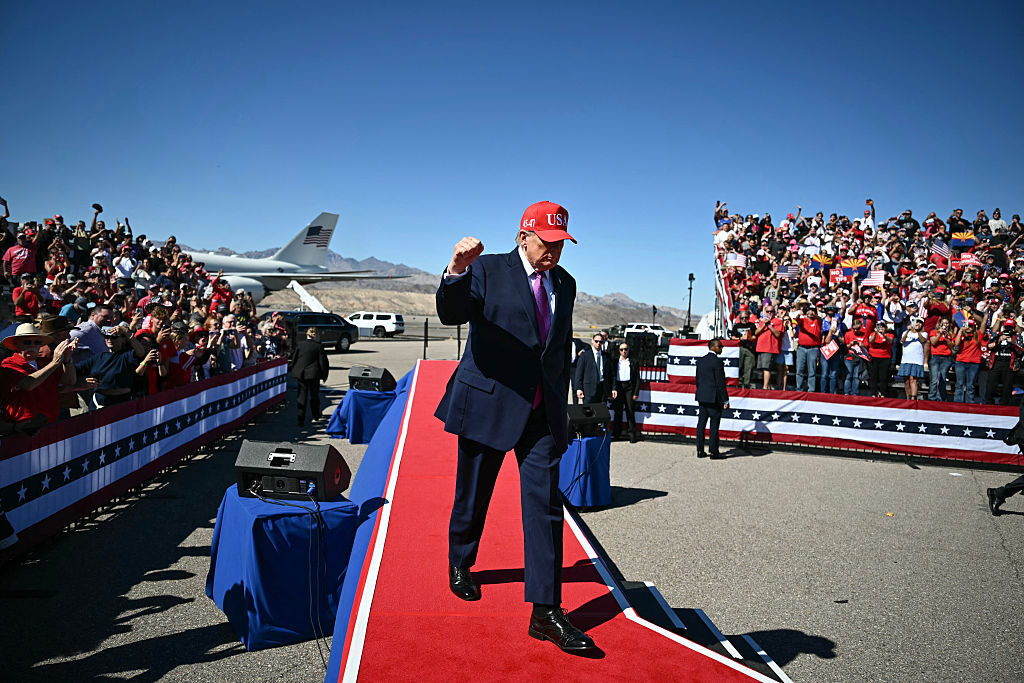
A day earlier, during a rally in Marietta, Ga., Trump’s jaw tightened as he railed against the Senate’s inability to pass the SAVE America Act, a GOP-crafted package of significant elections changes.
“They got to terminate the filibuster,” the president said. “Everybody call John Thune at the Senate. … And tell them to get this stuff approved. … So we’re fighting so that all voters must show voter ID. We’re fighting so that all voters must provide proof of citizenship, OK? And also the no mail-in ballots, very important.”
Sen. John Cornyn, a Texas Republican who lost to a Trump-backed opponent in the primary and will not have a vote in January when the GOP caucus elects leaders for the 120th Congress, said Thursday of the GOP elections legislation: “I’m one of those who said that this is unattainable.”
About the team Trump swipes at the majority leader, Cornyn said: “I think it’s unfair.”
One senator who will have a vote in January, newly minted Budget Chairman Ron Johnson of Wisconsin, seemed to want no part of the feud on Thursday.
“Sounds like his patience worn thin,” he said of Trump. “I don’t know what else I can add to it.”
No endorsement
A White House official did not directly respond to an inquiry on Friday about whether Trump would prefer a new top Senate Republican when the 120th Congress is seated in January — only referring a reporter to Leavitt’s Thursday comments. Notably, the White House, when given an opportunity, did not respond with an endorsement of Thune for leader in the next Congress.
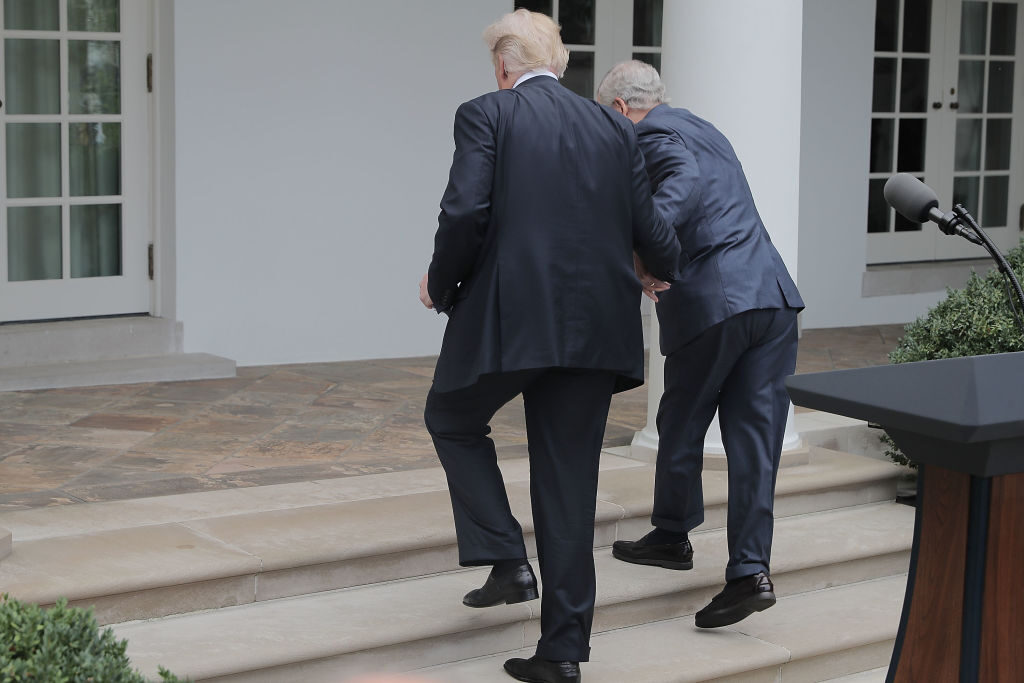
During his first term, Trump often grew impatient and frustrated with then-Majority Leader McConnell. Eventually, the president began referring to the Kentucky Republican as the “Old Crow,” and he even once made McConnell, who has long suffered from the aftereffects of childhood polio, stand beside him during one impromptu — and lengthy — Rose Garden press conference in 2017 — with the president helping McConnell navigate the space’s small steps after he appeared to nearly trip heading back inside.
McConnell mostly tried laughing off the public criticism from a president of his own party, criticism that recent presidents like Bill Clinton, George W. Bush, Barack Obama and Joe Biden avoided during their tenures. McConnell would, in his methodical Kentucky drawl, explain the importance of the Senate’s filibuster, with its 60-vote threshold, and once dropped this quip about the “Old Crow” moniker, telling an interviewer: “It’s my favorite bourbon.”
Thune, with his cowboy-like tall and lean frame, last week tried a strikingly direct approach.
“Well, maybe she or somebody else ought to get on the phone and get the votes, right? It’s 50 around here,” Thune told reporters Thursday when asked about Leavitt’s comment.
“So instead of, you know, pointing the finger at Republicans, they might think about going after the people who are stopping it on the floor, which is the Democrats,” he added. “And if there are Republicans that they think are gettable, get on the phone. Let’s get them to ‘yes.’”
Trump on Friday said he would be “willing” to take up Thune’s offer to work the phones to try securing the votes to pass the election legislation, and offered no new criticism of Thune during an exchange with reporters in the Oval Office.
‘Do anything we want’
Trump has been noticeably less hands-on with GOP lawmakers in recent weeks as the House stumbled, then sprinted into its August recess — but not before a group of Trump-aligned conservatives blocked floor action for two weeks.
The de facto leader of the party also has mostly railed against Senate Republicans over their unwillingness to nix the filibuster and create a 50-vote legislative threshold since a June 24 closed-door meeting at the Capitol got heated.
“It’s so important. The Republicans have to do it — it’s so insane. Otherwise, we’re going to have a shutdown in September, and we have a debt ceiling problem coming in two years,” Trump told Fox News on July 13, trying to create pressure on Thune and Senate Republicans.
“And if you terminate the filibuster, everything goes away, and we do anything we want. We pass everything we want,” Trump said, ignoring intraparty differences that could make even a 50-vote bar, at times, difficult to clear.
Trump also declared during the same interview that, should the opposition party take control of the chamber come January, “the Democrats are going to do it.” That statement ignored the most recent Democratic majority leaders, Charles E. Schumer of New York and Harry Reid of Nevada, leaving the legislative filibuster intact.
Team Trump’s increased willingness to call out Thune publicly comes as the president’s approval ratings have again dipped as he has restarted his war with Iran, oil prices are ticking up and voters keep telling pollsters the high cost of living is their top issue.
To that end, asked about Trump’s statement last week that he does not think about November’s midterm election when making decisions about the Iran conflict, Sen. Tim Kaine responded: “So, you know, his decision-making process has been extremely ego-driven rather than fact-driven, and now he has walked us into a box canyon.”
Kaine said his GOP colleagues are “frustrated” by Trump’s war and recent antics.
“I know what they’re hearing because I know what my constituents are telling me, which is like, ‘For God’s sake, the self-inflicted pain on my pocketbook with increased gas prices — we never signed up for this,” he said. “The president told everybody he was going to be against this kind of thing. … I know they’re frustrated.”