Former Kansas Sen. Nancy Kassebaum remembered as trailblazer
Three-term Republican had a reputation for moderate social politics
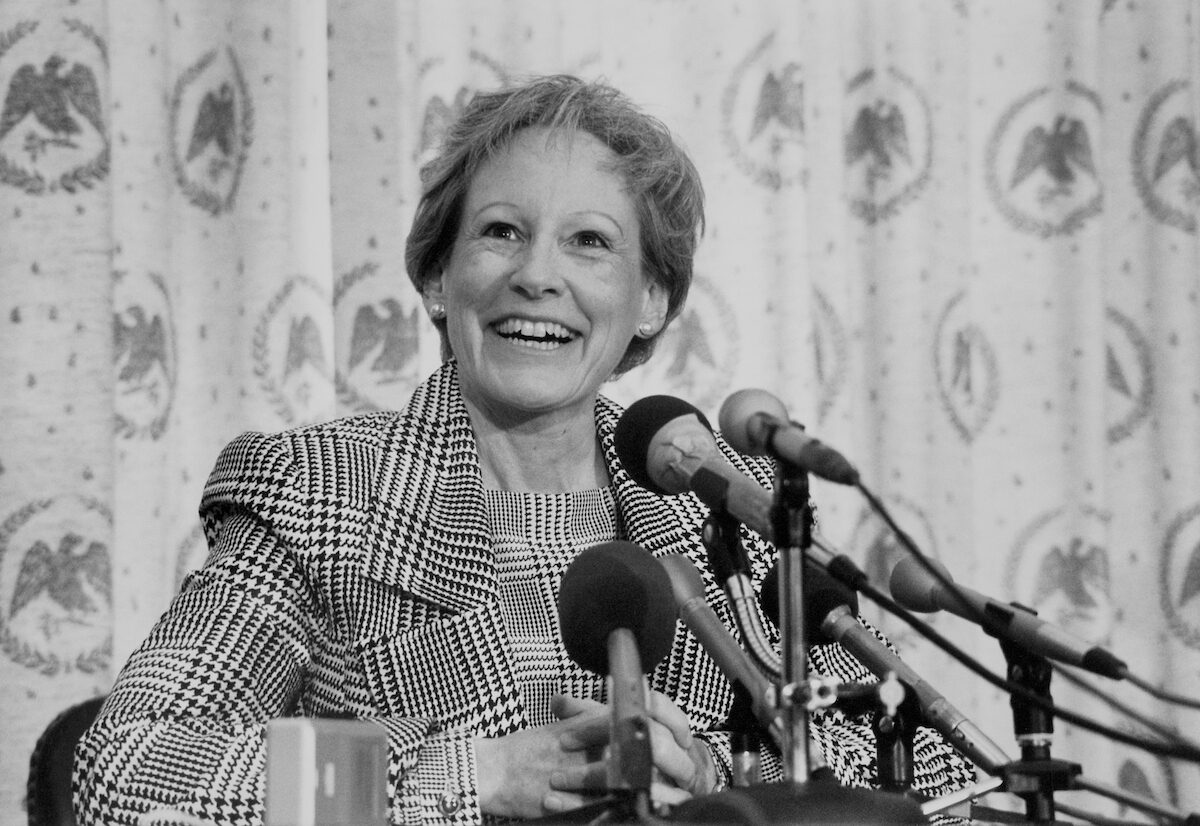
Former Sen. Nancy Kassebaum Baker, who broke multiple barriers for women in the Senate, has died at the age of 94.
The Kansas Republican died of natural causes in hospice care on Aug. 21, her son Bill Kassebaum confirmed to The New York Times.
Memorials came in from across the political spectrum in Kansas. Democratic Gov. Laura Kelly said in a statement that “Kansas lost part of its soul” with Kassebaum’s death.
Kassebaum was the first woman to represent her state in the Senate and the first woman to lead a major committee, taking the gavel of the Labor and Human Resources panel in 1995 during the 104th Congress.
Kassebaum was a relative political neophyte when she was first elected to the Senate in 1978. Her only prior political experience had been serving on the school board of Maize, Kan. — pop. 785, at the time — and as an aide for one year to GOP Sen. James B. Pearson.
But her roots in Kansas politics ran deep: Her father, Alfred M. Landon, was a governor of Kansas and the 1936 Republican presidential nominee, who lost to Franklin D. Roosevelt in a landslide.
When Pearson retired, Kassebaum — then Nancy Landon Kassebaum — ran to succeed him, buoyed by name recognition and TV ads featuring her father. She comfortably defeated Democratic former Rep. William R. Roy.
Kassebaum was the lone woman in the Senate when she was sworn in later that year after being appointed to serve out the last days of Pearson’s term, upon his resignation on Dec. 23, 1978. She remained the only female senator until Florida Republican Paula Hawkins joined the chamber in early 1981.
She brought a noted independent streak to her office, breaking with her party on key issues, including gun control and abortion. After the 1994 Republican Revolution, Kassebaum helped strike welfare overhaul provisions from the GOP’s “Contract With America” agenda that would have denied benefits to unmarried teenage mothers and the children of welfare recipients.
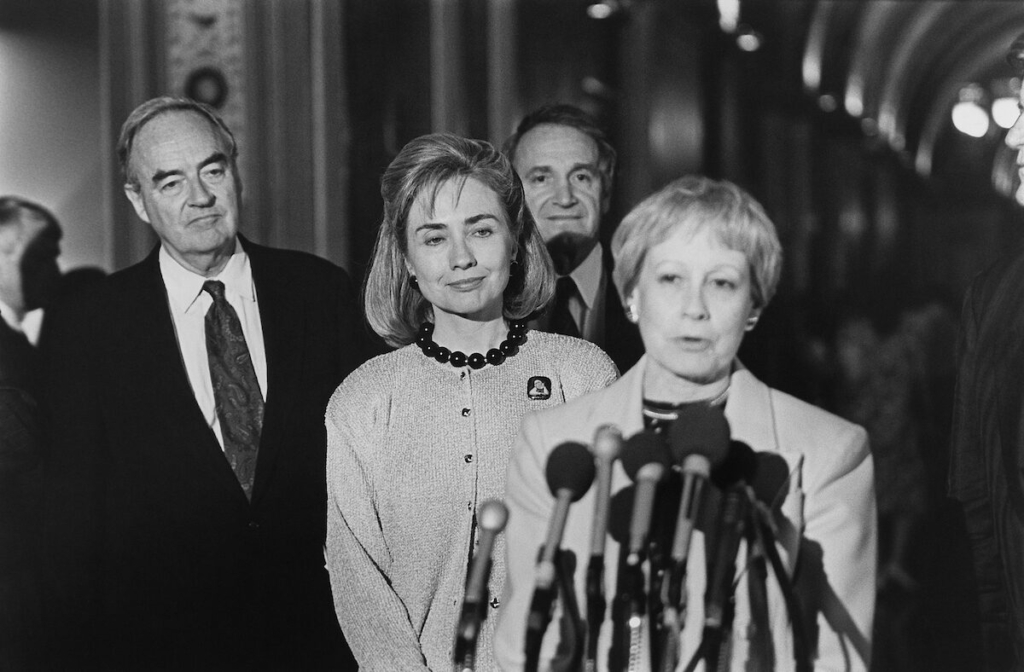
Her own legislative contributions include the Health Insurance Portability and Accountability Act of 1996, with Massachusetts Democrat Edward M. Kennedy, which made it harder for health insurers to deny coverage based on pre-existing conditions and prior group coverage.
She took a more conservative stance on other issues, opposing proposals to raise the minimum wage and require businesses to provide unpaid family and medical leave, saying she felt it was wrong to mandate benefits — to the chagrin of Democrats who mainly knew her through her moderate social stances. “I always feel like the skunk at the picnic on this issue,” she said at the time.
Kassebaum’s knack for mediating disagreements helped her earn a reputation as a bridge-builder, while her mild manner sometimes verged on discomfort with being a public figure. “Someday I’m going to hit someone over the head for calling me diminutive and soft-spoken,” she once said. “But I am.”
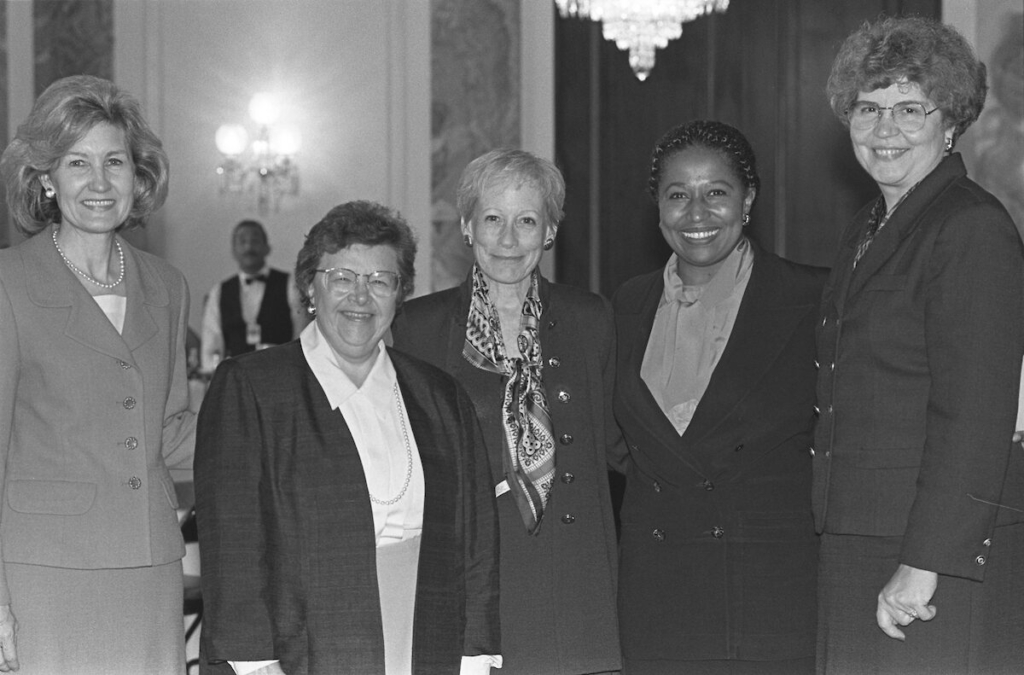
She was a trailblazer in smaller ways, as well. Irked by unwritten rules around what women could wear on the Senate floor in the early 1990s, Kassebaum and Sen. Barbara A. Mikulski, D-Md., staged a protest of sorts, wearing trousers to a weekend session and encouraging female staffers to do the same. Pantsuits soon became the norm.
In 1996, Kassebaum married Howard H. Baker Jr., the former Senate Republican leader from Tennessee, creating a true Washington power couple. That same year, she announced her retirement from the Senate, saying she had wanted to spend more time on other challenges, “including the challenge of being a grandmother.” The couple lived for a time in Japan, where Baker served as ambassador under President George W. Bush.
Toward the end of her life, Kassebaum’s ties to the Republican Party under President Donald Trump had begun to fray. She called for Trump’s impeachment after the Jan. 6 attack on the Capitol, The Washington Post reported, and endorsed several Democrats, including Kelly for governor and Kamala Harris for president.
Members of the current Kansas delegation in Congress fondly remembered Kassebaum over the weekend, including Republican Rep. Derek Schmidt, who worked for Kassebaum for five years on Capitol Hill.
“Senator Kassebaum introduced this kid from a small Southeast Kansas town to opportunities for public service I had not known possible,” Schmidt said on social media.
GOP Sen. Jerry Moran said he campaigned for her in multiple Senate races, calling her a “friend and encourager” who “was never afraid to challenge me in our conversations.”
“Senator Kassebaum’s time in public service embodied the institution of the U.S. Senate at its best,” Moran said.