Top Dems, voting groups gear up for potential midterm ‘emergency’
Top House Judiciary Democrat warns of immediate legal action
Some congressional Democrats and voting-rights advocates are taking President Donald Trump’s not ruling out a national emergency declaration around November’s midterm elections seriously and literally.
Trump raised eyebrows last month during an interview with conservative commentator Wayne Allyn Root, who had suggested to the president that he could simply declare a national emergency before the midterms if the Senate does not send him the SAVE America Act, a GOP-crafted elections package.
“If you do this in the next month, we will get photo ID, proof of citizenship and a limit to mail-in ballots, and you don’t even need the Senate’s help,” Root said to the president. The president interjected with this: “Let me just say that stranger things have happened, OK? I’ll leave it at that.”
The reality television host-turned-president understands the value of a cliffhanger, routinely skirting decisive statements and answers to reporters’ questions for vague ones. But some Democratic lawmakers and aides, as well as voting-advocacy leaders, are sounding alarm bells.
“Well, stranger things really haven’t happened than somebody trying to cancel midterm congressional elections. We had midterm elections in the middle of the Civil War. We had them in the middle of World War II,” House Judiciary Committee ranking member Jamie Raskin said Wednesday. “It would be extremely strange if the president declared non-existent emergency powers to cancel an election that he has no control over.”
The Maryland Democrat, who would take the gavel of the powerful oversight panel should his party win control of the chamber this fall, said his party’s “first immediate step” would be to “go to court to block it.”
“More than 80 percent of the cases against Trump’s lawlessness have succeeded when going to court. And it’s so blatantly obvious that he’s just frustrated because his polling numbers have collapsed, his SAVE [America] Act wasn’t passed, and he’s looking for a way to derail the election,” he added.
The former chairman of the Judiciary panel, New York Rep. Jerrold Nadler, on Wednesday sounded a similar note to Raskin.
“With him, you don’t know — he may try to do something. I don’t think he’ll get away with it, but he could try to do something,” the retiring Democrat said. “He may try to send the National Guard to polling places. I think we would get a court order against that very quickly, but that would be on Election Day because you wouldn’t know about it before.”
One Senate Democratic aide said lawmakers on that side of the Capitol also have taken team Trump’s midterm threats seriously.
“It wouldn’t be surprising at all if this president was to consider that kind of an action,” said the aide, granted anonymity to be candid. “It wouldn’t be surprising, either, if the courts do block this Postal Service rule.”
That was a reference to a proposed Trump administration rule that would allow the agency to require states to upload voter rolls — and the Postal Service to weed out ballots addressed to individuals not on those rosters. Trump administration officials have said the proposed program is needed to ensure individuals in the country illegally do not vote by mail.
California Democratic Sen. Alex Padilla’s office recently briefed reporters on the most likely administration midterms moves, cautioning Trump foes to not write off those in the president’s orbit who have pushed for a pre-midterms emergency declaration as having no influence.
‘Be ready’
One director of a voter-advocacy group, who requested anonymity out of concern about retaliation, predicted Trump will float a national emergency again before the election and that “There is some merit in not inflating everything this president says into something that could further confuse or scare voters. … But we need to take all his threats seriously and be ready.”
Trump issued a dozen national emergency orders during his first term, including one intended to trigger automatic sanctions on foreign-based individuals or entities deemed to have interfered in an American election. He already has signed that many during his second term, including one last week intended to block the purchase of bulk power system equipment that would pose a national security risk.
Washington Democrats and state attorneys general are coordinating to counter White House voting restrictions, congressional and outside sources said.
Multiple Senate sources said a Democratic elections task force has been talking to state AGs, especially in states with competitive congressional races.
“It’ll take more than litigation, but we have to be ready to litigate, where that’s needed,” the voting-advocacy group director said. “Since a lot of this, we think, will play out at the local and state level, that’s where we’ll go to court.”
Several sources suggested Trump is motivated to keep committee gavels away from Democrats because of the investigative powers that come with them — something the president has noted himself.
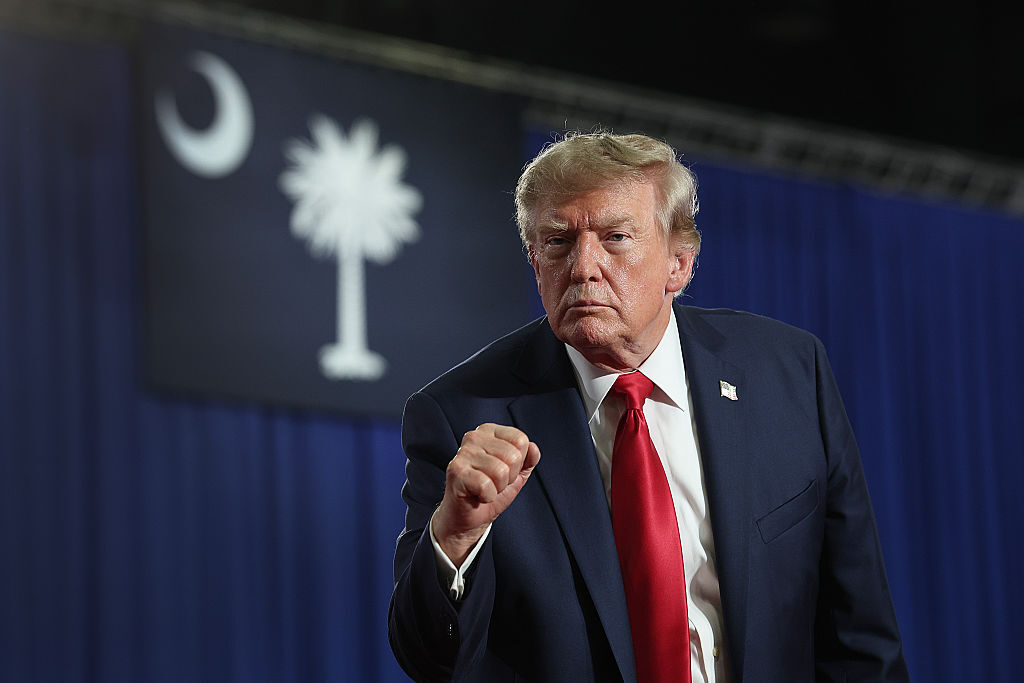
As he put it at an Aug. 21 rally in Myrtle Beach, S.C., for GOP Sen. Darline Graham, “I’m going to be impeached. … They have no idea why.”
To that end, Raskin, who served as an impeachment manager in Trump’s second impeachment trial, was asked Wednesday whether a midterms emergency order would trigger impeachment proceedings in a Democratic-run House.
“You know,” he said, “there’s a long list of potentially impeachable offenses.”