Trump on the ballot: Will it help Republicans?
The party’s candidates need a fuller closing argument
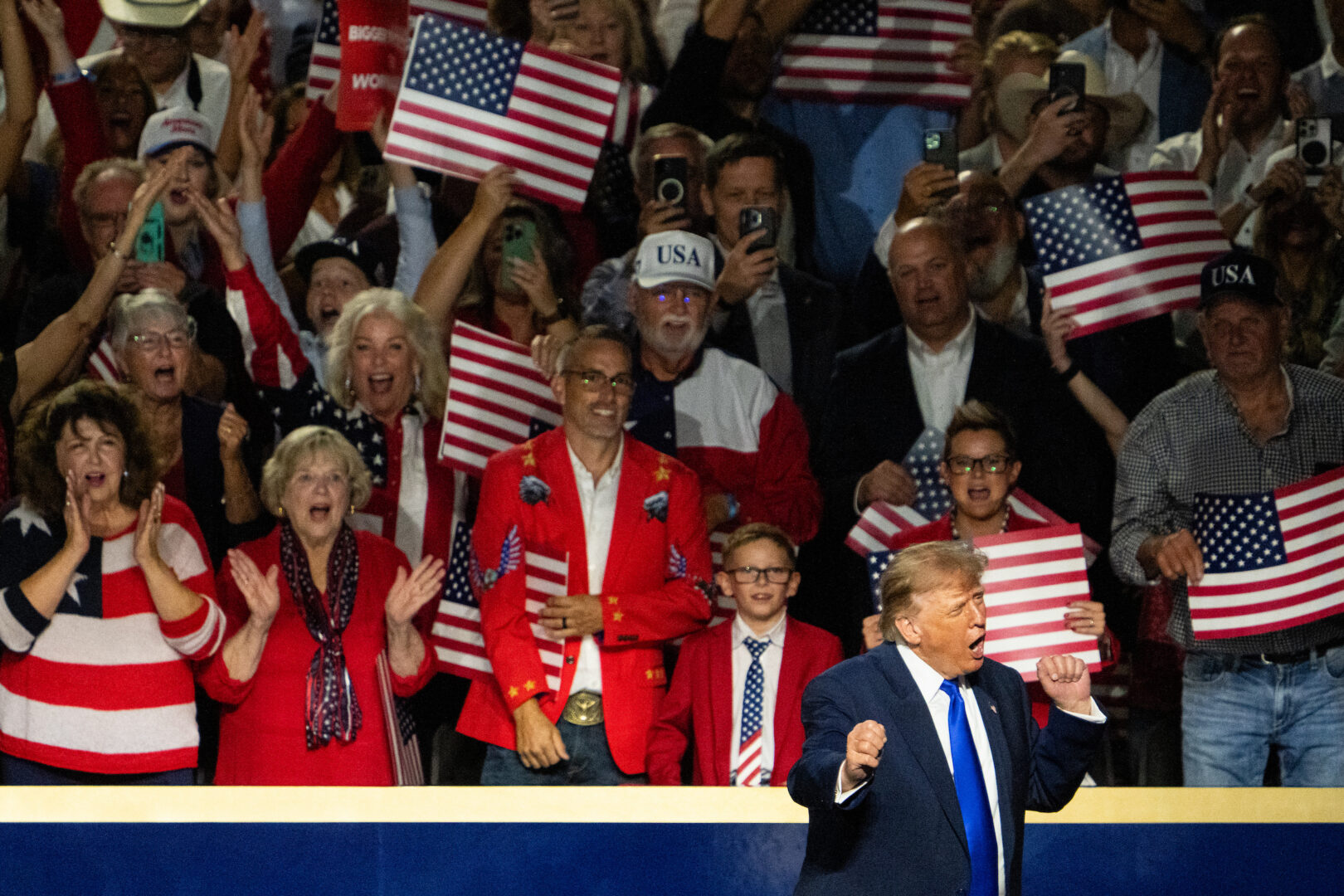
At last week’s GOP convention, President Donald Trump told the enthusiastic crowd he had a problem. He told them that when he’s not on the ballot, they say his people don’t show up in big numbers to vote for other Republicans, putting their majorities in the House and Senate in jeopardy. He followed that up by imploring his supporters, “I’m asking you to pretend that I’m on the ballot … just one more time.”
With that, Trump made the upcoming midterm elections all about him. Was it a sound strategic decision made by Trump and his team? Was it simply a nod to the reality that midterms, historically, are a reflection of voters’ view of the sitting president and the job he is doing? Or in this case, given Trump’s sinking job approval, an attempt to make the best out of a challenging situation?
This election is all about Trump, and he seems fine with that. But will a focus on the president rather than congressional Republicans’ legislative record help or hurt their chances?
There are two ways to look at it. First, analyzing previous elections, how did Republican candidates do with Trump on the ballot versus when he was not? Second, how will his job approval numbers affect the election outcome?
The critical element in Trump’s win in 2024 was his ability to carry all seven presidential battleground states. In five of those seven states, however, there was also a U.S. Senate race on the ballot: Arizona, Michigan, Nevada, Pennsylvania and Wisconsin. Out of those five races, only one Republican managed a win, Dave McCormick, who squeaked out a 0.2-point victory in Pennsylvania.
The four GOP losing candidates were facing better Democratic candidates who ran better campaigns than the Democratic nominee, Vice President Kamala Harris. But, more important, McCormick was the only candidate of the five who won independents, in this case, by a 3-point margin.
As an aside, one might also wonder how Harris lost four competitive states where Democratic Senate candidates won.
In the last two elections, we saw that House races weren’t immune from this political dichotomy. In 2022, House Republicans won 222 seats. In 2024, with Trump on the ballot, they won 220. This was despite voter unhappiness with President Joe Biden’s economic policies. Exit polls found that 75 percent of the electorate said inflation caused a moderate or severe hardship to them or their families. Yet Republicans lost two seats.
A look back at previous elections provides some insight into the impact of presidential job approval on midterm elections. Over the past three decades, the House majority has flipped five times — in 1994, 2006, 2010, 2018 and 2022. In each of those elections, the incumbent president’s party lost the House; and in every case, the sitting president’s job approval was underwater.
Across those five, exit polls showed the presidential job approval ranged from 43 percent to 45 percent. The disapproval ranged from 52 percent to 57 percent. The best of those was Trump in 2018 (45-54) and the worst was George W. Bush in 2006 (43-57). What should be most concerning for the Trump team today is how much lower his approval is than previous presidents’ ratings.
Trump’s job approval, according to the Real Clear Politics average, has been underwater since mid-March of 2025. On Tuesday, his current RCP average job approval overall was 40 percent, while 57 percent disapprove.
The president’s economic numbers, which are the most important to voters, particularly inflation, reflect Republicans’ biggest challenge. His job approval on the economy is 35-61, and on inflation, 29-68, according to the RCP average.
To buck history, Trump needs to overcome voter dissatisfaction with the economy. That will take an environment where voters can walk into a grocery store or fill up their cars believing that “I am better able now to handle these prices.”
Given voters’ current view of the economy, that’s a tall order. There is no doubt that Republicans have slipped since the November 2024 election. Fortunately, while voters may be unhappy with the economy, they also don’t believe Democrats have produced any real policies to put the economy back on track. Democrats have talked a lot about affordability but have offered only dated and demonstrably ineffective solutions to improve the economy.
People understand that somebody has to pay for free stuff, whether it’s child care, college, health care or groceries. Hyperbole isn’t a strategy any more than hope and tired promises voters have heard before.
But the same holds true for the other side. Voters aren’t likely to be persuaded by the president’s surprise $5,000 promise to every American adult if the GOP retains control of the House and Senate. Covid checks didn’t win Trump reelection.
Republicans need a closing argument based on more than “Trump is on the ballot.” It’s true that presidential elections turn out more voters than off-year elections, but increased participation doesn’t guarantee victory.
The vote for congressional House Republicans increased by 20 million votes from 2022 to 2024, yet Republicans lost two seats. Still, a bigger Republican turnout in the midterm this fall could make a difference, especially in Senate races.
Whether the “Trump on the ballot” strategy will drive enough GOP voters who usually don’t go to the polls in midterms to eke out a victory remains to be seen.
Voters need a sense of economic direction without the hype, a realistic discussion that acknowledges their concerns and offers real world solutions. People do not believe this is the best economy ever. Telling them otherwise without context or empathy only reinforces the view of many that too many political leaders are disconnected from the experiences of average Americans.
Biden is a perfect example. He tried telling voters how they should feel as he claimed economic progress that people simply weren’t experiencing. Republicans can point to some clear markers of progress and they should. Much of what was in the Big Beautiful Bill has been lost on most voters. Research shows people support the bill when they understand its provisions, from preventing a major income tax increase by making permanent the doubling of the standard deduction and keeping the child tax credit, among others.
If Republicans want to make history this fall, they need to make a better case for Republican policies because, as the president said at a rally in August, “Our country’s on the ballot.”
David Winston is the president of The Winston Group and a longtime adviser to congressional Republicans. He previously served as the director of planning for Speaker Newt Gingrich. He advises Fortune 100 companies, foundations and nonprofit organizations on strategic planning and public policy issues, as well as serving as an election analyst for CBS News.