‘The assumption is yes,’ Thune says of another leadership run
GOP Conference isn’t straying far from South Dakota Republican despite midterm angst
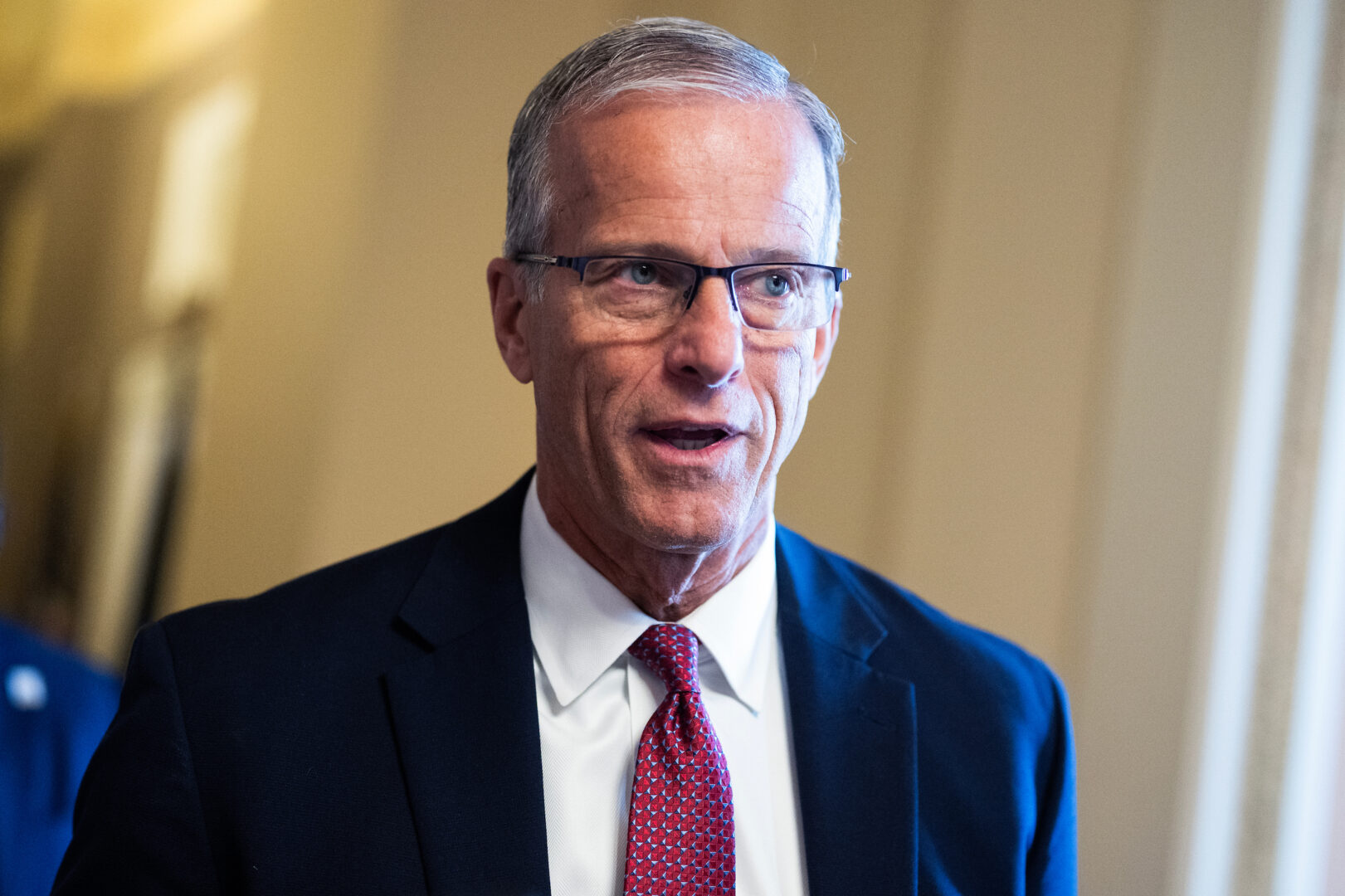
As the Senate tries to navigate its final business before the midterms, Republicans are facing another question — who will steer the ship once they’re done?
So far, they’re not straying far from their current captain, Senate Majority Leader John Thune, with no viable rival emerging as yet.
“The assumption is yes,” the South Dakota Republican said Thursday afternoon when asked if he would run again for leader in November. That internal conference election will take place after the midterms.
A GOP aide confirmed that Thune would try to keep the perch he secured in 2024, when he defeated Texas Sen. John Cornyn and Florida Sen. Rick Scott to succeed Mitch McConnell of Kentucky as the chamber’s top Republican. That was a spot McConnell had held since taking his party’s leadership reins in early 2007, making him the longest-serving Senate party leader in history, counting his time in both the minority and the majority.
Less than two years into his tenure, Thune laughed when asked if he anticipated a challenger, saying: “I don’t try and predict things like that.”
But frustration has mounted as Senate Republicans stare down a tighter-than-anticipated election map in November. In the online world of X and MAGA corners of the internet, calls to replace Thune have rung out for months, including over the voter ID bill, known as the SAVE America Act, that has stalled in the chamber. The legislation doesn’t have the votes to pass, and Thune and many in his conference have refused to blow up the legislative filibuster to sidestep a 60-vote cloture threshold.
Even when those requests came from President Donald Trump himself, Thune has insisted the math isn’t there.
Scott, a friend of the president’s, said that Trump has not floated a rival to Thune for after the midterms and that he himself was not planning on challenging him again.
“Been there, done that,” the Florida Republican said.
Wisconsin Sen. Ron Johnson, who supported Scott’s 2024 leadership bid, also downplayed any talk of challengers to Thune.
“I don’t see that in the cards right now,” he said. “I haven’t heard anything about it.”
The voter ID bill that angered Republicans’ MAGA wing is not the only hurdle Thune and other Senate GOP leaders have encountered this year. They’ve also had to deal with the war in Iran, skyrocketing diesel prices and the president’s falling job approval ratings as his messaging on affordability misses the mark with voters. But many Republican senators don’t view their party’s current predicament as Thune’s fault, even as they’re forced to defend more competitive seats than previously anticipated, including in red-leaning states such as Alaska, Kansas, Iowa and Texas.
Even if those states don’t swing to Democrats, it’s causing Republicans to spend money there rather than in more traditional battlegrounds.
Cornyn, who lost to his primary this year to a Trump-backed challenger, has a blunt assessment of who’s to blame if Republicans were to lose the Senate.
“I would look to the White House if you want to look for who’s responsible for the outcome,” Cornyn said Thursday. “I think John Thune’s done a fantastic job. He’s a good man, and he enjoys good support among the Republican Conference.”
Back in Texas, state Attorney General Ken Paxton, who trounced Cornyn in a May primary runoff, has been trailing Democratic nominee James Talarico in recent polling, including a Marist survey released this week. Democrats need a net gain of four seats to flip the Senate.
“Right now, we’re flying into some serious headwinds on the issues because the president does not believe that we should address affordability issues, which are top of mind for most voters,” Cornyn said. “You can have the best candidate in the world. You can have all the money in the world, but if you’re not running on issues that people care about, then you’re not going to win.”
That was a worry echoed by Louisiana Sen. John Kennedy, who has been on the campaign trail for GOP candidates in purple-leaning states. “I have been chasing my friend Sen. Thune like he stole Thanksgiving since we passed the One Big Beautiful Bill [to do] more on cost of living, because we haven’t done a damn thing, and it’s biting us in the ass right now.”
The Louisiana Republican said Thune has been “too cautious” trying to work within regular order and with Senate Democrats.
“He’s my friend. I love him like a taco, but he’s too cautious,” Kennedy said. “John’s going to make it to heaven before me, [but] he thinks he can always sit down with [Senate Democratic leader Charles E. Schumer] and work something out.”
Asked if anyone was planning to challenge Thune as leader, Missouri Sen. Josh Hawley said, “I can’t say that I have tracked that in terms of I haven’t asked around.”
“I haven’t heard anybody say they’re going to run against him,” the Republican added, while calling those speculations “premature.”
“I think we need to maybe try to win this election,” Hawley said, but noted that the outcome may “of course” influence the possibility of a Thune challenger emerging. “Yeah, I would think it would,” he said. “I just never pledge my vote.”
In 2024, Hawley publicly backed Cornyn in the GOP leadership election.
Senate Leadership Fund, the super PAC aligned with Thune, has raised and allocated hundreds of millions of dollars in battleground states over the past few months.
“We’re erecting a big wall around all of our candidates [and we’re] raising record amounts of resources,” Thune said.
“It’s not a great environment. There are headwinds we’re facing in all the races around the country, and so you deal with that in a couple of different ways,” he said, pointing to candidate quality and ramping up turnout in a non-presidential electoral year.
“The party out of power tends to be more enthusiastic and have more intensity. So we’re highly focused on that,” he continued. “At the end of the day, there are things you can’t control in politics. You try and control the things you can.”