Supreme Court again rejects Missouri effort to use GOP-friendly map
Ruling is a win for Democratic Rep. Emanuel Cleaver II, now favored for reelection
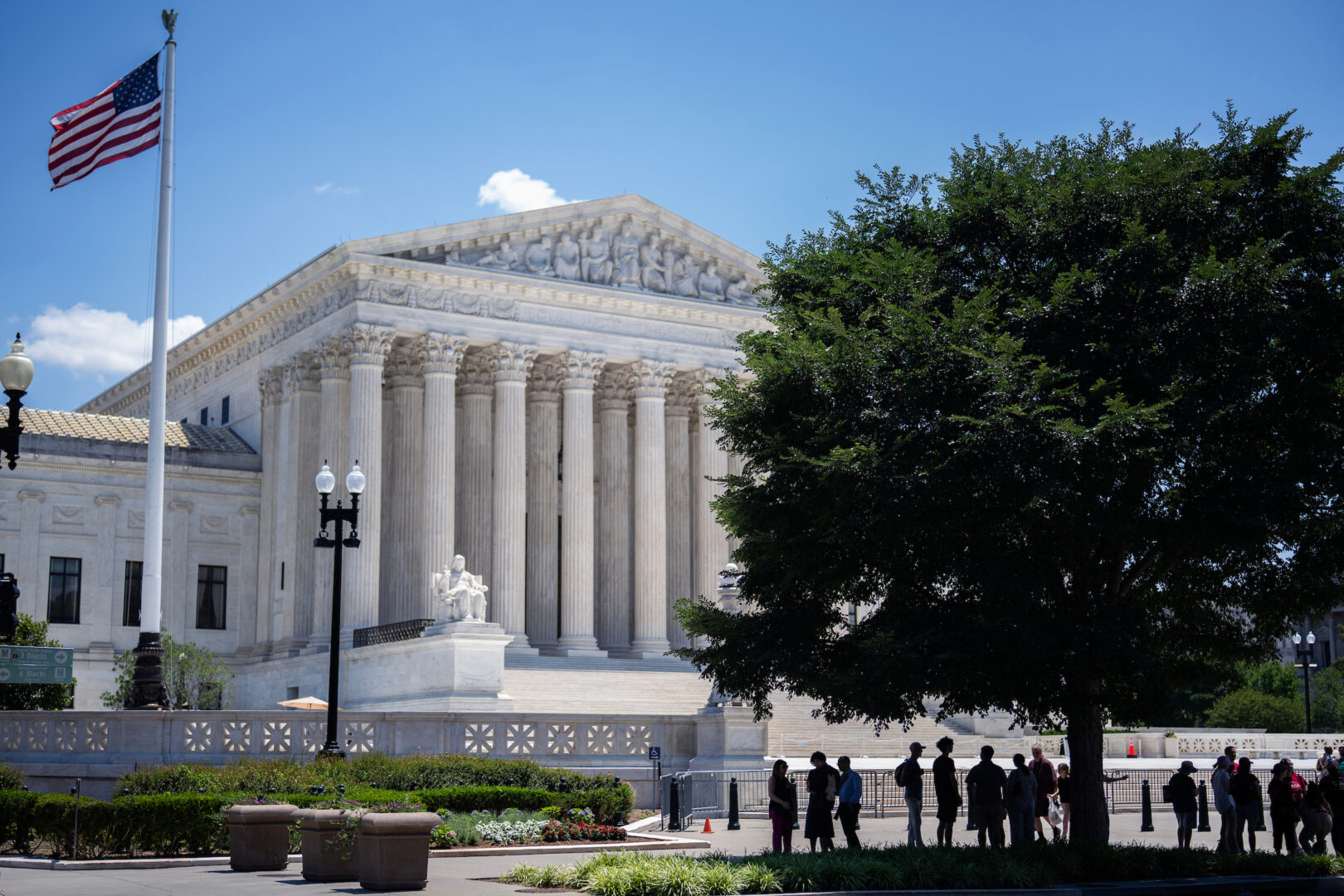
The Supreme Court on Friday effectively shelved Missouri’s effort to enact a congressional map that would have helped Republicans pick up a House seat, issuing an order that reinstated boundaries first enacted in 2022.
Friday’s unsigned ruling set aside a Monday ruling from a three-judge panel of the U.S. Court of Appeals for the 8th Circuit, which would have made the state use a map drawn in 2025 that the state used for the primary. The high court’s ruling ruling noted that it was not clear that the state was required to use the 2025 map and that the election had already started.
“At this late date, ordering reversion to the 2025 map in the midst of an ongoing election would usher in electoral chaos,” the ruling stated.
The ruling included no dissents and urged the lower courts not to again order the state to use the 2025 lines.
The group pushing the 2022 plan, People Not Politicians Missouri, filed its emergency application to pause the 8th Circuit ruling on Tuesday night. The group argued that the appellate court effectively ignored the prior ruling from the Supreme Court.
“The result is chaos on both sides of Election Day: confusion over how to conduct the election now, and uncertainty over the rules governing its results,” the application said.
Monday’s ruling from the 8th Circuit held that it would be unconstitutional to use the 2022 map, as candidates and voters had used the 2025 map for the August primary.
In their Supreme Court filing, state officials argued that it would be almost impossible to conduct an orderly 2026 election at this point; using the 2025 map would require missing a federal deadline to distribute mail ballots and using the 2022 one would open up challenges to the eligibility of candidates currently running for the House.
“Yet the honest truth is that — regardless of what this Court does — Missouri will not be able to run an orderly 2026 General Election,” the filing said.
However, the state argued that it would prefer to hold the election under the 2025 lines.
Missouri Republicans adopted the 2025 plan amid a nationwide surge in partisan redistricting. Under the new map, Republicans would have been favored to win seven of the state’s eight House seats, including the Kansas City-area district currently held by Democrat Emanuel Cleaver II.
The new lines shifted Cleaver’s 5th District from one that backed Kamala Harris by 23 points in 2024 to one that Donald Trump would have carried by 18 points, according to calculations by Inside Elections with Nathan L. Gonzales.
After the legislature adopted the map, People Not Politicians Missouri started a citizen petition to put the adoption of the map to a statewide vote. While the petition effort was pending, the state held its August primaries under the 2025 lines.
The petition group won a successful ruling from the state Supreme Court in September, which held that the 2025 map could not be used in November because of the pending ballot measure on the same map. The state high court ordered officials to hold November’s election under the 2022 map.
Republicans in the state then asked the U.S. Supreme Court to intervene but were turned down.
Separately, Republican Rep. Bob Onder, along with another GOP congressional candidate and two voters, filed a federal lawsuit against the state, arguing that federal law and the Constitution required the state to use the 2025 map because it held the primary under those lines.
Judge Stephen R. Clark of the U.S. District Court for the Eastern District of Missouri ruled in Onder’s case that Missouri must use the 2025 lines because of the primary.
Days later, the Supreme Court paused that ruling and sent it back to the lower court pending final decisions. On Monday, the 8th Circuit issued that final decision, ruling that Missouri must use the 2025 lines, with similar reasoning.
Onder and the others who brought the lawsuit defended the 8th Circuit decision in their Supreme Court filing Wednesday. They argued that the Constitution requires a “continuity of constituency” between a primary and general election, so that voters select a candidate who is eligible to represent them.
“More than 1.4 million Missourians could not vote for the congressional district nominees who will appear on their November 2026 general election ballot, and more than a quarter-million Missourians who voted in the August 2026 primary election cast a vote for a congressional district candidate who now cannot represent them,” Onder and the other plaintiffs argued.