Confessions of a political handicapper
Democrats are favored to flip the House and Senate, but more clarity would be nice
ANALYSIS — What if we got it all wrong? That’s the question that usually goes through my mind at this point in every election cycle. Because 25 years of experience in analyzing elections has made me more humble, rather than more cocky.
Political handicapping has a way of knocking people down a couple of notches. Do it long enough, and you’ll have a “miss” or two or three, whether it’s an individual race or an overall projection.
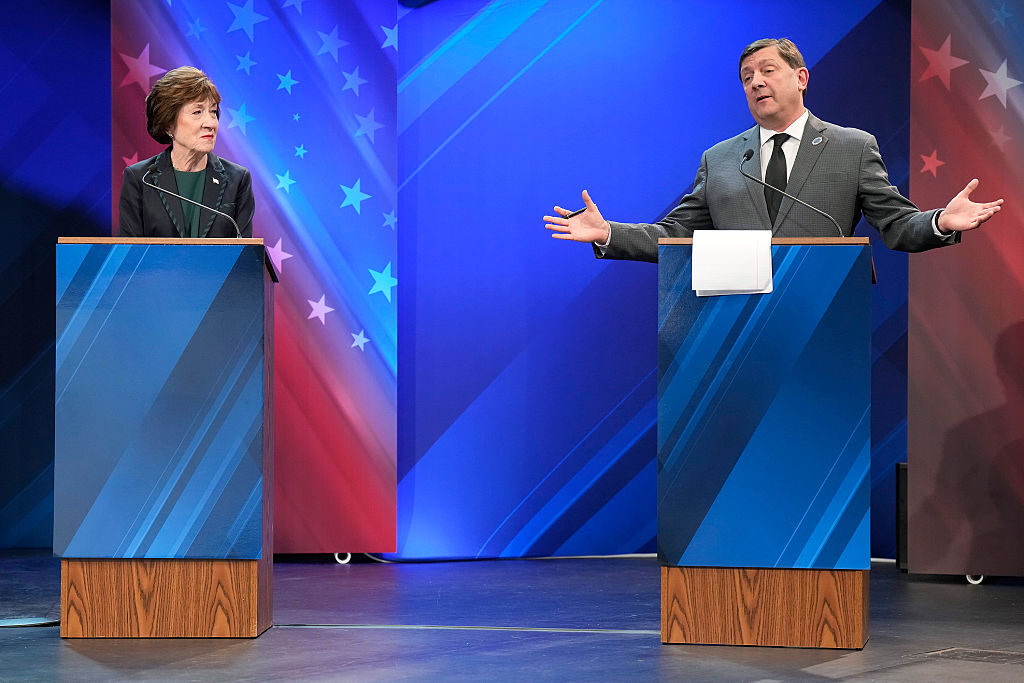
I convinced myself that Democratic Rep. William J. Jefferson of Louisiana would lose reelection in 2006 after the FBI found cash in his freezer. I believed Republican Sen. Susan Collins of Maine was an underdog in 2020. And I was wrong both times. I thought Hillary Clinton had an advantage over Donald Trump in 2016, and, like most Republicans, I thought the GOP would lose House seats in 2020. Wrong again.
There have been some highlights, including projecting the red wave in the 2010 midterms or being the first outlet to push the late Massachusetts Sen. Ted Kennedy’s seat into the GOP column in that year’s special election. But, of course, none of that guarantees accuracy in 2026.
So what will happen this year? With just five weeks to go, I wish there was more clarity.
To be clear (pun intended), uncertainty does not mean all outcomes are created equal. There’s a preponderance of evidence for a good November for Democrats. Trump’s negative job rating, high gas prices, a significant Democratic advantage in the generic ballot, an unpopular war, two years of special election results and a pessimistic electorate about the direction of the country all point to a traditional midterm in which the president’s party loses ground in Congress.
And yet the current projections by Inside Elections look modest: Democratic gains of two to four seats in the Senate and two to 10 seats in the House. That’s because the micro-level contest-specific data is lagging behind the macro-level national data. Republican and Democratic candidates are within a few points of each other in dozens of House and Senate races around the country.
It’s likely that the race-by-race polling will catch up with national trends in the final weeks, demonstrating that the Republican spending advantage isn’t changing the trajectory of enough elections. And as Democratic candidates start to put some distance between themselves and their GOP opponents, our ratings will follow suit.
As I wrote earlier this month, 2026 is starting to feel like 2006, when the bottom fell out from under the Republican majority in the final two months and Democrats rode a wave of voter frustration into House and Senate control. I also remember how GOP strategists admitted after the election that their fundraising advantage didn’t really matter because frustrated voters weren’t interested in listening to their attacks on Democratic candidates.
So why the uncertainty this time around? Because some of the states and places where Democrats have a chance to win are places the party hasn’t won in years, or even decades. And because polls have underestimated Republican support in the past.
But it’s also possible that surveys are underestimating Democratic support this cycle. If pollsters are trying to fight the last war and are overcompensating for previous “misses,” then the polls could be missing the widespread voter frustration with the economy and direction of the country. Or pollsters could be assuming a level of GOP turnout that never materializes.
The 2016 presidential election outcome still casts a shadow over the political handicapping world and feeds the narrative that Trump is immune from electoral trends. But that ignores the fact that most political rules continue to apply.
When Trump was an unpopular president in 2018, his party lost a net of 41 House seats. When an unpopular president ran for reelection in 2020, he lost. In 2022, with an unpopular Democratic president in the White House, Democrats lost House seats in the midterms. And when the vice president of an unpopular sitting administration ran in 2024, she lost.
While each election has unique circumstances that are worth considering, it’s probably best not to overcomplicate things. Unless there’s a dramatic fundamental change in the dynamic, Democrats are on pace to capture the Senate and House majorities in November.