Madam speaker, madam president: Ansari looks back on her first congressional job
She interned for Nancy Pelosi back in 2012 before getting elected herself
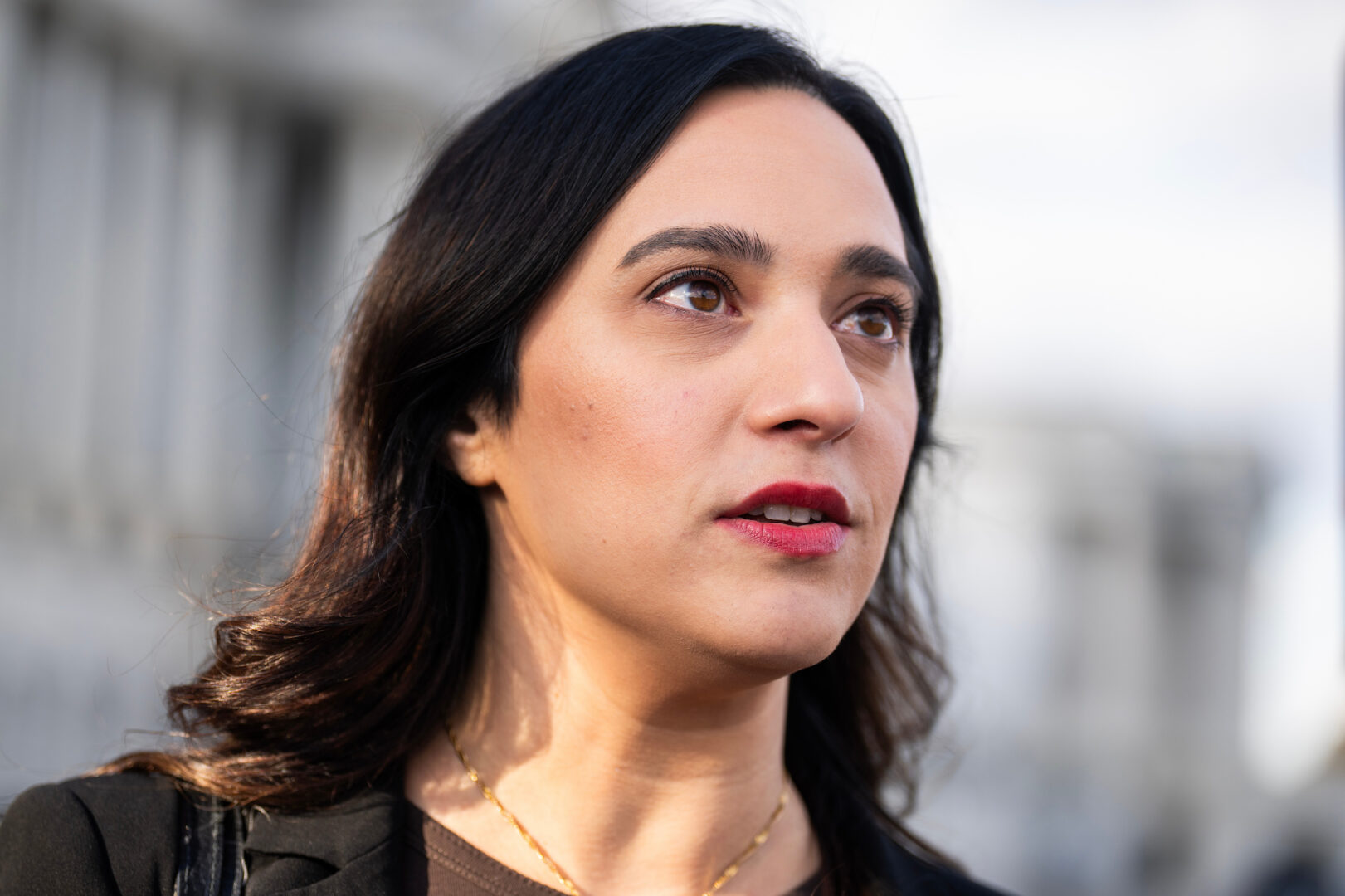
Yassamin Ansari’s first term in Congress coincides with the last of Nancy Pelosi, her former boss.
“It’s such a shame that I didn’t get to work here when she was speaker, because I have heard such incredible things,” says Ansari, a progressive Democrat from Arizona. “And I got to experience such a tiny glimpse of it.”
Back when she was a college student at Stanford University studying international relations, she would hop in her car a couple days a week and drive north to San Francisco, where she interned in Pelosi’s district office, mostly answering the phones.
Just 12 years later, Ansari was elected to the House herself, after stints with the United Nations and on the Phoenix City Council. At 34, she’s currently the youngest woman, a rare agnostic (“I’m part of the Freethought Caucus,” she points out) and one of just two Iranian Americans serving in Congress.
That’s brought her extra attention in her freshman term, especially as President Donald Trump defends his administration’s ongoing war in Iran.
“I’ve always attempted to talk about Iran with nuance,” she says. “It’s clear that this regime is violent, brutal … but at the same time, Trump’s illegal war in Iran has only entrenched them.”
Overlapping with her former boss in the House has been a bit “surreal,” she said, describing the speaker emeritus as “really attentive to everybody and very supportive” even as she prepares to retire. In an interview with Roll Call this month, Ansari looked back on her early internship and offered her take on generational change.
So what does Pelosi call her now? “Madam President,” Ansari says with a laugh, a nod to Ansari’s role as class president for freshman House Democrats.
This interview has been edited and condensed.
Q: What was your first interaction with politics?
A: I would say President Obama’s campaign in 2008. I was in high school, and after he won the primary, I started volunteering with the Arizona Democratic Party and would go as many days as I could after school.
Q: What made you want to volunteer?
A: I’m somebody who grew up mostly during the Bush presidency, and I remember in my childhood and the 9/11 era things feeling very scary and politics feeling very doom and gloom. Being the daughter of immigrants from Iran, and the Middle East being the focus and a source of fear for the United States, I felt it represented such a shift in politics — going from negative to hopeful.
I just got so excited about it all, and at the election night victory party in downtown Phoenix, I remember bursting into tears and screaming and celebrating. And then that night, I went home and watched the speech the president gave in Chicago over and over, and I would watch it again for years in the future.
The next eight years represented that same feeling for me. From the UN side of things, I got to work on major policies like the Paris climate agreement and see that vision come to life.
Q: Before you went to work for the UN, you interned for Nancy Pelosi during college. How did you land that role?
A: I was a nerd and ambitious, and I applied for many, many things. I was studying international relations, so I wanted to learn more about domestic issues and federal politics as well. Because I had a car at Stanford, I knew I’d be able to drive up to her district office in San Francisco a couple times a week. I got the internship and ended up staying through the spring of 2012.
The woman who ran the internship program was awesome and ran a tight ship. It was really serious, and we had training. The biggest part of my job was answering phones, and then someone recognized I was a decent writer, and so I got a lot of the letter responses assigned to me to draft.
Q: What was it like answering the phones?
A: I see now that it’s an important job, of course, because you are the first line when people call. But working for Speaker Pelosi, [who at the time was serving as minority leader], it also meant getting a wide range. Someone would call daily to say he knew she had nuclear weapons under her house or something.
I’ve since learned the threshold for threats is higher than you’d expect, and unless someone says, “I’m going to do XYZ” and makes a very direct threat at you, there’s not much that Capitol Police can do.
Q: What are some full-circle moments you’ve experienced now that you’re a member yourself?
A: I serve as a freshman class president, and last year I asked [Pelosi] if she would take part in a private dinner with our class, and she immediately agreed.
She called me the day after, and said it was really great and she wants to do another dinner — but this time she’s gonna have a special guest. I didn’t know who the guest was until the day before. I was walking off the House floor, and I hear her voice saying “Madam President, Madam President,” and I was taken aback because it’s still surreal that she’s a colleague.
She told me who the guest would be: “It’s Barack Obama.” She’s like, “You can’t tell anyone, but you need to make sure everyone comes, because no one’s gonna want to miss this.”
Q: You’ve talked about your parents growing up in Iran. What’s it like being one of the only Iranian Americans in Congress during the current war?
A: It’s been incredibly challenging. I grew up always being vehemently opposed to the regime in Iran that led to my parents not being able to return. But I also grew up during the 9/11 era and think U.S. foreign policy in the Middle East needs to change, and so I was against the war from the beginning.
I think Donald Trump made a lot of empty promises to Iranians directly in the aftermath of really massive and historic protests that took place in Iran in January — and specifically, he said on social media that help is on the way for Iranian people. And a lot of people, both inside and outside of the country, believed him.
Q: You’re part of Congress’ youngest cohort. Some older, more established Democrats are starting to relinquish their seats. What are you hoping to see from that generational shift?
A: More fearlessness and more willingness to make our government work for people and support transformational change. I think people are really tired of slow incremental change in the United States and excuses as well. We’ve seen that very clearly in New York City and with Zohran Mamdani as mayor. He had a very ambitious platform, and he is literally delivering on all those things — and there’s no reason we can’t do that in Congress.
Q: What lessons from the old guard and your former boss do you think are most valuable today?
A: Discipline and focus. During the discussion that took place with President Obama and Speaker Pelosi at that freshman class dinner, they really detailed how the Affordable Care Act came to life and how challenging it was at the time, and how they even struggled with so many Democrats.
Sometimes when you look back now, you think, “Oh, well, that was easy” or “We didn’t go far enough.” I think it’s important to remember that the wins were historic and monumental at the time, and took a lot of discipline and hard work and persistence to get there.