Bill easing seniors’ wheelchair upgrade costs clears Senate
The voice vote was one of the Senate’s last acts before recessing for the midterms.
Legislation reversing a decade of Medicare payment policy that made it too expensive for many seniors to buy ultra-lightweight manual wheelchairs is on its way to President Donald Trump’s desk after the Senate quietly cleared it late Wednesday night.
As one of the chamber’s last acts before adjourning for the midterm recess, the Senate by voice vote cleared the bill from GOP Reps. John Joyce of Pennsylvania and Vern Buchanan of Florida, which had passed the House in July, also by voice vote.
Due to a 2016 change in billing policies made by Medicare Part B’s contractors that process durable medical equipment payments, seniors who wanted to buy the lighter wheelchairs had to pay the full cost upfront and then seek reimbursement later.
This made it cost-prohibitive to the point that Medicare beneficiaries simply wouldn’t buy the lighter wheelchairs made with carbon fiber or titanium bases, which advocates say provide greater health benefits by reducing the strain on users’ shoulders and arms.
Under Part B, beneficiaries are responsible for 20 percent of a wheelchair’s cost after meeting an annual deductible with Medicare paying the rest. That policy limited out-of-pocket wheelchair expenses to a few hundred dollars on average — but not so for the upgraded models, which can cost several thousand dollars apiece.
The bill that cleared Wednesday fixes that problem by creating separate billing codes for carbon fiber and titanium wheelchairs. That means seniors who want to buy the lighter models would pay only the upfront difference between what Medicare pays for a standard wheelchair and the more expensive product.
To help buyers understand what they may be on the hook for, the measure allows the Centers for Medicare and Medicaid Services to require wheelchair suppliers to send notices to beneficiaries buying or renting the upgraded models, letting them know what’s expected.
Medicare isn’t out any money as a result, because any additional costs would be borne by the beneficiary, not the government. Before House passage in July, the Congressional Budget Office estimated the bill would have no impact on the deficit.
“This commonsense approach preserves the Medicare Program’s fiscal integrity while ensuring that beneficiaries who would clinically benefit from lightweight wheelchair technology are no longer denied access because of an overly restrictive administrative interpretation,” a coalition of supporters wrote to congressional leaders in August.
Groups backing the bill ran the gamut, including the American Association for Homecare, Amputee Coalition, Christopher & Dana Reeve Foundation, United Spinal Association and many more.
Sen. Marsha Blackburn, R-Tenn., is that chamber’s lead sponsor of the companion bill. Two major manufacturers of ultra-lightweight wheelchairs — Numotion and the U.S. headquarters of Permobil, which is owned by a Swedish investment firm — are based in Tennessee, where Blackburn is favored to win the governorship next month.
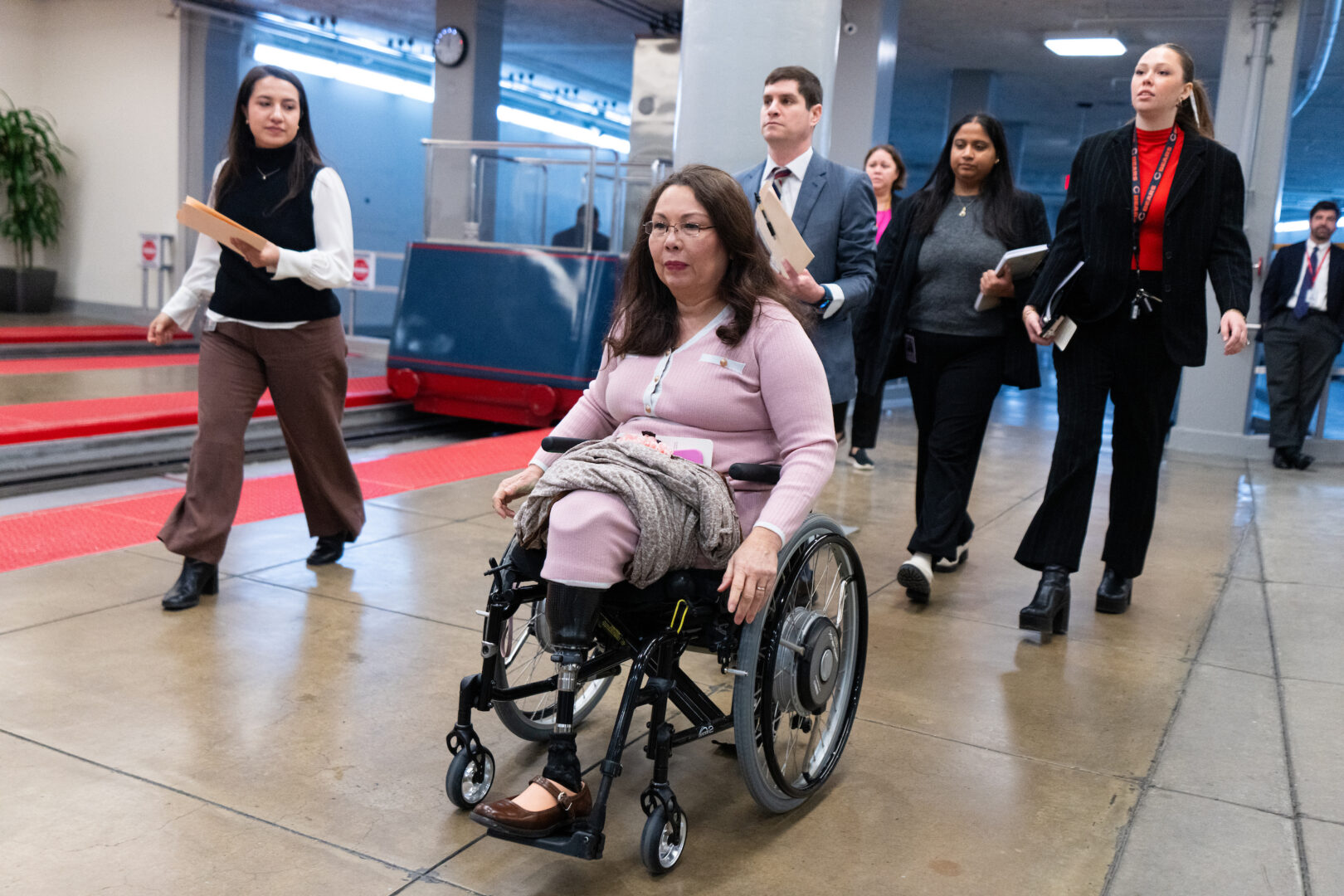
Blackburn’s co-sponsor is Sen. Tammy Duckworth, D-Ill., who uses a wheelchair to get around after losing both legs while serving as a helicopter pilot during the Iraq war. Another wheelchair manufacturer, Medline Industries, is based in Duckworth’s home state.
Numotion, Permobil and Medline are members of the home care association and also listed the wheelchair legislation as among the bills they’ve been individually lobbying on, according to disclosures.
While the bill didn’t see any opposition as it whisked through Congress this year — including a 45-0 vote in the House Energy and Commerce Committee — at least one hint of concern emerged during debate.
Energy and Commerce ranking member Frank Pallone Jr., D-N.J., pointed out that the high cost of the upgraded wheelchairs would likely price out many seniors even with Medicare picking up more of the tab up front.
“Mr. Speaker, while I support this bill, I am concerned that the bill only helps higher-income seniors who can afford to pay out of pocket for these additional upgrades beyond what is covered under the Medicare program,” Pallone said. “The universality of the Medicare program and the fact that all beneficiaries have access to the same benefits is an important principle in my opinion.”