The anthrax attacks, 25 years later
Senators and staff remember a ‘chaotic, confusing, anxious’ period in 2001
When David Malet arrived at his job on Capitol Hill on Oct. 15, 2001, some semblance of normalcy was just starting to return after the terrorist attacks of 9/11.
The flags were back at full-staff. Things were calming down, even as reports simmered around the country about mysterious envelopes sent to media outlets through the mail.
But the panic and uncertainty came roaring back that day in then-Senate Majority Leader Tom Daschle’s office, where Malet was working as a research assistant. An intern opened a letter purportedly from a fourth-grade class, and white powder came spilling out.
“Capitol Police had already responded to a couple of false alarms already,” Malet said. In the moment, it was hard to tell if the letter was just “another practical joke.”
“There wasn’t an immediate lockdown protocol” as first-responders arrived, he recalled. Instead, staffers in many other parts of the building continued their work, though the air ventilation system was cut off — made all the more uncomfortable by the “fairly warm day.”
The answer came soon enough: This was no joke. It was the deadly bacteria that causes anthrax.
Now, 25 years later, some who worked in the Hart Senate Office Building are reflecting on how lucky they truly were. Two postal workers died after the letter to Daschle passed through a mail sorting facility in Washington, D.C., along with another anthrax-filled envelope that was addressed to then-Sen. Patrick J. Leahy, D-Vt., but never reached its destination.
In the end, five people were killed and at least 17 sickened overall in the 2001 anthrax attacks. None of those were workers at the Capitol. But in those tense days and weeks, the entire complex was on edge.
‘Guinea pigs’
Back then, Republican Sen. Todd Young of Indiana was a young staffer who had recently landed a job with then-Sen. Richard Lugar, whose office was also in Hart. “Blessedly, that did not happen,” he said of more people falling ill. “I feel as though we were a bit lucky.”
For Daschle, the South Dakotan who led Senate Democrats for 10 years, it was both unexpected and not. He had been following the news about anthrax sent to NBC’s offices in New York and assumed “it wouldn’t take much for Congress to be another target.”
“But I was really surprised it was me. You’re never ready for something like that,” he said.
Daschle described arriving to work a little late that morning after a doctor’s appointment and hearing of the incident from his chief of staff. At the time, the majority leader was talking daily with then-President George W. Bush in the wake of the 9/11 attacks.
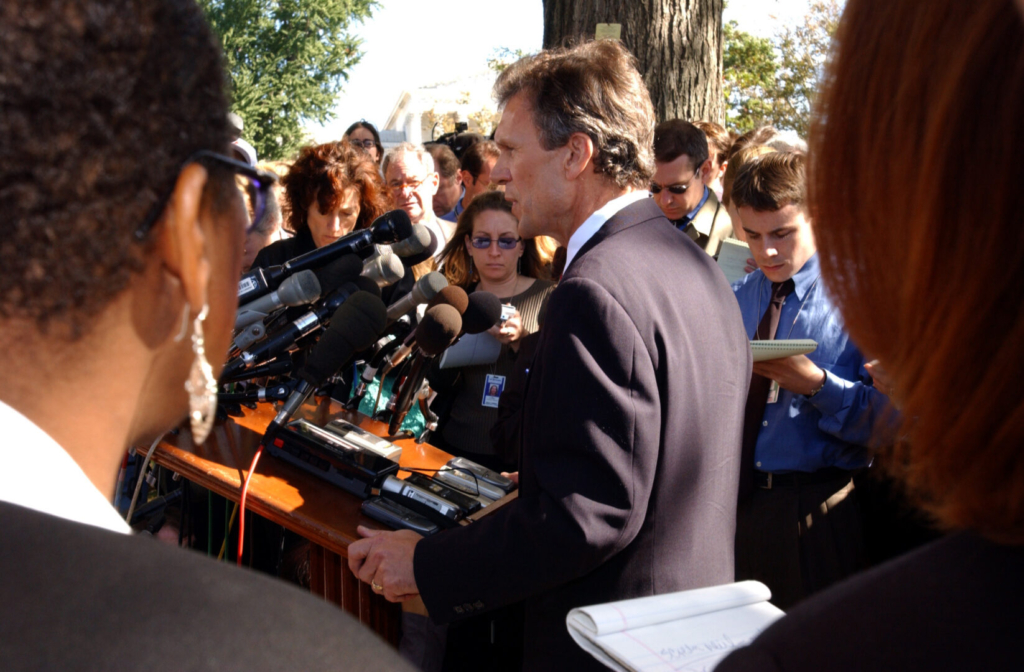
“I just talked to Leader Daschle. His office received a letter, and it had anthrax in it,” the president told reporters at the White House. “The letter was field tested. The staffers that have been exposed are being treated.”
Bush “hadn’t really thought about what would happen if he announced something. So he actually was the first one to announce publicly that this attack had occurred, and of course there was then the rush of media” to the Capitol, Daschle said. “I felt bad because I was immediately trying to call all the families of the staff who were affected, just to let them know, and I wasn’t able to get through more than a few of those before it became national news.”
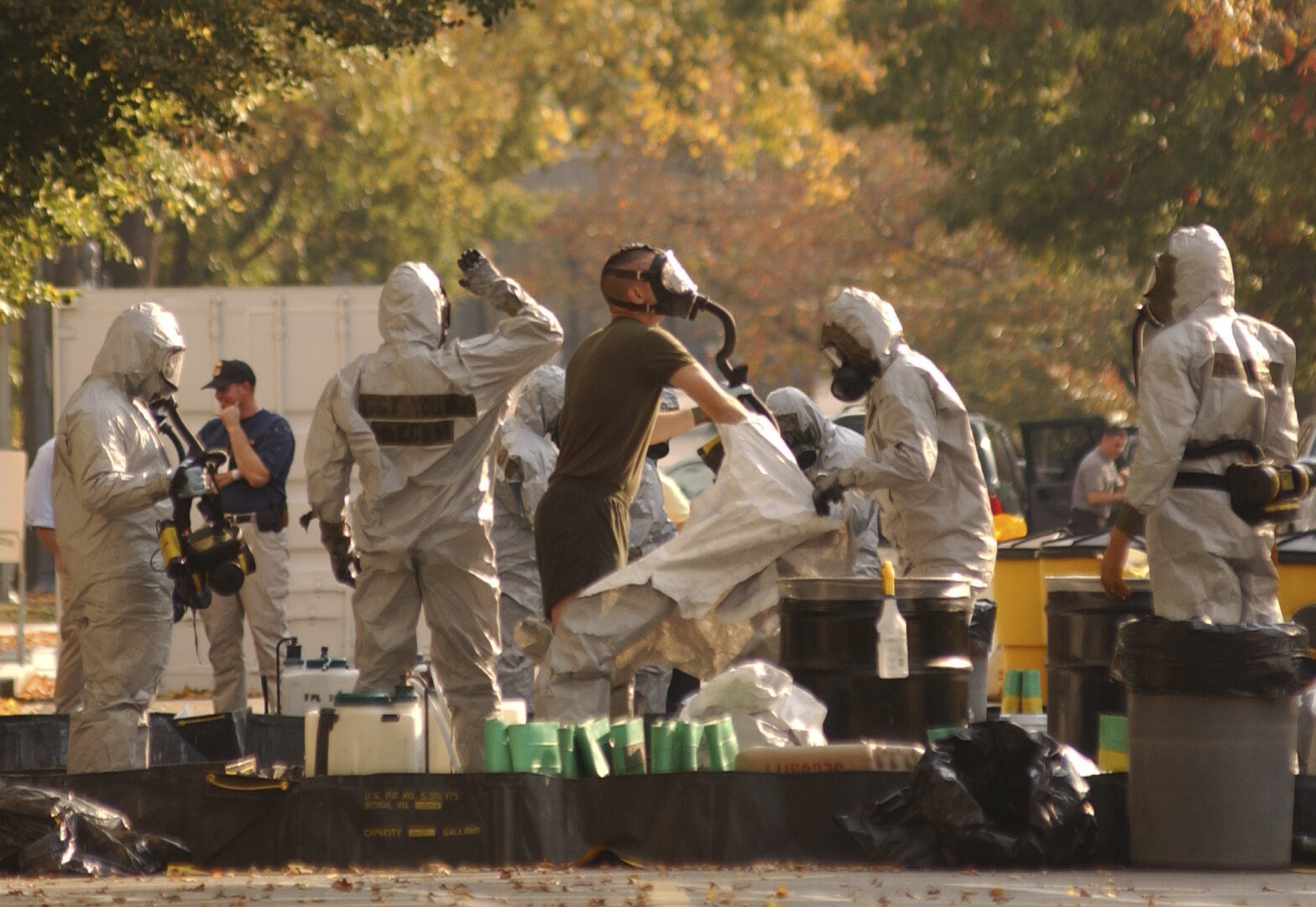
The period afterward was one Dachle described as “chaotic, confusing, anxious.” He recalled “people being asked to put their anthrax-exposed clothing in a black garbage bag and bring it into the Capitol for proper disposal.”
“We all met the next day with these black garbage bags filled with anthrax-laden clothing to be disposed of. We kind of felt like refugees,” he said.
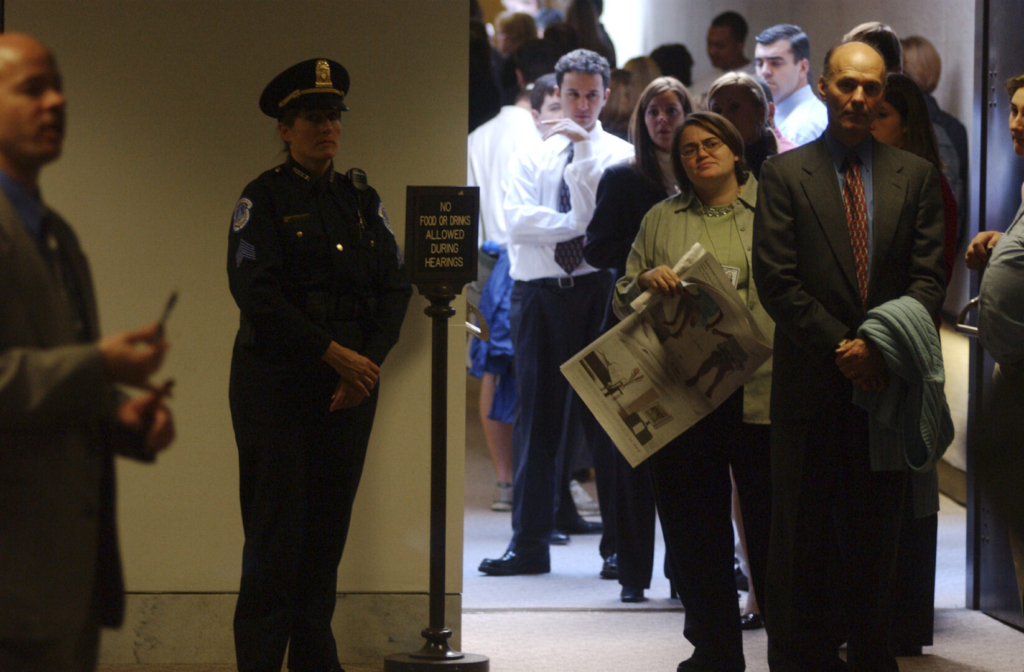
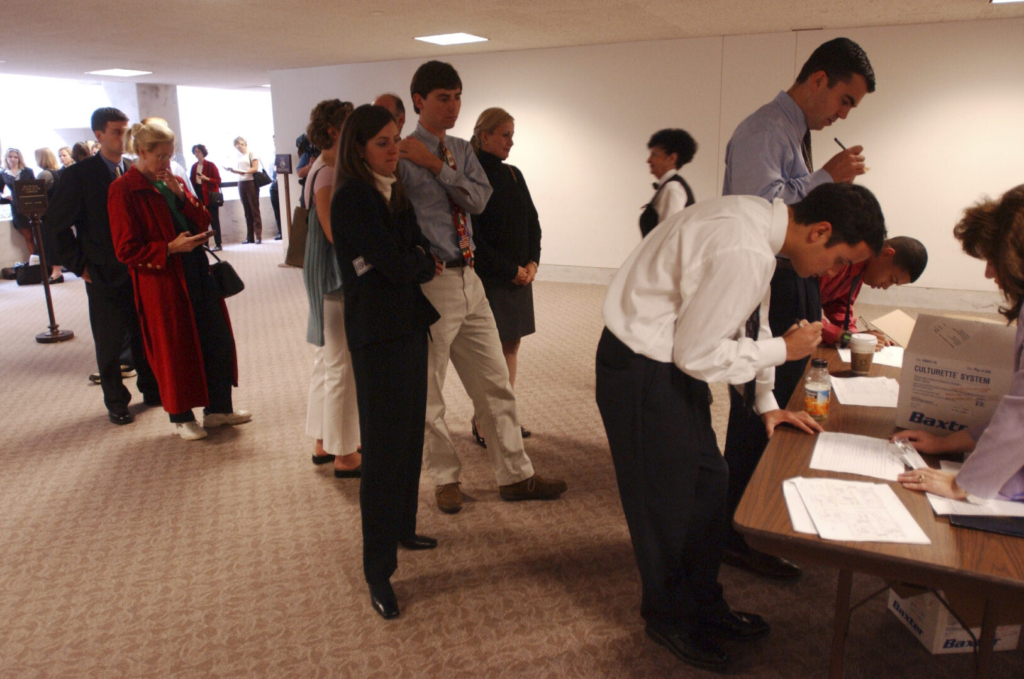
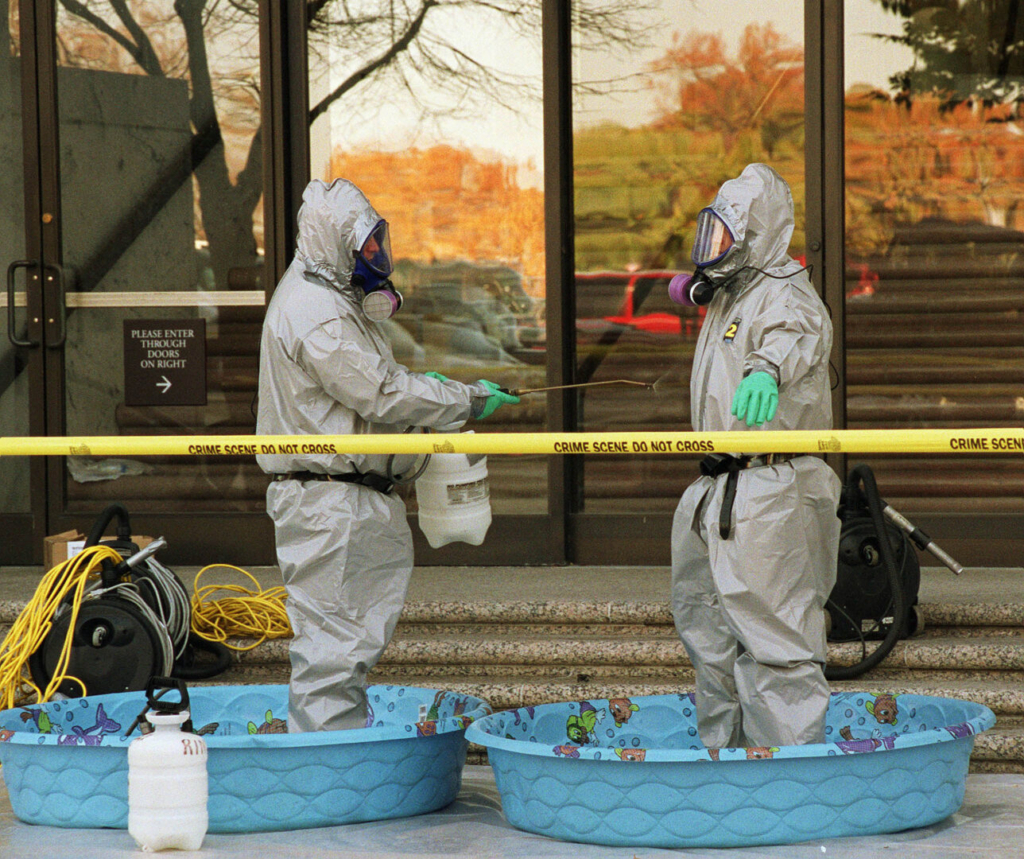
Lines snaked into the halls as people waited for nasal swabs, and more than two dozen would ultimately test positive for exposure. By Oct. 17, the entire Hart Building was shut down for decontamination. It wouldn’t reopen until January.
“Senators offered up their office space to other senators who were displaced temporarily. Republicans and Democrats did that together, both ways,” Daschle said.
Many on the Hill spent months on antibiotics, including the broad-spectrum fluoroquinolone known as Cipro.
“They gave the toughest thing they possibly could,” Malet said, citing lingering effects he attributes to Cipro. “I definitely started having some internal bleeding issues … which still show up once in a while, 25 years later, in my digestive system.”
Someone had ordered a pizza the day of the attack, sneaking the delivery person through what Malet described as a “back staircase” as Daschle’s staff waited to hear what they should do.
“It wasn’t until later that somebody realized, ‘Oh no, that guy could have been exposed and could have exposed other people,’ and they had to find him and retrace his steps and give him medication,” Malet said.
Malet said the government also offered staffers an anthrax vaccine, though the situation was uncharted territory and it wasn’t clear what the effects would be.
“There were a lot of things that made some of us feel like human guinea pigs,” he said. “But we also understood that there really wasn’t good information available at the time, so we didn’t have much choice.”
‘Nation on edge’
For Young, the overriding feeling was “a nation on edge, and it was certainly a Washington D.C. area on edge.”
The future senator had recently served in the U.S. Marine Corps, but looking back, he said his “time of greatest danger may have been that domestic assignment as a D.C. staffer,” including working at the Heritage Foundation on 9/11 and his close call with the biological attack “within days of joining” Lugar’s office.
“Compared to the very graphic and dramatic images of 9/11, this was less notable,” he said of the anthrax scenes. “But it just added to an atmosphere of anxiety and consternation, and a desire for answers among the American people to some pretty hard questions related to how the homeland was being protected.”
Speculation was gripping the country. It would be several years before investigators linked the anthrax strain to Bruce Ivins, a biodefense researcher at an Army laboratory who died by suicide in 2008 as prosecutors were preparing charges.
“The news offered all kinds of different hypotheses and narratives — among those was that maybe this was the doing of Iraq and Saddam Hussein,” Young said. “Others speculated that the same people who were responsible for 9/11 were responsible for the bioterror attack, and still others thought it was maybe domestic actors.”
The incident brought permanent changes to the Capitol complex. Mail is now sorted offsite, for example, and signs outside senators’ offices warn against direct deliveries.
Things that may now seem routine were shocking at the time, according to Malet, who said they “never went back to the same kind of normal” after 2001.
“Most people never really worried about security in a way that people who lived through 9/11 and anthrax think about it,” he said.
Unprepared
For Malet, it was also the start of a career researching military applications of biotech. Now an associate professor at American University, he said his work on the issue is “100 percent related” to his experience in Daschle’s office 25 years ago.
Similarly, Young went on to chair the National Security Commission on Emerging Biotechnology, a legislative branch advisory entity. Daschle is on the Bipartisan Commission on Biodefense at the Atlantic Council, a privately funded group.
“I don’t see how you can experience something of that magnitude and not be affected by it permanently. It affected a lot of choices I’ve made in the last 25 years,” Daschle said.
Asked what lessons should come from the anthrax attacks, Young said, “history may not repeat itself, but it rhymes.” In the age of artificial intelligence, bioterror could take on a new meaning.
“We are told it’s going to become easier for bad actors to develop really dangerous germs and to distribute or disseminate those germs and to harm others. We’re going to have to adapt our tactics and our protective measures,” he said.
Daschle said on a scale of one to 10, he’d give the nation “about a two” for preparedness.
“We spend basically the equivalent of one half of an aircraft carrier on biological defense,” he said. “Unfortunately, I think we’re probably far more vulnerable today because of AI to another attack — or any one of a number of new threats that didn’t even exist back then.”
Besides a few documentaries and retrospectives in recent years, interest in the anthrax attacks has faded, Malet said. “People who are studying terrorism become super hyper-familiar with it. Beyond that, it really has kind of receded in public consciousness.”
But investing in biosecurity is more important than ever, in his mind.
“We’ve gone through a pandemic since then,” he said. “With the prospect of AI and more genetic engineering by different actors operating without safety constraints, it’s really important to at least keep in mind the possibilities.”