He’s retiring from the Senate. What will happen to his ‘dream’?
‘It’s personal,’ Durbin says of his immigration push over the years
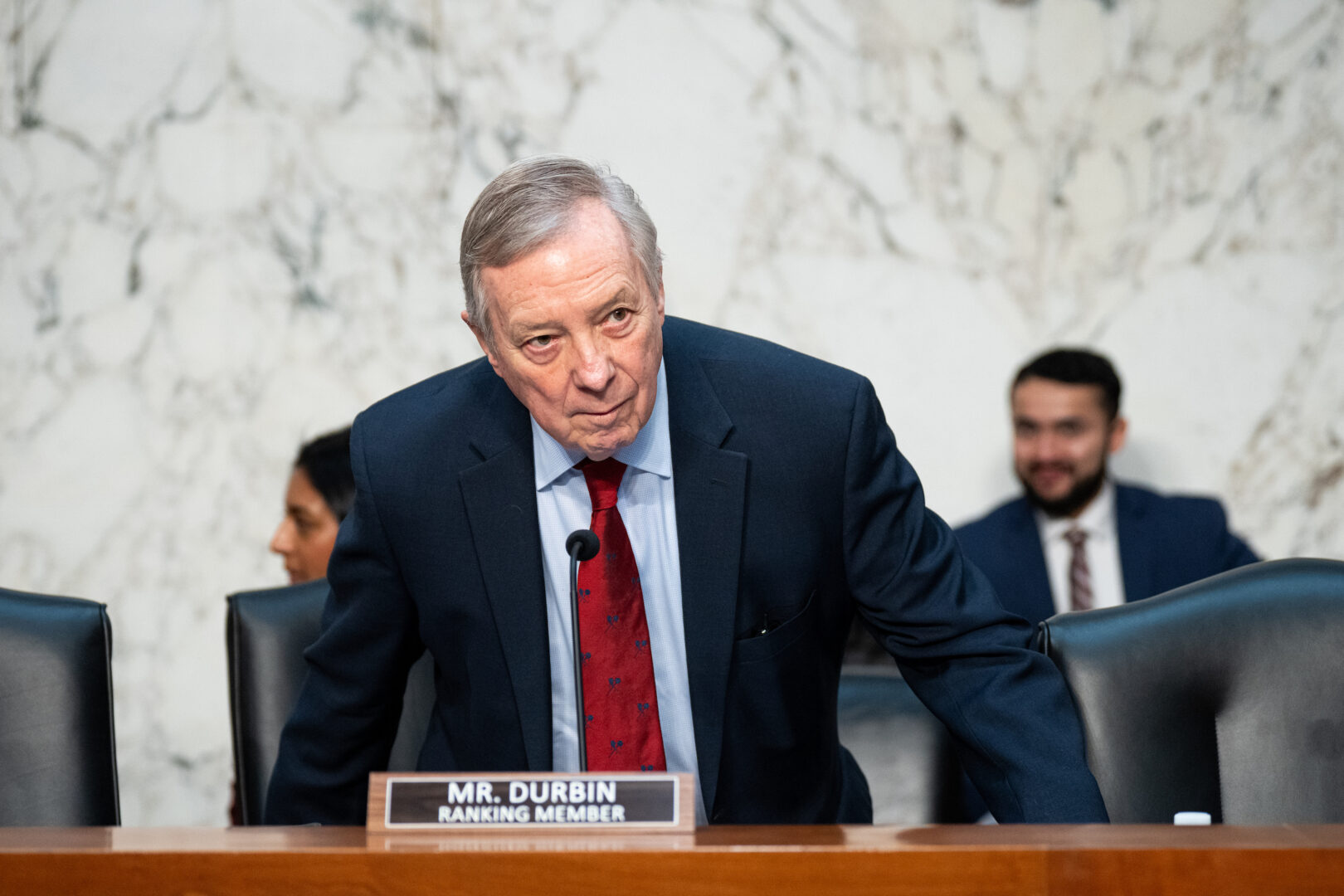
When Sen. Richard J. Durbin first proposed what’s known as the DREAM Act, his current interns weren’t born yet. Pagers were often used instead of cellphones, and George W. Bush was president.
More than 25 years later, it hasn’t become law. And in just a few months, Durbin will leave the bill — and the Senate — behind.
For the Illinois Democrat, it’s the immigration breakthrough that never came. Since 2001, he’s been pushing for a path to citizenship for immigrants without lawful status who were brought to the U.S. as children. It’s common for lawmakers to have pieces of legislation they reintroduce every Congress, and this was one of his.
“To leave here without this being a law finalized to protect these young people … is painful, really painful. I don’t want them to feel like I’m abandoning them,” he said in an interview last month, as he prepares to retire after 44 years in Congress, including three decades as a senator.
In some ways, the effort hasn’t just stalled; it’s lost ground.
When President Donald Trump took office in 2017, he implemented a “zero tolerance” policy for unauthorized border crossings from Mexico, resulting in the separation of some children from their families. He also tried to end the Deferred Action for Childhood Arrivals program, which was put in place by the Obama administration as a temporary fix for the so-called Dreamers as Congress declined to act.
Durbin recalled introducing himself to Trump at a luncheon following his inauguration.
“I said, ‘Congratulations, Mr. President. I want to say a word to you about the DREAM Act.’ He said, ‘Oh, don’t worry about that, Durbin. We’ll take care of those kids.’ Well, that was many years ago, and exactly the opposite happened,” Durbin said.
In his second term, Trump has pursued an immigration policy focused on mass deportations, among other things. How does it make Durbin feel to see that as his time in the Senate runs out?
He paused, getting up from an armchair in his office in the Capitol. Walking over to his desk, he picked up a framed piece of paper. “My mother was an immigrant, and this is her naturalization certificate. She passed away the first year I was in the Senate,” he said.
His mother was 2 years old when she came to the U.S., brought from Lithuania by his grandmother.
“I’ve left that as a reminder of who I am,” he said. “So it hurts. It’s personal.”
Gang of eight
Immigration changes are notoriously elusive on Capitol Hill, as Durbin knows better than most.
More than 150 times, he’s told stories on the Senate floor to make his case, speaking to a mostly empty chamber and toting photos of some of the estimated 2.5 million people who could gain permanent residency under his proposal. He’s described doctors, lawyers, teachers and small-business owners, to name a few, all of whom entered the U.S. as minors.
The way Durbin sees it, when they were children, they “were not determining their own fate. They were in the back seat of the car that came into the United States. They deserve a chance.”

While his Dreamers bill drew bipartisan support over the years, it wasn’t enough, missing an initial procedural hurdle by eight votes, 52-44, in 2007 as opponents argued it would reward illegal border crossings. Even when his party held control of both chambers in 2010, Durbin was disappointed again, with a House-passed version coming up five votes short in the Senate.
It wouldn’t be the last time. In 2013, he was part of a bipartisan group he thought had the best shot in decades at overhauling U.S. immigration laws. Known as the “gang of eight,” it hammered out sweeping compromise legislation that passed the Senate but never saw action on the House floor.
“We just set out to methodically — over months of time, once every week — sit down and tackle another issue. We didn’t solve them all on a weekly basis; some took longer, but we were determined,” he said.
When Durbin leaves the Senate in January, only two members of his gang of eight will remain — Minority Leader Charles E. Schumer and Sen. Michael Bennet, D-Colo.
“It’s hard to imagine that it could be possible today, but hope springs eternal,” Bennet said of convening a 2013-style gang in today’s deeply divided Senate.
The other gang members have already scattered. Former Sen. Marco Rubio, R-Fla., is now the secretary of State. Sen. Jeff Flake, R-Ariz., did not run for reelection in 2018, Sen. John McCain, R-Ariz., died in 2018 and Sen. Bob Menendez, D-N.J., resigned in 2024 after a federal corruption and bribery conviction. And Sen. Lindsey Graham, R-S.C., a longtime friend and legislative partner of Durbin’s across the aisle, died unexpectedly earlier this year.
“We had a friendship and a political alliance on that issue, which people just don’t understand at home. My family says, ‘Lindsey Graham is your friend? How can that be?’” Durbin said.

From intern to member
Asked what’s next for him, the 81-year-old Durbin said he’s got “a couple offers that are interesting involving universities” and still has things he’d “like to work for,” like reversing cuts to medical research.
“We’re risking a lot of our talent and opportunity with cutbacks in research under the Trump administration. I think the Republicans can be persuaded to change that,” he said.
Durbin will leave the Senate with a lengthy resume, including more than two decades in leadership as the No. 2 Democrat. He claimed the Judiciary Committee gavel in 2021 after an internal debate in the caucus over how many prime spots he should hold at once — a move that rankled some who worried about concentrating too much power in the hands of party elders.
Now ranking member on Judiciary, he’s set to become that panel’s 11th longest-serving member of all time, according to the Senate Historical Office. He’s also spent a combined 40 years helping shape the course of government funding, serving on both the House and Senate Appropriations panels.
None of it would be possible without a college internship in then-Sen. Paul H. Douglas’ office in the 1960s, helping sort mail, he said. Douglas lost the use of his left arm after getting shot in Okinawa while in the Marines, and Durbin would sit with him in the evenings as he signed letters.
“I thought to myself, ‘Okay, don’t talk, don’t breathe, you know, get the job done.’ And he stopped after a few letters and said, ‘So you’re Dick Durbin of East St. Louis, Illinois.’ I thought, ‘How did he know that?’” he said.
Thirty years later, Durbin would be elected to Douglas’ Senate seat.
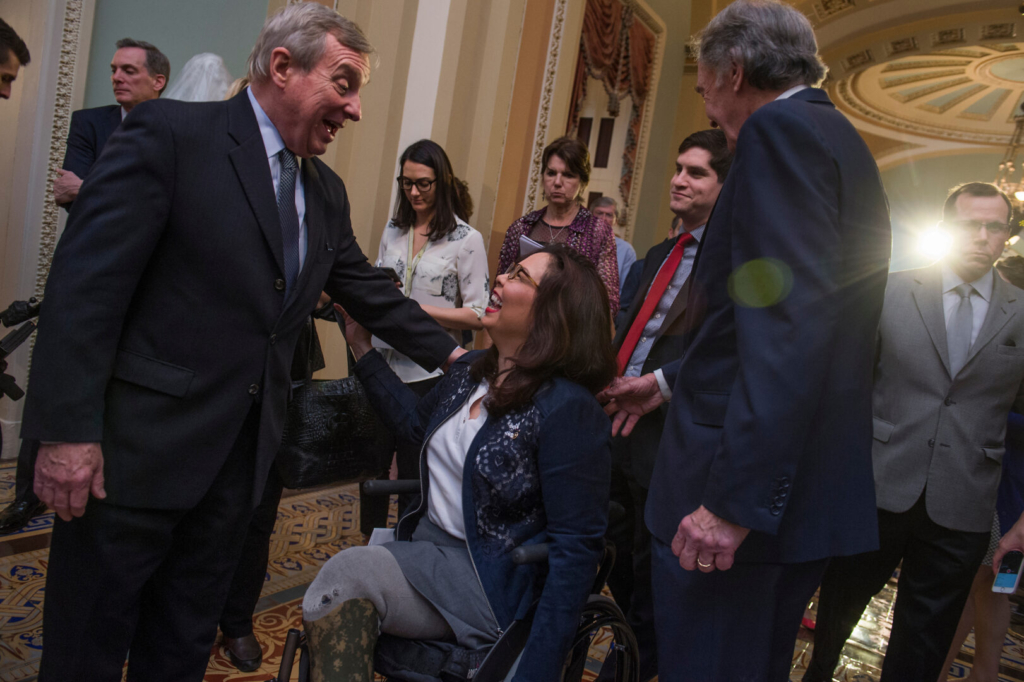
Along the way, Durbin has had his own chance to open doors. In 2005, Durbin invited a soldier who had recently lost both legs and was recovering from severe combat injuries at Walter Reed to be his guest at the State of the Union address.
That soldier was then-Army Maj. Tammy Duckworth. She’s now his Senate colleague.
“Dick Durbin saw me in that hospital, and he didn’t see the wheelchair. He didn’t see a wounded soldier. He saw someone that really was lost and couldn’t figure out how do I keep serving,” Duckworth said. “He challenged me to do something else, and he challenged me to help veterans, and now I’m here.”
‘A much different America’
After 44 years on the Hill, Durbin has some regrets. While still in the House in 1986, he backed new mandatory minimum sentences for drug offenses, which he later came to see as a “serious mistake.” That law established a 100-to-1 sentencing disparity between crack and powder cocaine offenses.
“We ended up doing just the opposite of what we hoped to do,” Durbin said. “We saw the number of incidents of crack cocaine crime go up instead of down, and we filled American prisons primarily with African Americans at record levels.”
In the Senate, he then tried to right what he said was a “disastrous decision,” working to pass what’s known as the Fair Sentencing Act, which reduced the sentencing disparity to 18-to-1, and later to make that change retroactive.
But he also pointed to bills he said “changed America for the better.”
“One of them was banning smoking on airplanes, which sounds like a little thing. It turns out to be a big thing. It really inspired people at every level to question secondhand smoke, and now we live in a much different America,” he said.
In an increasingly gridlocked Congress, can change like that be possible again?
“If we return to a more spontaneous and open process, we might be in session more days,” Durbin said. “But I think the members would find it much more rewarding, and America would be in a better place.”
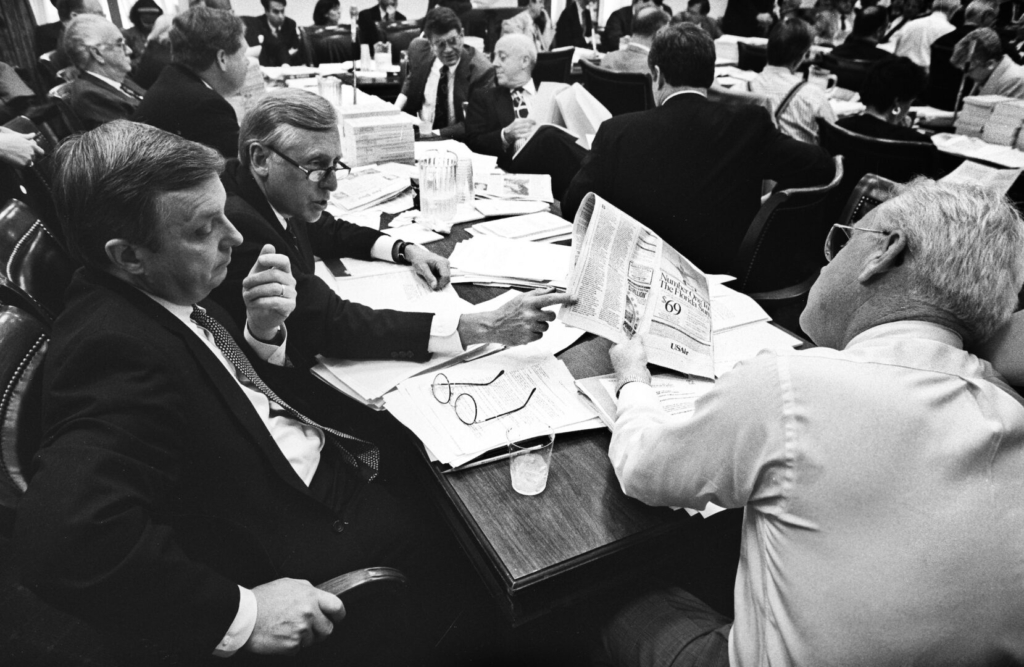
He cited one of his signature pieces of legislation, a provision folded into the 2010 Dodd-Frank Act that limits debit card transaction fees paid by retailers.
“I was the 24th senator to offer an amendment to the Dodd-Frank banking bill. I wasn’t a member of the Banking Committee, but I got my day, got my chance,” he said.
As for the DREAM Act, he cites a few lawmakers he thinks could continue the push once he’s gone, including Sens. Alex Padilla, D-Calif., Chris Coons, D-Del., and Catherine Cortez Masto, D-Nev. He still hopes it could someday become law.
“You can’t survive in politics unless you’re optimistic. You’ve got to believe that even though you face a setback or you don’t have all the laws you need, that tomorrow will be better. I believe that’s the key to success, if there is one, in public life, and it keeps you going,” Durbin said.