Permitting bill writers seek industry aid ahead of Senate vote
Measure faces pushback over proposed changes to environmental laws
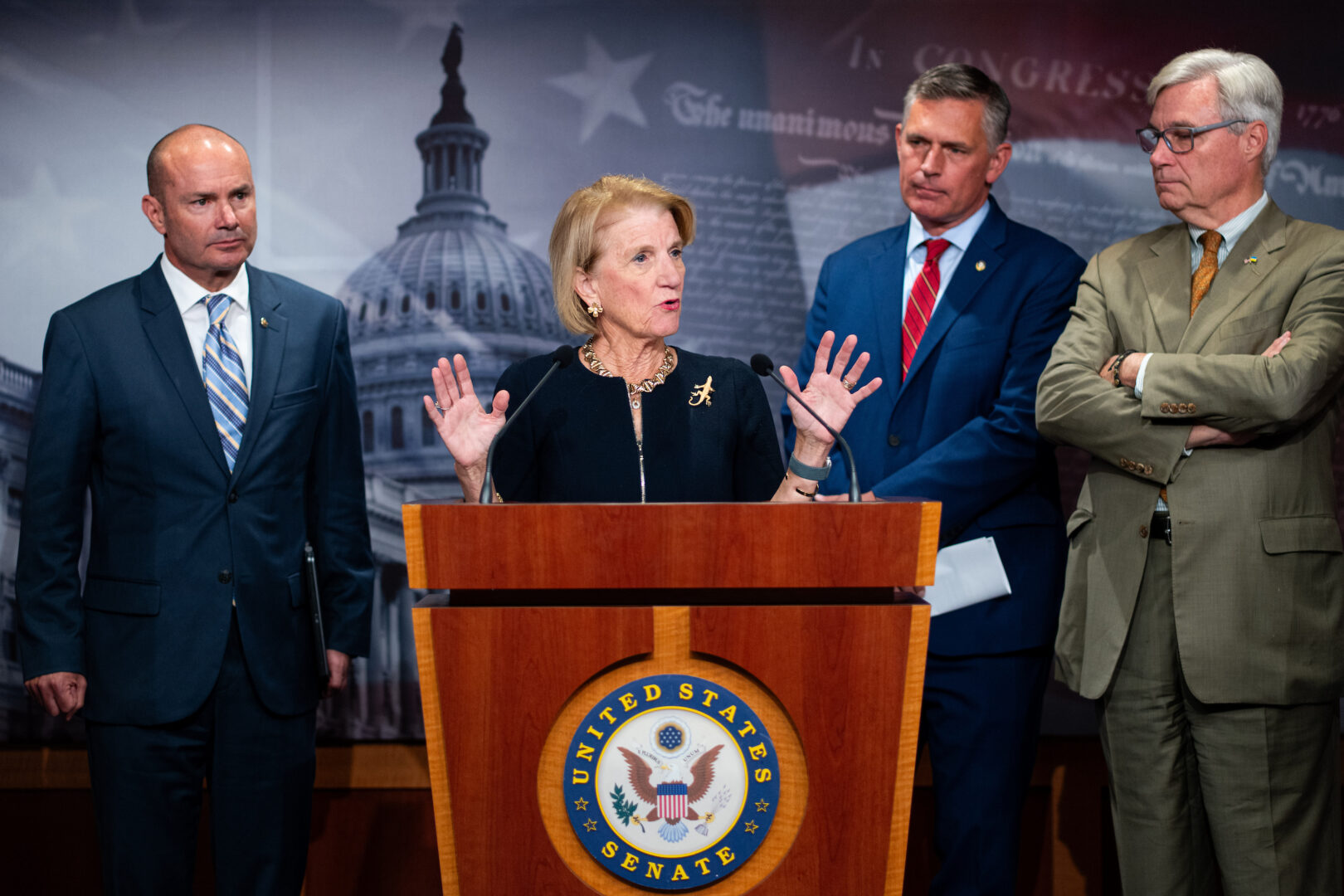
Top aides to the “big four” senators behind the bipartisan energy permitting overhaul package had a message for industry supporters Thursday ahead of a key procedural vote scheduled for Nov. 9: Help us help you.
Speaking at a conference hosted by the American Council on Renewable Energy, the staffers said the bill was a carefully crafted compromise and worthy of support, amid heated lobbying efforts by stakeholders for and against the measure ahead of the midterm elections.
“For those of you in the room — individual developers — you know your projects,” said Kara Allen, deputy staff director for Senate Environment and Public Works ranking member Sheldon Whitehouse. “You know where they have stumbling blocks, your voice is very helpful.”
At least 60 votes will be needed to achieve cloture on the motion to proceed, which would allow the legislative vehicle for the permitting bill to come to the floor for debate and amendments.
Whitehouse, D-R.I., worked closely since the start of the 119th Congress with Senate Environment and Public Works Chairman Shelley Moore Capito, R-W.Va., and Senate Energy and Natural Resources Chairman Mike Lee, R-Utah, and ranking member Martin Heinrich, D-N.M. They finally introduced the bill last month, but there wasn’t enough time to try to get it across the Senate floor as lawmakers were anxious to leave Washington for the campaign trail.
The 417-page measure would make significant change to a host of bedrock federal environmental laws, including changes to how projects are permitted under the National Environmental Policy Act, Endangered Species Act and Clean Water Act.
Aides to the four committee leaders said that feedback from groups representing a wide range of industries helped inform the bill, and said that highlighting how its provisions could make it easier to secure permits and build infrastructure projects could help get the 60 votes needed to advance.
‘Seize this opportunity’
Many of these groups have expressed their support for the bill in recent days. The American Petroleum Institute led a letter urging the bill’s passage in the lame-duck session, telling lawmakers it would “restore confidence in the nation’s ability to build critical infrastructure. Congress should seize this opportunity and act.”
ACORE itself has also signed on to a support letter with other renewable energy industry groups, including the American Clean Power Association and the Solar Energy Industries Association.
The bill faces some headwinds, however, particularly from environmental groups that oppose changes to the laws and limits on judicial review. Native American tribes have raised concerns about changes to the National Historic Preservation Act, and electric utilities have concerns with portions that could make it easier to transmit power from renewable energy sources.
There is also continuing concern among Democratic members about whether the Trump administration would faithfully enforce the bill if signed into law given actions it has taken against renewable energy projects, including recent filings seeking to reopen permits for four offshore wind projects off the coast of the Northeast U.S.
The Trump administration has made some concessions on renewable energy that Whitehouse said was a starting point for negotiations last month, although has not publicly announced a shift in policy. House Natural Resources ranking member Jared Huffman, D-Calif., has said these assurances are not enough.
“A serious permitting deal must start with an end to the war on clean energy, and this cheap window dressing doesn’t even come close to cutting it,” Huffman posted on X.
Anticipating Democratic wins in both chambers in the midterm elections, Huffman previously encouraged his Democratic colleagues to revisit permitting legislation once the 120th Congress has been sworn in.
And Senate Republicans may have some work to do on their House GOP counterparts, if the bill can successfully get to that chamber for consideration.
Jake McCurdy, energy policy director for Lee, said he’s encountered some partisan pushback that runs counter to the approach Senate leaders have taken.
“I was speaking to some House Republican [legislative assistants] last week, and they asked me to go through each section to know which one’s Republican and which one’s Democrat. And I don’t think we really see it that way,” McCurdy said.
The four senators have said they expect to introduce a manager’s amendment that would incorporate feedback they receive ahead of the vote.
Data centers debate
The bill is the culmination of a yearslong process, McCurdy said, adding that the legislation has also incorporated concerns that have either emerged or grown in recent months. Those issues include the buildout of data centers, growing electricity demand and consumer concerns about electricity affordability, all of which have been major issues on the midterm campaign trail.
The measure includes language pushed by Heinrich, for instance, that would require state regulators to adopt federal standards ensuring that artificial intelligence “hyperscalers” that need massive amounts of power for data centers take on those costs themselves, rather than sticking consumers with the bill.
“I’ve said to folks throughout there’s two ways to do a bipartisan bill. One is to stay super close to the center and not really change very much, but avoid controversy and keep everybody on board that way,” said Adam Tomlinson, staff director for Capito. “The other way is to really shoot for some big policy changes on both sides that benefit both parties and projects of all types, and certainly this is the second type of bipartisan approach.”
The aides also expressed their hope that the language of the bill around project certainty, including limits on actions administrations can take to revoke already-issued permits, would spur investment.
“Capital will come off the sidelines because you know your permits are going to be valid no matter what the political lens might happen to be at a given time, and we certainly need that,” Tomlinson said.
The staffers also confirmed that the bill, dubbed the Bipartisan American Affordability and Jobs Act, or BAAJA, has been pronounced like the Spanish word “baja.” Supporters of the bill have already celebrated its introduction with Mountain Dew Baja Blast, as well as a margarita-based version.