Eight(ish) California predictions for 2026
One way or another, expect California to dominate the political conversation

I swore off the prognosticator business after the 2016 election, but my students and news anchors alike still ask me anyway. Who will run for president? Will California’s temporarily redrawn congressional boundaries withstand legal challenges?
I have some reasoned guesses and some informed analysis, but one thing is for certain: What happens here in the Golden State, and to the nation’s largest congressional delegation, will continue to influence the conversation in Washington.
From the minor to the monumental, here are a handful-and-a-half of political predictions for California’s year ahead.
Retrospective on monstrous wildfires
Be prepared for California’s largest story from 2025 to carry over into 2026. There will be no shortage of reflection about the deadly blazes that destroyed much of Pacific Palisades and Altadena — two very different neighborhoods 35 miles apart — last January. As I have told my journalism students, this is a story of their generation as it touches just about everything: politics, policy, climate change and the cost of housing.
These communities had their lives shattered, and even people whose houses remained standing have been forced to relocate or make the choice to return to property surrounded by rubble with scarce resemblance to the area they once called home.
The stories coming out of Los Angeles showcase resilience and human ingenuity in defining community (and surely are setting news outlets up for Pulitzer nods). Will the fires have political consequences? Mayor Karen Bass will be able to answer that when she faces the voters again in June.
ICE on the streets
Massive immigration raids across the state have reshaped California in tangible and intangible ways. Viral videos of people being slammed to the ground, families being torn apart and, worse still, U.S. citizens wrongly detained, are now the norm in our state. Plus, there’s a growing protest movement ready to document each and every capture by Immigration and Customs Enforcement officers.
The new year isn’t going to change the administration’s focus on California, even though last week President Donald Trump said he would pull back the 2,000 National Guard members deployed here after a long legal back-and-forth.
What I’m watching is action from Gov. Gavin Newsom and the legislature that surely will provoke Trump.
A new analysis from the University of California, Merced found the economic impact of the ICE raids in California are comparable with the Great Recession and the onset of the COVID-19 pandemic, with both actual job losses and workers who feel they must shelter in place out of fear.
Professor Edward Flores, director of the UC Merced labor center, recommended in a December report that lawmakers consider some form of economic relief.
The raids “reveal how the state currently lacks an adequate economic safety net system for undocumented immigrant workers, and the downstream effects of escalated immigration enforcement on citizens’ employment,” the report read.
It suggests lawmakers develop “a major economic stimulus and disaster package for all workers.”
Paging Fox News.
Like the fires, the news stories about the Californians — legally here and otherwise — affected by the enforcement surge will continue into this year as court proceedings advance, school attendance figures are tallied and the economic figures are reported.
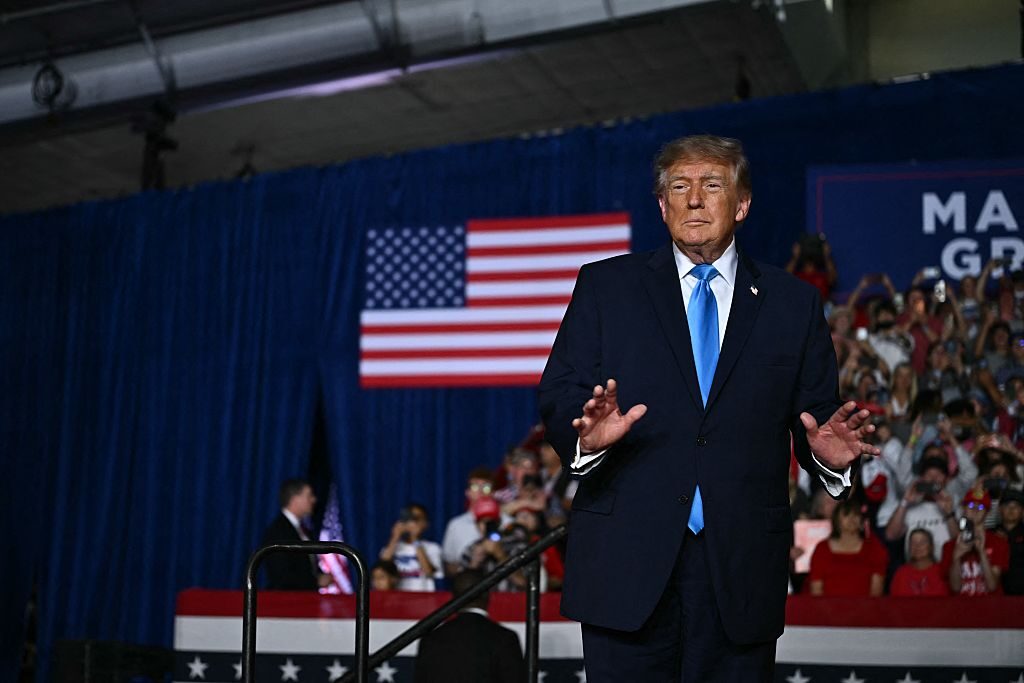
Given it’s an election year, you can expect Trump will keep dragging California.
Newsom’s all-caps trolling will continue
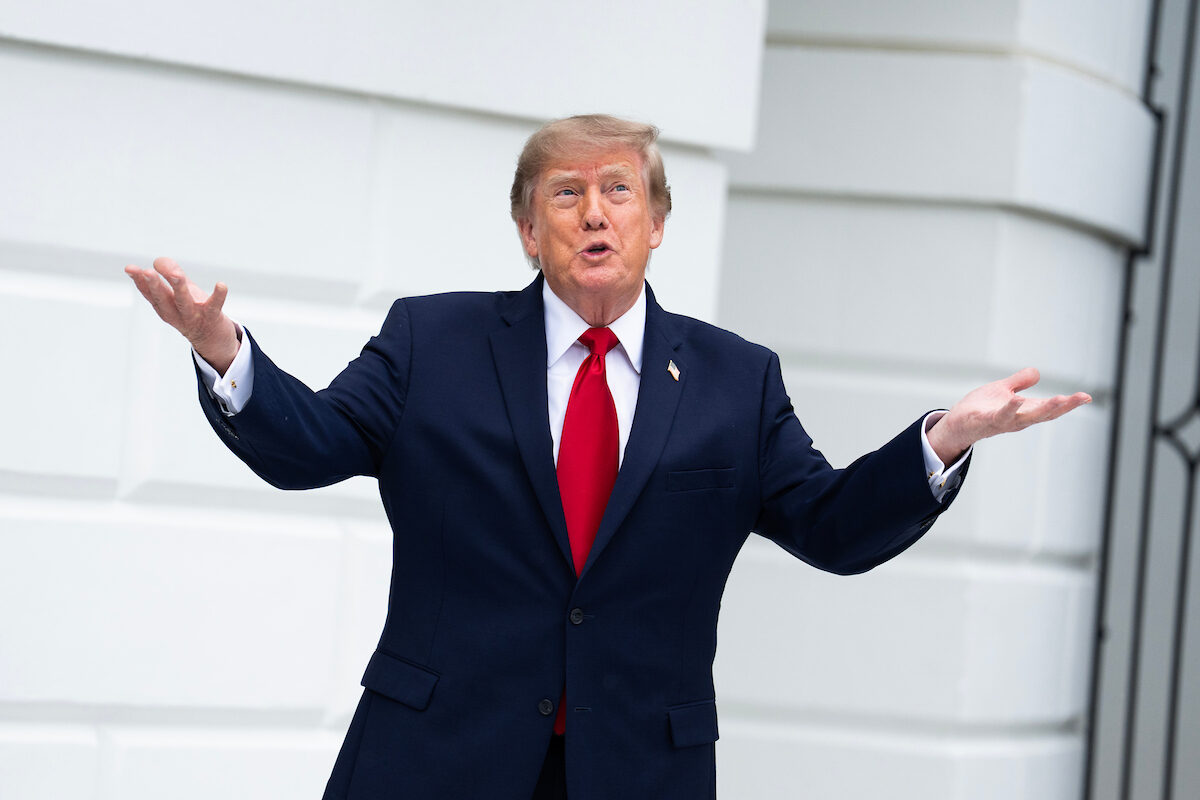
There’s nothing Trump enjoys more than a bogeyman, and Newsom has happily played the part and dished it right back over the last year. The Democratic governor, whose new book, “Young Man in a Hurry: A Memoir of Discovery,” is out in late February, will continue to angle for national attention. That’s been easy for the governor to do the last few months simply by meeting Trump on his own turf, matching every all-caps post meme for meme. (Fun fact: A USC graduate student is leading the trolling effort on Newsom’s official office accounts.)
Just in the last few weeks, Newsom’s own feed has dubbed Trump the “Grinch in Chief” and said the next president would overturn the Kennedy Center renaming. Trump has gone after Newsom at least twice since the new year began, including with the label of “crooked.”
Expect Newsom to deliver a fierce and fiery speech Thursday during his final State of the State address.
A new governor on the way
The California vs. Trump fight will evolve one year from now when a new governor takes over. That’s going to be a marked shift in the state by itself, given we’ve had larger-than-life, nationally known politicians at the top here for 22 straight years (Democrat Jerry Brown before Newsom, and Republican Arnold Schwarzenegger before that).
I’d wager money that most of you wouldn’t be able to put all the faces to the names for the eight most prominent politicians who have filed candidacy.
What’s more, the lack of a true front-runner with “rizz” (that’s charisma, for those not surrounded by college students) means we’re in for a strange season ahead of the top-two primary in June.
I’ve talked with well-placed Democrats who decry our all-party primaries because they can end up forcing interest groups and the party to spend money against fellow Democrats. I think we’ll see an Adam Schiff-like effort to prop up a Republican candidate who could prevent a nasty Democrat-versus-Democrat general election battle come November. Republican hopefuls like Riverside County Sheriff Chad Bianco and conservative commentator Steve Hilton are attracting attention.
That said: Don’t waste any money betting we’ll end up with two Republicans on the November ballot, despite some reporting otherwise.
As political consultant Jim DeBoo said at the USC Center for the Political Future’s Warschaw Conference on Practical Politics in November, “most people don’t know” the candidates, but those two Republicans aren’t far from 15 percent in polls.
“If they sneak through, you could have a scenario where you have a Republican governor in a state that would never elect a Republican governor and would subsequently a day later get recalled,” said DeBoo, a former Newsom chief of staff who heads a strategic affairs firm.
Among the Democratic candidates are former Rep. Katie Porter (getting mercilessly trolled for some videos showing her walking out of an interview and being unkind to staff); former Rep. Xavier Becerra, who served as the state’s attorney general and also Health and Human Services secretary during the Biden administration; and Rep. Eric Swalwell. Billionaire Tom Steyer, a Democrat who ran for president in 2020, has been blanketing the airwaves (including with a “Love, Actually” parody) with ads.
A PPIC poll from November found Porter ahead of Becerra, with Republican hopefuls Bianco and Hilton the only other candidates in double digits. Porter came in a distant third place in the 2024 top-two primary for Senate.
Fun fact: In this century or the last one, no member of the House has ever been a California governor.
All politics is local
Perhaps just as exciting and meaningful will be the Los Angeles mayoral election. Bass started off strong after romping Rick Caruso by nearly 10 points in 2022 and will be facing voters again in a June primary that already has more than a dozen candidates. Former Los Angeles County Unified schools chief Austin Beutner (a billionaire, and also my one-time boss at The Los Angeles Times) is running, and Caruso has been flirting with a run for governor instead of a rematch.
Bass, who served in Congress for more than a decade until her mayoral victory, was doing fine until the fires last year. Her favorability has suffered greatly since then, with her disapproval at 49 percent in a first-quarter 2025 UCLA survey, a net 20-point decline. Half of those surveyed in an April poll by the LA Times and UC Berkeley’s Institute of Governmental Studies also viewed her negatively. Caruso has repeatedly criticized her handling of the disaster.
A scrambled House delegation
Buckle up for a wild ride with the midterms in the Golden State. There is a lot of the uncertainty that I predicted last fall, but three major questions were resolved over the last month.
Rep. Ken Calvert has opted to run against fellow Republican Rep. Young Kim in the new district created by the passage of Prop 50. It’s not his turf, but he’s sounding confident notes about his length of service even as most of the district will be new territory. We might well get a member-vs.-member race between them in November.
Rep. Darrell Issa opted against moving to Texas to seek one of those newly created GOP-friendly districts there, seeking reelection instead, joining the California Republicans facing tough battles given the new lines.
And of course, Rep. Nancy Pelosi’s retirement has opened things up in San Francisco — expect a competitive primary that will lead to a Democrat-vs.-Democrat contest in November. Her daughter Christine Pelosi has launched her first bid for elected office, but chose to seek a state Senate seat instead of her mother’s district.
It’s too early to know if Newsom will call a special election in Northern California following this week’s surprise death of Republican Rep. Doug LaMalfa, or if a replacement would be on the June primary ballot alongside the term for the next Congress. The seven-term lawmaker held one of the seats targeted by Prop 50, so expect to hear more about this district being competitive.
Will USC president be ‘fighting on’?
This one is a lot closer to home, but I have a feeling my own university — the largest private employer in Los Angeles — will be in the headlines again soon.
The student journalists covering USC have heard next to nothing about the search process for a new president, even though the committee tasked with the job must be vetting finalists by now. A new leader to run the private university would be expected to start July 1 — will they be Trump-friendly, or a fighter?
USC’s interim president Beong-Soo Kim said he would not be a candidate for the permanent position when he took on the one-year seat-warmer role. He’s navigated the school through layoffs and fiscal tumult, so the scuttlebutt is that he could be well received as a candidate for the permanent job.
Kim rejected the Trump administration’s so-called “compact” which would have forced the school to cap its international student population and only recognize two genders. He said in October it would “undermine” free inquiry and academic excellence. “Without an environment where students and faculty can freely debate a broad range of ideas and viewpoints, we could not produce outstanding research, teach our students to think critically, or instill the civic values needed for our democracy to flourish,” Kim told the administration in a letter.
The largely left-leaning faculty breathed a sigh of relief but our potential for newsmaking remains high. As universities across the country pay large settlements over claims of antisemitism, USC faculty and staff have heard nothing about a visit from the federal task force investigating the issue despite a February announcement we were on the list.
Plus, we have one of the largest populations of international students, undocumented students and one of Trump’s political besties, Miriam Adelson, on our board of trustees.
Trust me, you’ll be hearing about USC this year.
Suddenly, media competition
In the next few weeks you’ll see a surge of new media outlets spring to life in California. The most highly anticipated is the California Post, which I predict is going to shake up the state’s politics with its tabloid style and right lean. As an observer of the media, I am glad to see competition, and I think the Post and several other outlets on the horizon will keep the LA Times — and the politicians — on their toes.
Did I miss something? Let me know: christina.bellantoni@usc.edu