Budget resolution to unlock immigration funds adopted in Senate
Measure adopted 50-48 after overnight 'vote-a-rama'
The Senate adopted a GOP-written budget resolution early Thursday morning that marks a critical first step toward providing roughly $70 billion for immigration enforcement for the remainder of President Donald Trump’s term.
After a marathon “vote-a-rama” on amendments that stretched through the night, the Senate voted 50-48 for a budget blueprint laying the groundwork to pass a filibuster-proof budget reconciliation bill for immigration enforcement funding. That bill could bypass Democratic opposition and help end a record-breaking partial shutdown of the Department of Homeland Security.
Republican Sens. Rand Paul of Kentucky and Lisa Murkowski of Alaska voted against the budget plan, as did all Democrats who were present. Sen. Charles E. Grassley, R-Iowa, was absent, recovering from surgery to remove gallstones. Sen. Mark Warner, D-Va., whose daughter recently died, was also away from the Capitol.
The fiscal 2026 budget resolution calls on the Senate Homeland Security and Governmental Affairs Committee and the Judiciary Committee to write reconciliation legislation by May 15 that would provide up to $70 billion. It calls on the House Homeland Security and Judiciary panels to do the same. Once the budget resolution is adopted in both chambers, the detailed work on a reconciliation bill could begin.
The final vote came a little after 3:30 a.m. Thursday after a slew of attempts, mostly by Democrats, to broaden the scope of a reconciliation package in the run-up to the November midterm elections.
The first out of the gate, shortly after 9:30 p.m. Wednesday, was an amendment by Senate Minority Leader Charles E. Schumer, D-N.Y., seeking to lower out-of-pocket health care costs.
He said his amendment and similar ones from other Democrats were designed to show a contrast between a Democratic fight to lower costs and a Republican drive to fund “two rogue agencies that have no restraint”: Immigration and Customs Enforcement and the Border Patrol.
But the GOP’s budget resolution was so narrowly tailored — limiting a reconciliation bill to the jurisdiction of only two Senate committees — that efforts to expand the package faced a high hurdle. Schumer’s amendment, like those of some other Democrats, required 60 votes to waive a budget point of order.
His amendment was rejected on a 48-50 vote, falling 12 short of the 60 required. But two Republicans facing reelection this fall in hotly contested races — Sens. Dan Sullivan of Alaska and Susan Collins of Maine — joined all Democrats in support of Schumer’s measure.
Similar Democratic amendments aimed at reversing cuts to food stamps, increasing funding for school meal programs, protecting consumers from tariffs and preventing health insurance companies from delaying or denying care also fell by the wayside in mostly party-line votes.
The health insurance amendment, sponsored by Sen. Jon Ossoff, D-Ga. — the most vulnerable Democratic incumbent seeking reelection this fall, according to Inside Elections with Nathan L. Gonzales — was defeated on a 49-49 tie vote.
GOP amendments
Some Republicans offered their own amendments, which mostly fared no better than those of their Democratic colleagues.
Sen. John Kennedy, R-La., offered an amendment seeking to incorporate in the reconciliation package parts of the so-called SAVE America Act, which would require proof of U.S. citizenship to register to vote and a photo ID for voting, among other things. The amendment, which required waiving a budget point of order, was defeated on a 48-50 vote.
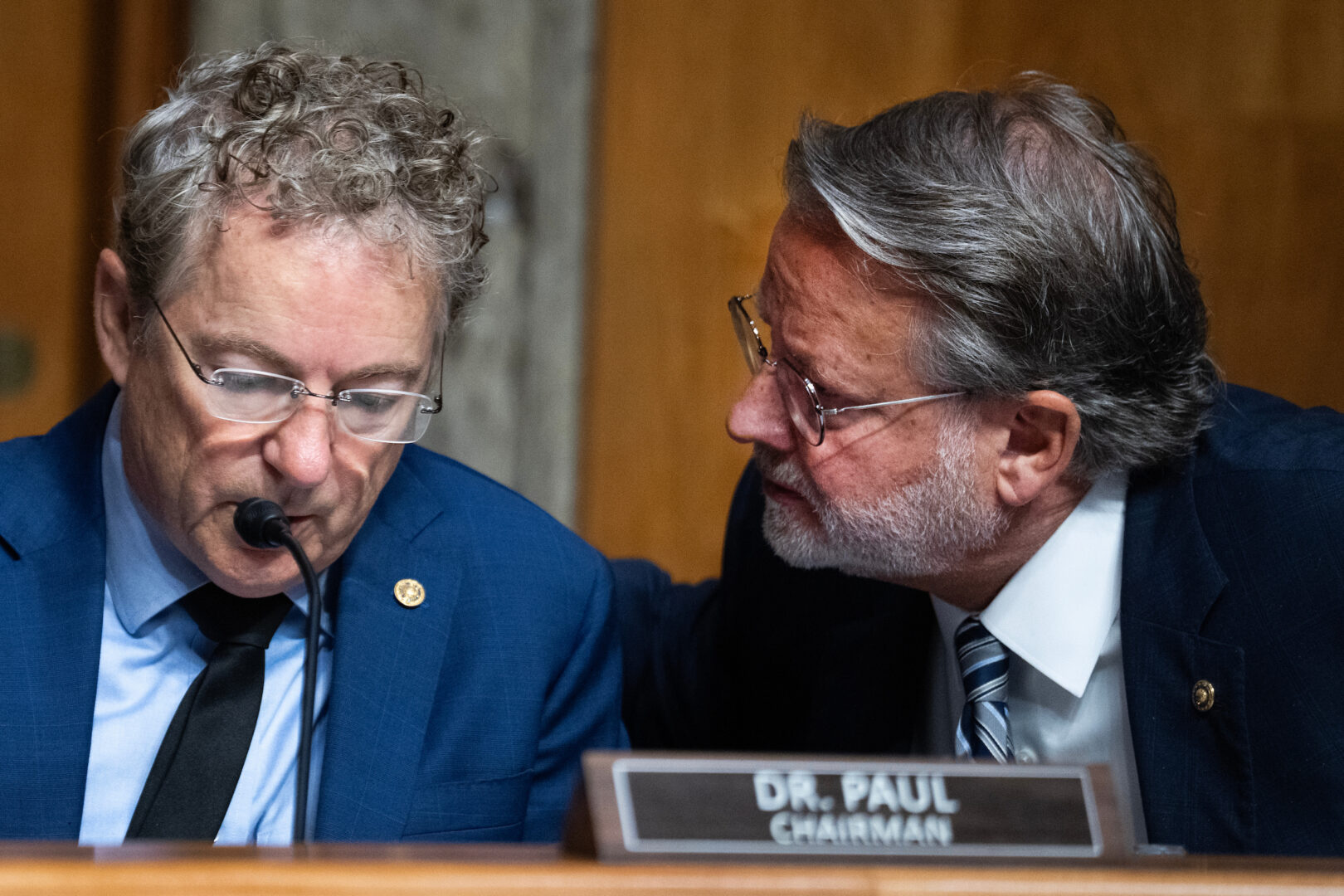
Paul sought an amendment designed to offset the cost of the $70 billion for immigration enforcement funding. His amendment called for cutting $45 billion from foreign aid, $16 billion from the Education Department, $5 billion in refugee aid, and $4 billion from the National Science Foundation. It was rejected on a 24-74 vote.
Sen. Josh Hawley, R-Mo., offered a mostly symbolic amendment that would create a “deficit-neutral reserve fund” to extend a prohibition on Medicaid payments to health care groups like Planned Parenthood that provide abortions along with other medical services. The amendment, which required waiving a budget point of order, fell short on a 50-48 vote.
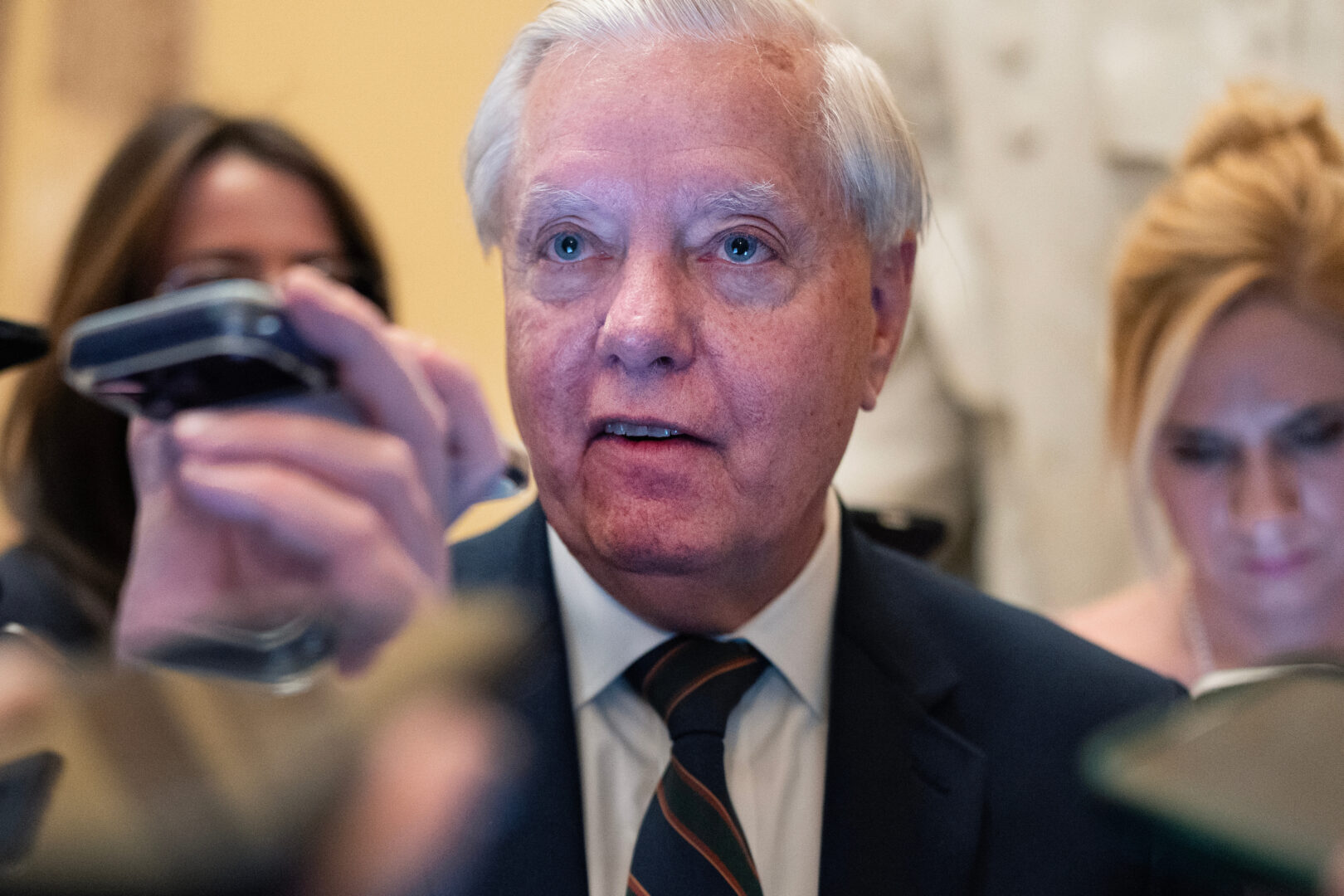
But Senate Budget Chairman Lindsey Graham, R-S.C., the author of the budget resolution, won adoption of a mostly symbolic amendment that would create a deficit-neutral reserve fund for legislation to provide money to ICE to apprehend and detain undocumented immigrants convicted of rape, murder or sexual abuse of a minor.
That amendment proved too politically risky for any Democrats to oppose; it was adopted, 98-0.
Deficit-neutral reserve funds in budget resolutions allow spending and revenue targets to be adjusted in the blueprint to accommodate a particular policy goal. They are nonbinding but can create the appearance of legislative momentum for an issue, which makes such amendments popular with lawmakers on both sides of the aisle.
Shutdown’s end?
Adoption of the budget was the latest step in Senate Republicans’ effort to end the 10-week partial shutdown of the Department of Homeland Security. Under the plan, ICE and the Border Patrol would be funded through reconciliation, while the rest of the department would be funded for fiscal 2026 via a separate Senate-passed spending bill.
Whether House Republicans would be willing to abide by that plan remained an open question. Some House conservatives have bristled at the notion of having to fund the department in two pieces, warning that they may not be willing to vote for a bill that offers no funding to immigration agencies.
Speaker Mike Johnson, R-La., has said the House would need to pass the reconciliation bill for immigration enforcement funding first, before taking up the Senate-passed bill for the rest of the department.
Trump has said he wants the reconciliation measure on his desk no later than June 1 and has expressed support for the separate DHS appropriations bill.
While ICE and Customs and Border Protection are sitting on substantial funds leftover from last year’s GOP reconciliation package — $103 billion, according to calculations by Senate Budget Committee Democrats — other parts of the department haven’t fared as well during the shutdown.
A $10 billion fund for general border support appropriated in last year’s bill has dwindled to less than $1.4 billion, for example, as the administration scrambles to ensure that various tasks are performed and that personnel from the Coast Guard to the Transportation Security Administration continue to get paid.
That fund is expected to be depleted within the next month. Similarly, the Federal Emergency Management Agency has reported that it expects to run short of disaster aid funds by June.