‘Screw this, I’m out’: Why members of Congress are retiring
Wave of goodbyes points to an uncertain future
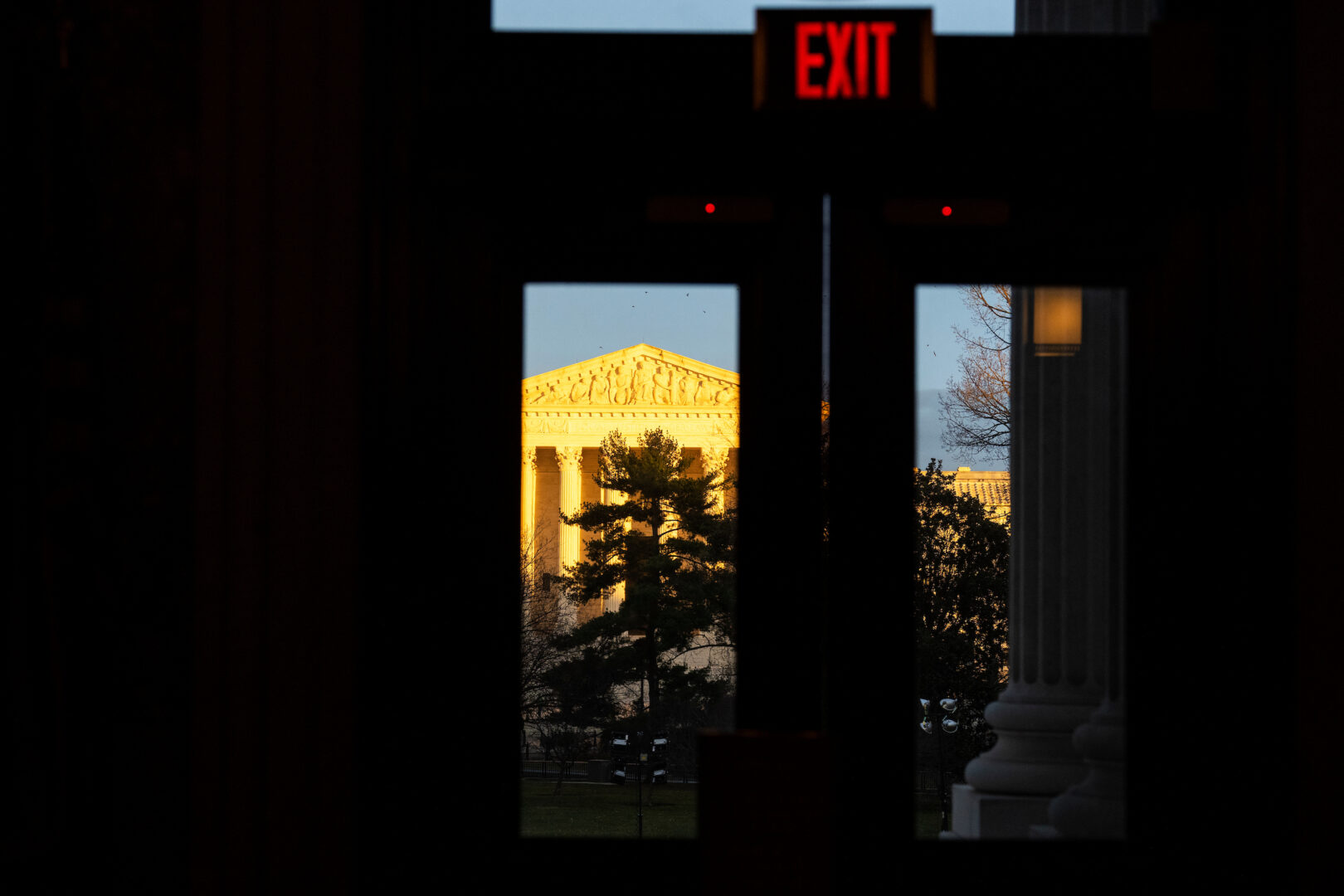
As more lawmakers than usual leave Congress, it begs the question — is this a one-off spike or a larger sign of things to come?
Retirement announcements are a feature of any election year, but this goes beyond normal turnover, experts say. Bitterly partisan redistricting pushes around the country have created a state of constant uncertainty that only adds to the political polarization and low legislative productivity that’s plagued Capitol Hill.
To date, 36 House Republicans and 20 Democrats have said they won’t return to the chamber next year — either because they are running for another office or are giving up public service altogether — representing the largest number of retirements since the 1992 cycle, according to Brookings. That count doesn’t include members who died, resigned or lost their primary.
In the Senate, 11 senators are leaving the chamber, including seven Republicans and four Democrats.
The cohort represents a range of fresh-faced and seasoned lawmakers, but a few points stick out: most of them are Republican, and of the House Republicans, over 85 percent hail from safe red districts, according to a Roll Call analysis.
Similarly, in the Senate, where experts see the GOP as having a stronger chance of keeping the majority come November, only a couple Republicans in “purple” competitive states are leaving, while the rest are considered to be ruby red.
In other words, the data suggests that members are leaving for reasons other than regular midterm pressures, said Casey Burgat, legislative affairs program director and associate professor at George Washington University.
“The number of folks who are leaving voluntarily, particularly in safe seats, maybe not facing a credible primary challenger … this is a signal that they want to do something else, they’re not being satisfied by the job of being a member of Congress,” he said. “The reasons for all of that can be many and varied, but it’s some combination of the partisanship and the unlikelihood of getting anything done legislatively.”
A ‘nasty surprise’
Burgat said the biggest complaint he hears is that lawmakers can’t get anything done anymore, even if you have an idea that’s supported by leadership in the majority party.
“We’ve seen some members, in their press releases or in interviews since their announcements, literally outright say that they can do more good on the outsides of the chamber than they can do on the inside,” he said. “That’s an alarm bell.”
Rep. Mark Amodei, R-Nev., who’s retiring after roughly 15 years in the House because it “just felt like time,” said it’s gotten harder to get things done over the years.
“Things that might have been easy, like partisan things, you think, ‘Oh, well, we’re in the majority, we’ll be fine.’ But it’s like, no. In some ways, you’ve got to work just as hard or harder than before,” he said. “About the time you take anything for granted around here, you’re probably going to get a nasty surprise.”
Rep. Ryan Zinke, R-Mont., who’s leaving after serving more than three terms plus a stint in the first Trump administration’s cabinet, said he’s been frustrated with the lack of “regular order,” or a more traditional, committee-centered approach to legislating.
“There’s some frustration about lack of rules, lack of regular order — which we haven’t done in a decade — and there’s a loss of muscle memory on what regular order even is,” he said. “Some of it is just the frustration of just getting back to the Constitution.”
For some who’ve already departed, the mass exodus isn’t much of a surprise.
Former Rep. Debbie Mucarsel-Powell, D-Fla., who now leads George Washington University’s political management graduate program, said there was “a lot of energy” when she was elected and Democrats won the majority.
“I think that now that a few years have passed since 2018, a lot of those members are seeing … the stronghold of the two opposing parties, the control of leadership from the parties, makes it very difficult for members to work for their constituents,” she said.
She lost a reelection race in 2020.
Former Rep. Dan Kildee, D-Mich., added Congress “isn’t quite the place it was when I first came to know it.”
“Now there’s a whole set of members that quantify their success based on, you know, the number of clicks,” he said.
Burgat said a good portion of lawmakers who aren’t returning next Congress are keep-your-head-down, “workhorse” types who seem to be disillusioned with increasing political polarization and low legislative productivity. In turn, the current conditions tend to starve the workhorse and incentivize the “showhorse,” or members who seem to vie for the spotlight, he said.
“It’s not everyone who’s announced their retirement, but it is too many good legislators — the workhorses, the ones who you don’t know their names because you don’t see them on cable news all that month,” Burgat said. “They’re just like, ‘Screw this, I’m out.’”
One retiring workhorse senator is counting down the days until he departs the Capitol. But “I’m not counting my days until I leave. I’m counting the number of days I have to get things done,” Sen. Thom Tillis, R-N.C., said.
“I think members [need to] actually treat people with a little bit more respect and stop pretending they’re not voting for something just because it’s not perfect, when they know good is all we get here on our best day,” Tillis said of Congress’ current atmosphere. “Basic stuff like that.”
Redistricting rush
A high-stakes midterm election where Republicans’ majority in Congress hangs in the balance has only compounded these issues. And they’re made more complicated by another twist: a last-minute dash for states to redraw their congressional maps.
The Supreme Court’s Callais decision last month threw a wrench in House Democrats’ plans to hold on to their blue majority-minority districts in the deep South, serving a marginal win to Republicans. The Virginia Supreme Court invalidated a Democrat-backed map, while while the fate of a redistricting effort remains unsettled in South Carolina.
It’s a bitter back-and-forth that’s likely to push more people out of their seats — whether through redistricting, primarying or plain-old burnout.
“We might see an uptick with Democratic members, but it will likely be from the gerrymandered districts where [two Democrats] are running against each other — one’s going to fall on the sword and announce a retirement,” Burgat said. “Who knows where these district lines are going to end up being, though we might see those numbers tick up a little bit as we get closer.”
Mucarsel-Powell said the constant threat of redistricting is “a distraction from the work that needs to be going on in the House chamber.”
“The legal battles are expensive. They take a long time,” she said. “Incumbents need to decide where they’re going to be running. At the same time, some members that have been running already or campaigning in some of these districts, no longer have those districts.”
She also described redistricting as adding to polarization in Congress, which some cite as the biggest reason they’re heading for the door.
“Redistricting is not helping the polarization that we’re seeing, because now you’re seeing members that are going to represent deep red and deep blue areas, and there’s not going to be a whole lot of appetite for these members to try and reach across the aisle,” she said. “They’re going to be digging into their part with their partisan hats. Leadership is going to expect them to do that.”
Jessica Wehrman contributed to this report.