US overlooks drug treatment centers in hepatitis C fight
Experts say methadone clinics offer an opportunity to treat hepatitis C
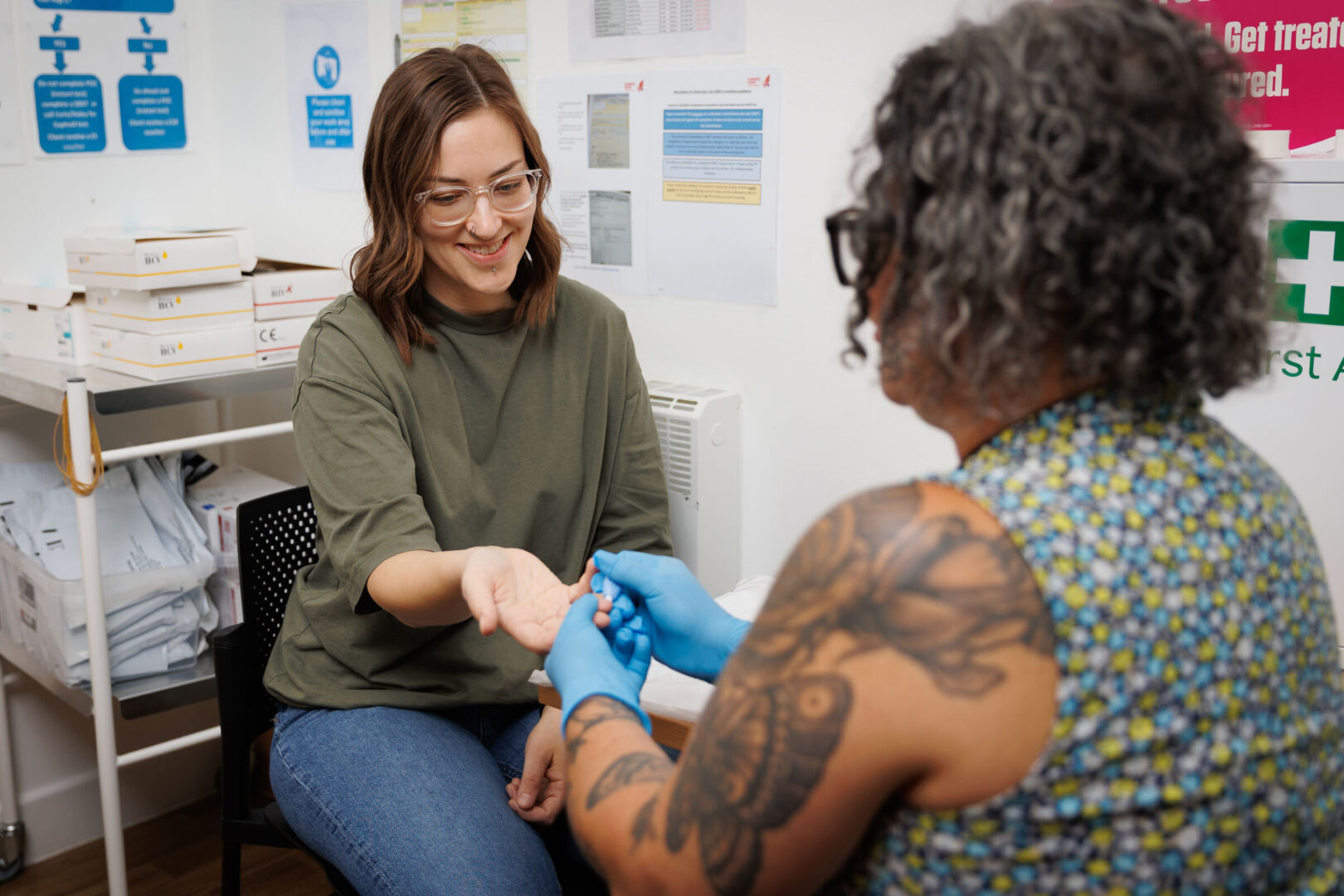
MANCHESTER and LONDON, England — Alison Starkie spends her days tracking down people who need testing or treatment for hepatitis C, especially those who are unhoused or actively using drugs.
Starkie, an intervention worker for a drug treatment service, recalled the difficulty of treating a man living in a tent in northwest England. Each time he started treatment for the disease, his medication was lost or stolen.
He’d been thrown out of sheltered housing for disruptive behavior at one point, but “we chased him, we hounded him,” about his treatment, she said. “We weren’t just going to forget about him.” The man was not only cured of hepatitis C, he also hasn’t used drugs in two years, she said.
Starkie works at Change Grow Live, one of hundreds of drug treatment providers in England that are a key part of the country’s plan to eliminate hepatitis C as a public health threat by 2030, a goal the United States has aspired to, yet hasn’t fully committed to.
Because people who inject drugs account for most new hepatitis C infections, England has targeted drug treatment centers as key venues for testing and treatment of the blood-borne virus, which attacks the liver and can cause severe damage, cancer, or death if left untreated.
The country reached a deal with drug companies in 2019 to lower the government’s cost of hepatitis C treatment, with a large share of the program focused on expanding testing and treatment through drug treatment settings.
“This is the only place where they come and see a nurse or a doctor,” said Piers Adamson, senior operations manager at Turning Point, a drug treatment service with 17 locations across England.
The elimination initiative is projected to save thousands of lives and ultimately save money by avoiding the long-term costs of liver failure that would fall to the nation’s health system.
[Related: Deadly liver disease, rooted out elsewhere, retains grip on US]
But despite the connection between injection drug use and infectious diseases, addiction treatment centers in the U.S. don’t routinely test or offer treatment for hepatitis C, according to federal data.
Only 36.5 percent of the 16,000 substance use treatment facilities in the U.S. offered testing for hepatitis C in 2024, according to a national survey by the Substance Abuse and Mental Health Services Administration. Just 17 percent offered medications for hepatitis C treatment.
“This is urgent,” said Dr. Tom Hutch, medical director at We Care Daily Clinics, a group of opioid treatment programs that also provide hepatitis C testing and treatment in Washington state. “There are a lot of people still dying of hepatitis C, and prior to COVID, it was the leading cause of infectious death.”
‘Go where it is’
A subset of drug treatment centers, opioid treatment programs, also called methadone clinics, pose a unique opportunity to treat hepatitis C, experts say. That’s because federal regulations already require patients to pick up their methadone — a treatment for opioid use disorder — in person several times a week.
According to the survey data, while 70 percent of opioid treatment programs offered testing for hepatitis C in 2024, only 22 percent offered medication.
Programs may refer people who test positive to outside care, but research has shown that treatment uptake is higher when provided at the same site.
“To get serious about eliminating [hepatitis C], we need to go to where it is,” said Hutch, whose clinics treated 92 people between January 2020 and December 2024.
Hutch’s clinics in Washington state use an opt-out testing model — similar to England’s — in which everyone is offered testing when they walk in the door, then periodically after, depending on risk factors.
The medical providers are trained to provide hepatitis C treatment, which is delivered to the clinic and provided on site.
“You don’t have to look much further than syringe exchanges or opioid treatment programs and you need to target those areas and be sure that these facilities are supported,” Hutch said.
But that is not the norm.
The approach in the U.S. is scattered, with no nationally funded hepatitis C elimination plan or consistent funding stream to help opioid treatment programs and addiction centers test and treat for the disease.
While legislation sponsored by Sen. Bill Cassidy, R-La., would establish a national hepatitis C elimination program, it has not been considered by Congress.
[Related: Immigration debate, upfront costs are hurdles for hepatitis C bill]
“It’s not a question of motivation or interest but a question of specific barriers in our health system that prevent the scaling of these programs,” said Apoorva Mallya, executive director of the Washington-based Hepatitis Education Project, which helps opioid treatment programs and other providers eliminate barriers to providing hepatitis C testing and treatment.
Centers may have few staff trained to draw blood for testing or prescribe treatment. And reimbursement rules from government programs and private insurers can make it difficult to bill for services that aren’t directly related to providing addiction treatment.
Medicaid, the federal-state health insurance for low-income people and individuals with disabilities, is the largest payer of substance use disorder treatment in the United States. Most states outsource Medicaid coverage to private managed care companies, which can create barriers to care, advocates say.
Billing for physical health services as a substance use treatment provider can be a “heavy lift,” said Allegra Schorr, president of the Coalition of Medication-Assisted Treatment Providers and Advocates.
For example, the New York State Department of Health had to issue guidance recently clarifying how opioid treatment programs could bill Medicaid for hepatitis C treatment, after providers encountered reimbursement problems with the private managed care plans that run the program in many states, Schorr said.
Now, the primary barrier to expanding access in those facilities is not having enough workforce, she said.
Some states may also require extra licensing or certification to provide medical care beyond addiction treatment.
CODAC Behavioral Healthcare, a group of seven opioid treatment programs in Rhode Island, began offering treatment in 2017 but lost money on the service, CODAC President Linda Hurley said. It took the organization several years to meet the state regulatory and licensing requirements to treat hepatitis C in the clinics.
Not all opioid treatment programs will have the bandwidth or staff to go through that process.
“It was so complex,” Hurley said. “It’s very much worth it but it’s also the kind of thing that you really have to pay attention to and plan for because it can be costly.”
‘Micro-elimination’
Typically, all clients are tested at intake unless they decline, and are again annually if they inject drugs or are otherwise at risk for acquiring the virus.
Those who test positive are then treated through the National Health Service, typically on site. The goal is to test and treat people as quickly as possible. Many drug treatment services, including Turning Point, use rapid hepatitis C testing machines that can return results in as little as 60 minutes, compared with sending samples to a lab, a process that can take days or even weeks.
Peer workers who have had hepatitis C and caseworkers like Starkie are key to the effort, bringing people back into care, Adamson said.
“You’ve got to get out there. You can’t rely on people coming and attending set appointments,” Adamson said. Dozens of England’s drug services have now achieved micro-elimination, contributing to significant decreases in chronic hepatitis C among people who inject drugs. In 2024, that rate was 5.2 percent, compared to almost 30 percent in 2022.
The strategy is called “micro-elimination” — a focused approach to eliminating hepatitis C within specific high-risk populations, such as those served by drug treatment programs, prisons, and other settings.
Now five years into the micro-elimination initiative, drug services are finding far fewer people with the disease, Adamson said.
A Turning Point facility in the Hackney borough of London, an area experiencing higher-than-average rates of drug use and homelessness, was the first inner-city borough in London to achieve micro-elimination.
All of Turning Point’s 700 clients who inject drugs have been tested for hepatitis C, either at the service or another setting, and almost everyone who needed it has started treatment, in large part because it is provided at the same location, Adamson said. The latest figures show 98 percent of patients who tested positive have been treated.
Studies have found hepatitis C treatment can lead to improvements for people suffering from depression, anxiety, chronic pain, and even less injection drug use and sharing of drug equipment like needles.
“It can be the springboard to recovery,” said Johnathan Occleshaw, the hepatitis C coordinator for Change Grow Live in northwest England.
Of the 20 services he works in, 17 have achieved micro-elimination, he said.
Slow progress
Several U.S. states have their own elimination programs and have identified opioid treatment programs as a key opportunity to expand access to testing and treatment. But it has still been a struggle.
“In an ideal world, all would be providing hepatitis C testing and treatment,” said Emalie Huriaux, STD, adult hepatitis, and syringe service program manager for the Washington State Department of Health. “We know for some of these community members, a referral is not practical, that people really need the services in places they know and trust.”
Washington rolled out its elimination program in 2018.
That’s the goal of an initiative from the Coalition for Global Hepatitis Elimination and Prisma Health, a nonprofit health system. The initiative will launch hepatitis C testing and treatment this year across 60 clinical settings in six states, including in opioid treatment programs, funded by the Patient-Centered Outcomes Research Institute.
Part of the goal is to help providers create sustainable hepatitis C programs in spaces that people feel comfortable going to.
Providers in the program will also have access to outside hepatitis C experts and patients will get fast treatment and help navigating the health system.
“We’d hope that if we can demonstrate success this could be a model that could be scaled up as part of an elimination effort,” said Dr. Alain Litwin, chief scientific officer at Prisma Health. “It’s not just providing free medicine and testing but making sure these medical homes are supported and know how to implement and sustain these models.”
This report is part of series made possible by a reporting fellowship sponsored by the Association of Health Care Journalists and supported by The Commonwealth Fund.