Packwood, former senator who resigned amid sex scandal, dead at 93
Oregon Republican served as chairman of Senate Finance Committee
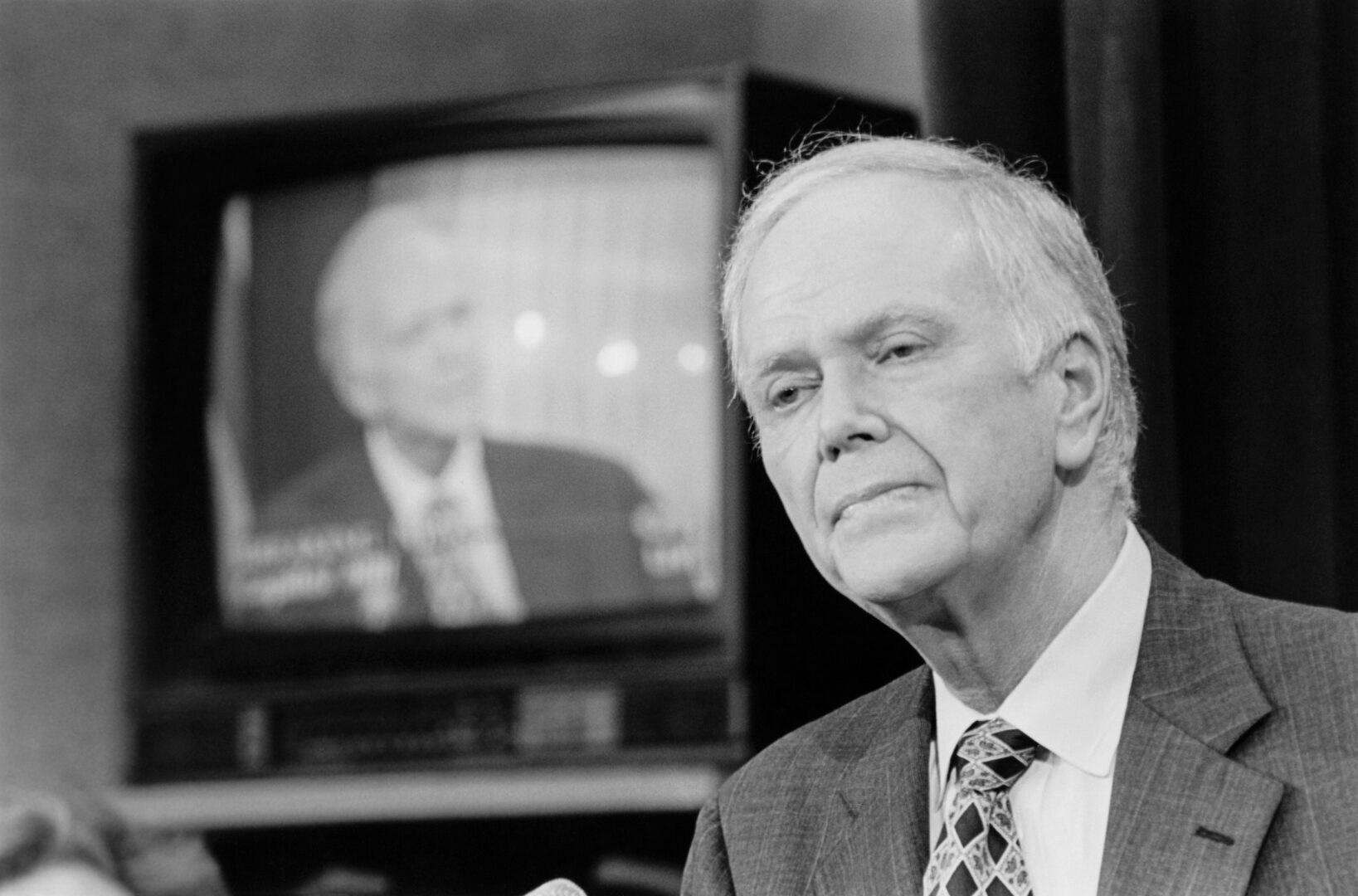
Former Sen. Bob Packwood, whose immense political influence was marred by a major sexual misconduct scandal, died Saturday at the age of 93.
The Oregon Republican served nearly 27 years in the Senate, but resigned in 1995 after the Senate Ethics Committee voted to recommend expelling him for sexual misconduct, abuse of office and obstruction following a 33-month investigation.
It was a rare example of a senator resigning under pressure, and a tense moment for the Ethics Committee. The Senate Ethics Committee had determined that Packwood made unwanted sexual advances to at least 17 women during his time in the Senate, and that he altered evidence in order to mislead senators.
As the investigation came to an end, the Senate Ethics Committee released 10,145 pages of documentation, including Packwood’s own taped diaries that the committee obtained under subpoena. Packwood had joked that he was performing his “Christian duty” in having sex with a staff member.
“I am aware of the dishonor that has befallen me,” he said in a speech announcing his resignation on the Senate floor. “It is my duty to resign.”
Kentucky Republican Sen. Mitch McConnell, who was chair of the Ethics Committee at the time, said the panel’s vote to expel him had been made with the substantial documentation it had, but not with the more recent “credible” allegations that followed it, including one involving unwanted sexual advances against a 17-year-old minor who had been an intern in Packwood’s office.
The committee’s unanimous vote in September 1995 to recommend expelling him was the first time it had voted to remove a member since 1981. Packwood announced his resignation the next day.
During his tenure, Packwood spent a stint as the chair of the Senate Finance Committee and played a key role in the Reagan-era tax overhaul that was signed into law in 1986.
Packwood initially wasn’t bought in on the idea of such a tax bill, but he eventually helped broker the final product, in partnership with then-Ways and Means Chair Dan Rostenkowski, D-Ill.
The bill was up against a start-and-stop consideration process, with lawmakers and lobbyists insisting the bill was dead at multiple points before its final passage. Once signed into law, the bill dropped the highest personal income tax rate while increasing the top capital gains tax rate.
Packwood’s time on the Finance Committee is mirrored by the man who replaced him in the Senate, Sen. Ron Wyden, who is currently the top Democrat on the Finance Committee.
Decades before President Barack Obama signed the 2010 health care law, Packwood was the original Senate sponsor of President Richard M. Nixon’s 1974 plan that would have required employers to provide their employees with health insurance. But as opposition grew in the early 1990s, Packwood joined the ranks of those opposed to his own bill.
“Those who are opposed to this are of the same passion as gun registration and abortion,” he told reporters in June 1993. “I am not going to compel people who are so vehemently opposed to it to cover their employees.”
Packwood was born in Portland, Ore., in 1932. He earned his bachelor’s degree from Willamette University in 1954 and his law degree from the New York University School of Law in 1957.
He was elected to the Oregon House of Representatives in 1963, serving until 1968 when he was elected to the U.S. Senate. He was an early supporter of legislation supporting the legalization of abortion, introducing a bill to do so in 1973, three years prior to the Roe v. Wade decision.
Packwood is survived by his wife, two children, two stepchildren and three grandchildren.