Wrapup: Senate hits spy powers snafu
Plus, housing bill teed up while the chamber awaits Iran briefing
Senators moved ahead with a bipartisan housing bill this week, paving the way for a final vote once they return from the Juneteenth long weekend. But on another topic, they seemed to go not forward, but back.
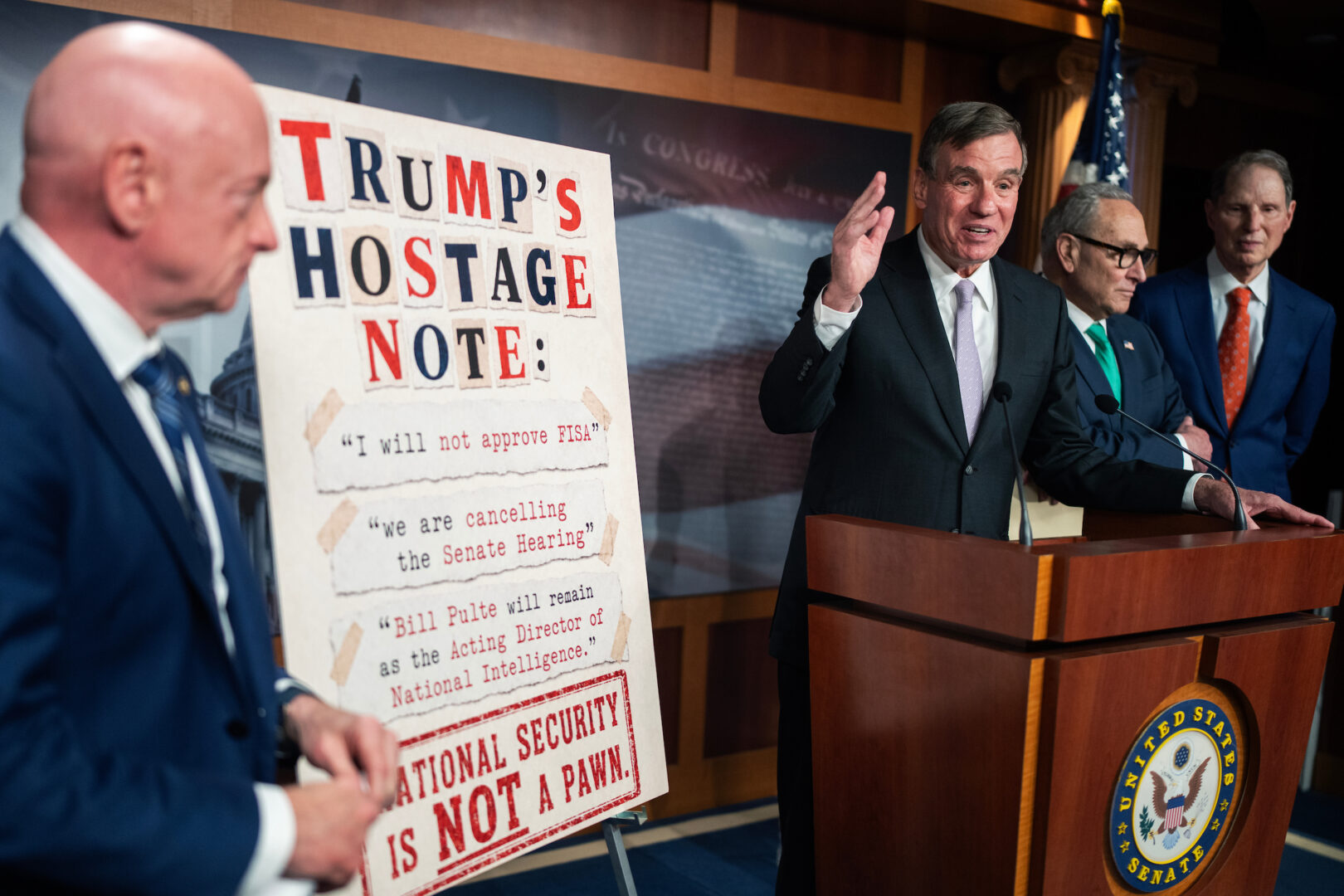
President Donald Trump sent negotiations to renew a lapsed spy power authority back to square one Wednesday, souring the mood as senators wait on word from the White House on how to proceed with the reauthorization and a key intelligence nominee.
“I’ve never been asked to slow a nomination down before,” said Majority Leader John Thune, R-S.D., Thursday of the White House. “We’re just executing, or trying to execute, on what they had asked us to do.”
Others were unhappy over how Trump is rolling out a “memorandum of understanding” with Iran meant to end the war, triggering calls for a congressional briefing from the White House. Particularly concerning for some GOP senators was confusion over a $300 billion “reconstruction” plan for Iran.
Meanwhile, the House had the week off. The chamber left town last week after voting down a short-term extension of the spy powers authority under Section 702 of the Foreign Intelligence Surveillance Act.
That authority lapsed Friday, leaving Thune to take up the FISA reauthorization mantle.
The path initially looked promising: Thune was working to shepherd Jay Clayton toward a quick confirmation to lead the nation’s intelligence community, defusing Democratic anger over Trump’s temporary pick, Bill Pulte.
But Trump upended that plan in the wee hours of Wednesday morning, when he ordered Clayton not to appear at his scheduled Senate confirmation hearing later that day.
Clayton is currently leading the high-profile Office of the U.S. Attorney for the Southern District of New York, and Trump said in a social media post he did not want Clayton to leave that position until James McDonald, his pick to replace Clayton, is in place. He added he also wants lawmakers to fold into FISA a voter ID bill that has no route to passage in the Senate.
Clayton didn’t show up for the canceled hearing Wednesday afternoon, and neither did members of the Senate Intelligence Committee. The reversal from Trump confused senators, and Thune said Thursday morning he hadn’t heard from the president on the Clayton nomination or another path forward on FISA.
The FISA fiasco overshadowed a long-awaited breakthrough this week, as Senate Banking and House Financial Services panel leaders reached an agreement on a sweeping housing package aimed at addressing voters’ affordability concerns, which they hope to pass early next week.
The measure includes nearly four dozen provisions based on stand-alone measures, including language aimed at streamline housing regulations to bolster the construction of affordable housing, change rules to increase manufactured housing and encourage localities to ease zoning rules.
On the floor, senators cleared two former Republican House members — Michelle Steel of California and George Holding of North Carolina — for positions in the Trump administration. Steel was confirmed in a 55-39 vote to be ambassador to South Korea, and Holding was confirmed in a 48-39 vote to be U.S. director of the European Bank for Reconstruction and Development.
Iran briefing
Before senators left town Thursday, many said they were anxious to get a briefing from the Trump administration on the Iran MOU, which requires another 60 days of negotiations to finalize.
Vice President JD Vance said Thursday that the White House intends to brief Congress “very soon” once both chambers are back in session and has been “informally” talking to people in Congress “just over the last week.” He added he does not think that congressional approval is needed to lift certain sanctions on Iran as part of the deal.
Thune said the deal seems “good for Americans” in that it will open up the Strait of Hormuz and result in economic benefits. But he said “long-term … issues are still unresolved, and that’s something they’re going to be working on.”
But Thune wasn’t sure about the $300 billion reconstruction fund idea.
“I don’t think there ought to be any financial incentives or any financial relief given to Iran absent their commitment to end their nuclear program,” he said. “I think these things are all contingencies right now, and they’re conditioned upon certain behavior on their part. … We’re still, as you know, getting the particulars and the details, and trying to sort out what comes next.”
Sen. John Cornyn, R-Texas, who lost his primary to a Trump-backed Republican challenger, said such a fund is “not gonna be [used] for constructive and useful purposes.”
“I think this is just an intermission,” Cornyn said. “I don’t think this is a conclusion.”
Mark Schoeff Jr., Nina Heller and Savannah Behrmann contributed to this report.