Supreme Court allows counts of late-arriving mail ballots
A 5-4 decision upholds Mississippi law over meaning of Election Day
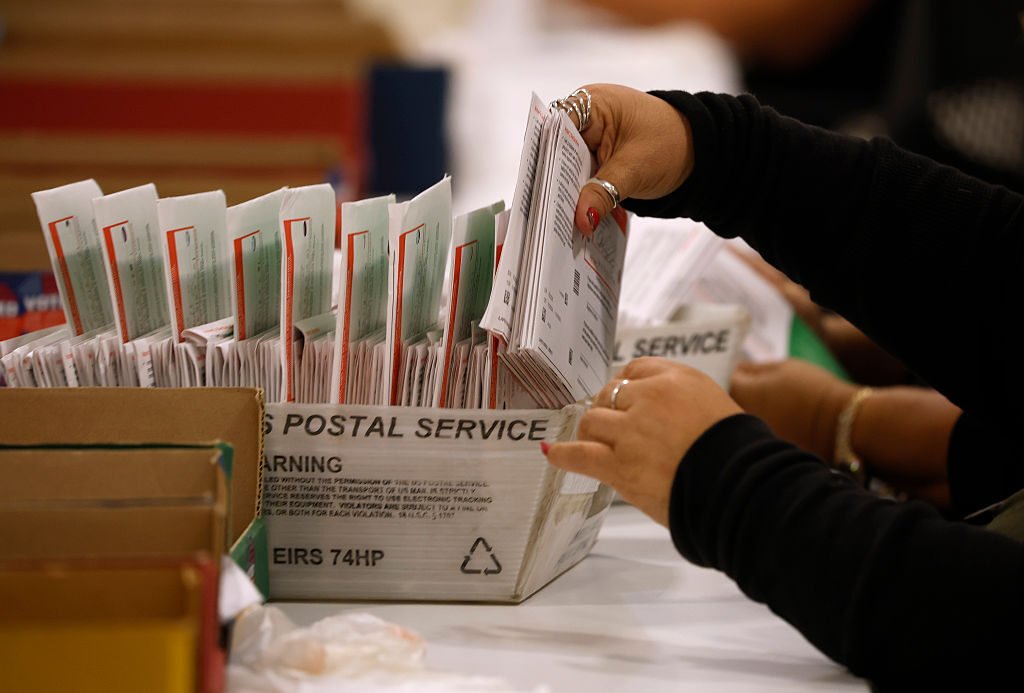
The Supreme Court upheld a Mississippi state law Monday that allows election officials to count mail ballots that are postmarked by Election Day but that arrive up to five days later, turning aside a challenge from Republicans and allowing similar laws in more than two dozen states.
The 5-4 decision, written by Justice Amy Coney Barrett, found that federal election law does not require ballots to be received by Election Day. It overturned a lower court opinion that had sided with a challenge brought by the Republican National Committee and the state Republican party.
States have had laws for decades allowing the counting of ballots that are postmarked by Election Day, but many expanded the practice during the COVID-19 pandemic.
Barrett wrote that federal law does not require that states close the metaphorical ballot box on election day. “The election-day statutes say nothing about ballot receipt, and we cannot add to the words Congress chose,” Barrett said.
Also, Barrett wrote a strict interpretation of the federal law laying out election procedure would also endanger many modern election processes, including early voting, voter registration systems and provisional ballots.
The Constitution gives states most power over elections, Barrett wrote, with Congress having the authority to change some rules.
The ruling likely sets up further political confrontations this fall, as Trump himself has asserted an ability to curtail mail voting and ban the counting of late-arriving ballots. It’s also been one of the major provisions in an election overhaul bill Trump has repeatedly backed.
That bill has not advanced in the Republican-controlled Senate despite public pressure from Trump to change the chamber’s rules to do so. Last week, Trump canceled the signing of a bipartisan housing bill and his allies in the House have vowed to stop floor votes in the chamber until the Senate votes on the measure.
Barrett on Monday wrote that the dispute was properly before the elected branches of government, not the courts. “As we have said time and again, however, policy arguments are properly directed to legislatures, not courts,” Barrett wrote.
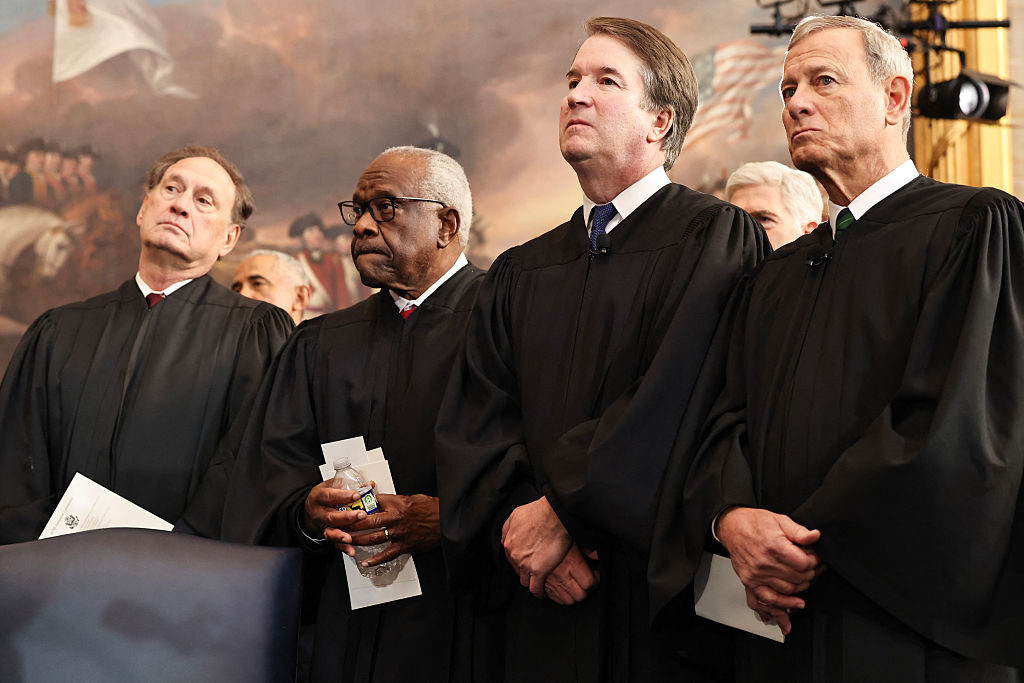
Justice Samuel A. Alito Jr., in a dissent joined by Justices Clarence Thomas and Neil M. Gorsuch, as well as in parts by Justice Brett M. Kavanaugh, argued that federal law barred states from counting ballots that arrived after Election Day.
“Because federal law requires that the election occur on election day, it preempts Mississippi’s statute,” Alito wrote.
Alito argued that for two centuries states had treated election day as the deadline for ballots. That included collecting ballots from soldiers deployed in wars and efforts to collect overseas voters’ ballots.
The case is Watson v. Republican National Committee.