For Sean Astin, it’s see and be seen … on C-SPAN
As leader of the screen actors union, he’s drawing on a deep interest in politics
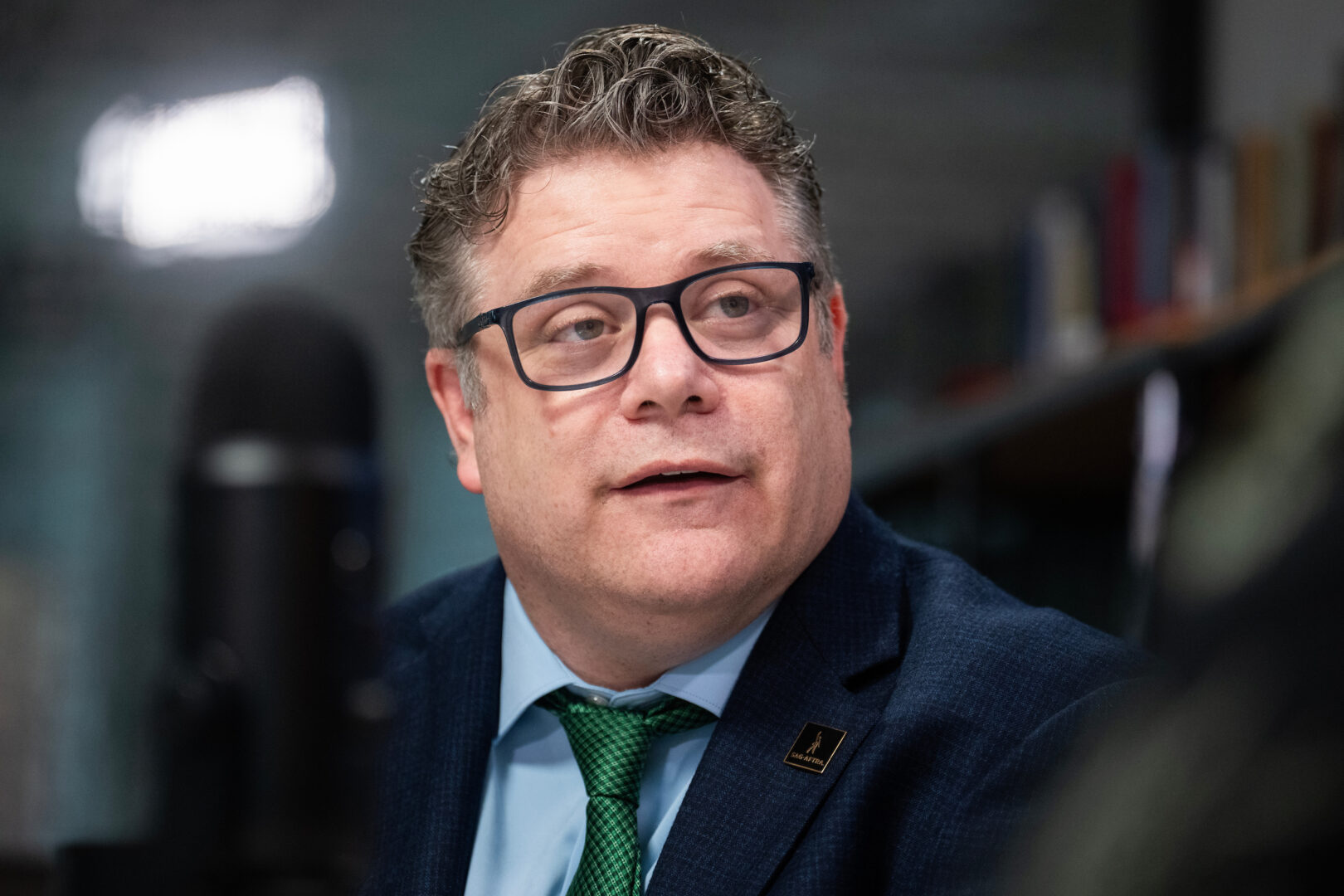
It wasn’t Sean Astin’s first time in Washington.
“As a C-SPAN junkie and a guy who loved ‘West Wing,’ I’ve always just felt a reverence for this place,” the actor says.
Between roles in “The Goonies,” “Rudy” and “The Lord of the Rings” trilogy, he managed to fit in a stint as civilian aide to the secretary of the Army. Just a couple years ago, he earned a master’s degree in public administration and policy at American University.
But his latest part to play — as president of SAG-AFTRA — brought him to D.C. this summer on a different mission, as he pushes for change on behalf of the union representing roughly 160,000 actors, dancers, DJs, stunt performers and other media professionals.
He wants to expand a tax deduction for performing artists’ expenses, create a federal tax incentive to lure productions back from filming abroad, and counter deepfakes by defining intellectual property rights in voice and likeness.
He may be a performer by trade, but he’s always enjoyed some in-the-weeds reading.
“I was in New Zealand when Bush v. Gore happened, and when that decision came down from the court, I printed it out. It was like 64 pages, and sitting in my Hobbit feet — there’s a lot of waiting around on the set, you know — I read this whole thing,” says Astin, who played the loyal Samwise Gamgee to Elijah Wood’s Frodo.
Now he’s jumping in with both feet. He succeeded Fran Drescher last fall as leader of the union, joining a list of famous Screen Actors Guild heads like a pre-presidency Ronald Reagan and Astin’s own mother, the Oscar-winning Patty Duke.
“I care about this stuff,” he says. “My parents bred that in me from a very young age. I remember the first time I came to Capitol Hill. I was probably 3 or 4, and they took a picture of me in front of the Lincoln Memorial above the Reflecting Pool where there’s cement kind of pedestals, and I jumped off of it. The picture has me in the air with my hair up, one of those 1970s kids with long hair, and that image is like — that’s who I am.”
This interview has been edited and condensed. To hear more, check out the Political Theater podcast.
Q: You’ve been making the rounds in D.C. this summer, talking about issues like AI and the tax code.
A: A few weeks ago, I was really tired at the end of a couple of days of shoe-leathering it through the halls of the Congress on the marble floors. So I got back to the hotel room and I turned on the TV, and there was a wonky hearing on C-SPAN, and I just watched like two hours of a tax subcommittee.
Q: How do you make the case for tax breaks for Hollywood?
A: If it has the word Hollywood attached to it, it’s instantly reviled by a certain section today. But if you take that word out, and you put in the entertainment industry — the word industry connotes labor. You’ve got workers pushing dollies and putting up lights, along with our performers.
Our line of work should not be considered a hobby, and it should not be considered a frivolity. This is real work that real people are doing. But there are quirks of our industry. You need an agent, and that agent takes 10 percent. And a lot of times, if you don’t have a manager, you’re not going to be able to triangulate on a job, so there’s another 10 percent. Now you talk about a number of other expenses, and next thing you know, you’re making 25 cents on the dollar.
Q: What about incentives to help America keep exporting movies to the world?
A: It’s not one of our biggest exports, but it’s one of our most special. American entertainment over the last 100 years has been a brand for us. Policymakers can talk about certain kinds of movies that promote values they don’t care for, but mostly speaking, they and their families love the romantic comedies, the action films.
All of us should be really proud of this American art form. You know, I did a movie in Bulgaria, just two or three days, and when I came onto the studio lot, it looked amazing. It looked exactly like Warner Bros. in Los Angeles, where I’m from. All the lights were on, and it just had that electricity that you have when you’re around movies.
That’s happening in Budapest. It’s happening in New Zealand, where we did “Lord of the Rings.” Canada’s got big incentives, and basically all over the world, there are governments saying, “Please come film.” They’ll build a studio over there, and that means fewer jobs for our performers, for our background artists and stunt people and singers and dancers.
Q: In June you testified in front of the House Judiciary subcommittee that deals with intellectual property, chaired by California Republican Rep. Darrell Issa.
A: The legislation we were talking about is the NO FAKES Act, and it would establish for the first time an individual intellectual property right in voice and likeness.
We performers, when we have a contract, we’re trading our likeness and voice. That’s what they’re paying us for — and so when you do a deepfake of somebody, you’re going to interrupt that commerce. But it actually is applicable to everyone, every American.
We’ve had to work with different constituency groups to make sure the First Amendment is safe, so there’s all these carve-outs for satire, for commentary, for news. The politicians are mindful of the protection of political speech.
My argument is if you have a facsimile of me saying something about some hot-button issue, you’ve now robbed me of my First Amendment right not to say something, or my right to say the opposite of that. And if you’re a parent and you see your kid has been deepfaked, what’s your recourse right now? Nothing. The platforms take it down if it deals with sexually explicit stuff, but the rest of it, there’s no recourse. So this would allow them to say, “Hey, that’s not me.”
Q: How does this compare to your past experiences in Washington?
A: I’m an expert in performance, but I’m not an expert in intellectual property or AI. My personality is I just don’t want to be unprepared, so I was reading and reading and reading until I really felt like I could speak to what’s at stake.
Our union does not take positions on individual political campaigns. We try to remain nonpartisan, so whatever happens, we still have an ability to make moves. And our members, they need this.
Testifying in front of that subcommittee should have been a thrill, because it’s the first time I’ve ever done that. But it was really important, and I was really focused on the substance of it. But when I get on the plane to go back to California, I think I’m going to be like, “What just happened?”
The spelling of Wood’s name has been corrected in this report.