Critics mount offensive against change to federal grant rules
OMB proposed rules triggered almost half a million responses
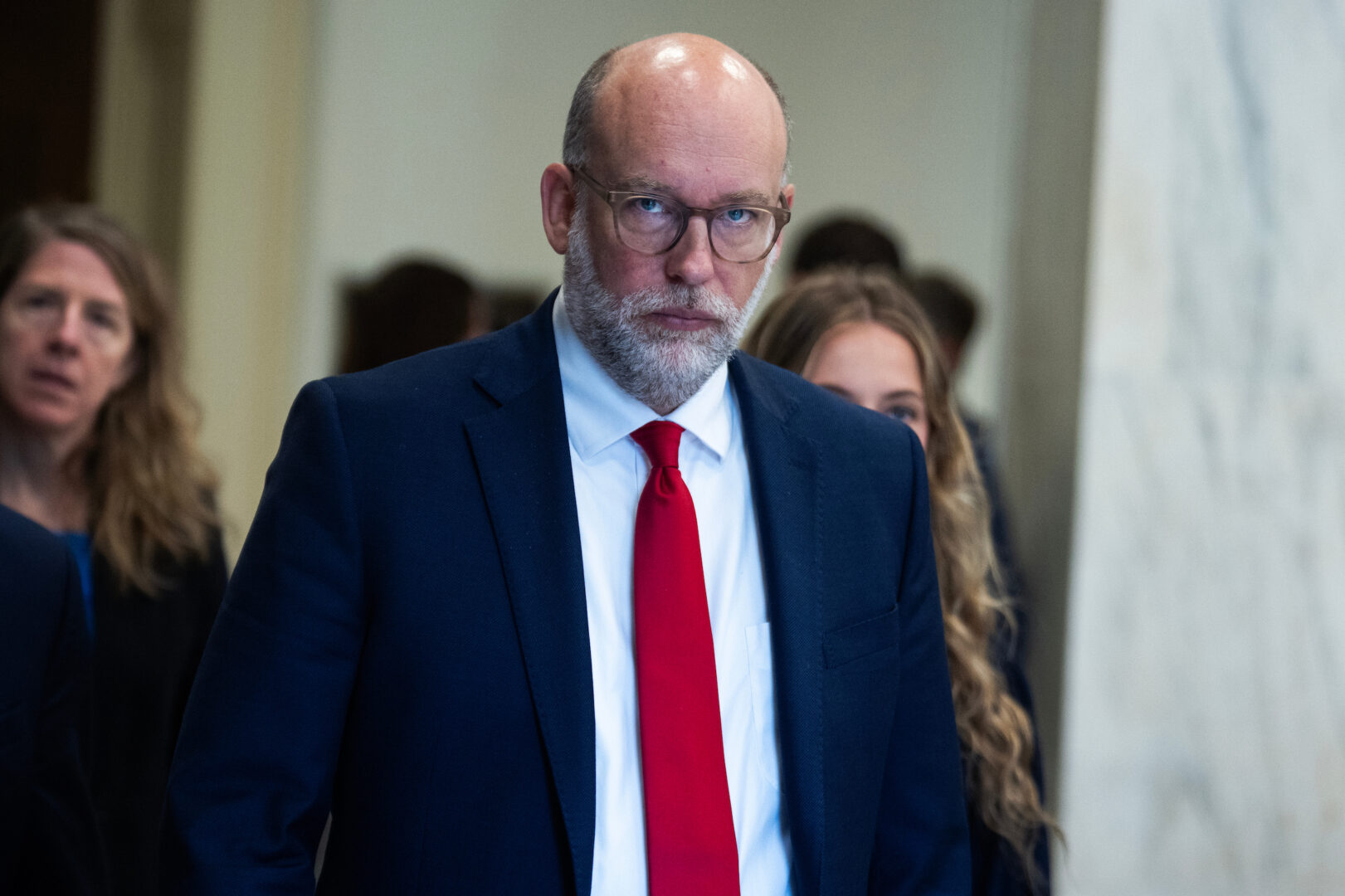
Opposition is building to a sweeping government-wide crackdown on federal grant awards, with opponents threatening litigation over a proposed rule that would put the grant approval process into the hands of political appointees.
A request for public comment on the rule by the Office of Management and Budget triggered almost half a million responses, most of them opposed to the changes.
Stand Up for Science, a nonprofit advocacy group that organized opposition to the proposed rule, said it was “prepping with our partners for the legal battles to fight OMB in the federal court system” and “doubling down on the pressure it will take to get this Congress to stand up and stop the OMB rule from being implemented.”
With the 45-day comment period ended on July 13, the next step is for the Office of Management and Budget to review the comments and publish a final version of the rule by Oct. 1, in time for the fiscal 2027 grant approval season.
The proposed rule would replace OMB’s “uniform guidance” with regulations that apply to dozens of federal agencies that award grants, potentially affecting up to $1 trillion or more in annual grant funding.
The rulemaking would flesh out and codify executive orders President Donald Trump issued last year that would overhaul how federal agencies dole out funds to prevent grants from furthering “woke” causes and impose a new “gold standard” for government-backed scientific research.
Among other changes, the rule would require approval from senior political appointees at agencies before competitive grants could be awarded, deemphasizing the role of peer review.
It also says agencies must ensure that funding proposals are consistent with the law, agency priorities and the national interest, and that they ensure “that discretionary awards advance the president’s policy priorities.”
The regulations would make it easier for agencies to cancel funding after a project is underway, bar the use of funds for “woke” causes, and prevent recipients of grants from collaborating with adversarial nations such as China.
Dozens of organizations representing grant recipients — who include state and local governments, nonprofit organizations, and medical and scientific researchers — mobilized against the proposal and urged that it be withdrawn or modified.
Litigation appears likely if the rule is made final.
In an analysis last month, the law firm Arnold & Porter wrote that “it is not obvious that OMB has the requisite statutory authority to impose binding regulations — rather than guidance — governing federal grantmaking, or at least not statutory authority covering all of the sweeping new procedural and substantive mandates the proposed rule would impose.”
Opponents hope to pressure Congress to stop the rule before it becomes final or to block it through appropriations bills or other legislation after it becomes final.
Gauging public reaction
Many, but not all, of the comments are opposed to the rule. Of 496,769 comments sent in during the 45-day public comment period, just over 54,000 had been published on Regulations.gov as of Friday.
Tech Policy Press, a nonprofit organization, used artificial intelligence to analyze 51,000 comments that were posted and said 94 percent were in opposition and only 6 percent in support.
OMB has said the revisions would improve transparency, accountability and oversight of grant awards, and “aim to ensure that basic American principles of equality and equal opportunity are upheld throughout all stages of the award making process and that unlawful discrimination is no longer permitted.”
The regulations would transform the award of “discretionary” or competitive grants, which average about $200 billion a year, by requiring review and approval by a political appointee.
The rule also could potentially affect some of the $900 billion a year in formula and block grants that go to state and local governments because it contains a provision that would allow an agency to change the “terms and conditions” of grants after work has begun.
The rule has drawn support from some conservatives. They like that the regulations bar funding for “diversity, equity and inclusion” initiatives, “gender ideology” programs and the transition of minors from one sex to another.
Jonathan Butcher, a senior research fellow at the Heritage Foundation, said he welcomes an overhaul of how grants are awarded. “I think the peer review process is deeply in need of reform, and I think that steps to improve it and make it consistent with the priorities of the administration … are valid,” he said.
Critics of the proposal range from House and Senate Democrats to multiple organizations and individuals to Senate Appropriations Chair Susan Collins, R-Maine.
In a letter to OMB Director Russ Vought last month, Senate Democrats charged that the rule “unlawfully seeks to substitute Congress’s role in directing federal spending with the president’s preferred priorities, and in doing so, makes it harder for every community and organization … to fairly access federal funding.”
Collins also wrote to Vought asking him to extend the comment period for at least 90 days. She added that the rule would “impose new, burdensome requirements on award recipients that would harm small and rural communities, undermine scientific and biomedical research, and conflict with Congress’ control over the federal funding process.”
During a House Financial Services Appropriations Subcommittee hearing last month, Vought told the panel he would not extend the comment period but he added that reviewing the public comments “is going to take us some time.”
Russ Paulsen, president and CEO of Research!America, an advocate for biomedical research, took aim at a provision that would allow agencies to cancel projects — including potentially clinical trials — midstream.
He said that move would be unjust to patients in clinical trials who “have put in volunteer hours and at some point taken on risk, probably to themselves, and who would then be told, ‘Thank you for your service, but we’re going to stop this experiment because there’s somebody new who’s interpreting administration priorities.’”
Few if any Republicans besides Collins have objected to the rule. But it has taken some fire from the right side of the political spectrum.
George Mason University economist Alex Tabarrok, who describes himself as a free-market conservative, slammed the proposal in a blog post last month.
“Political review of every award, peer review demoted, agency review promoted, termination whenever ‘priorities’ change. Chilling,” he wrote. “It’s a nightmare of petty low-trust review of the kind that is already drowning science.”