Which direction is Trump’s job approval rating headed?
After brief polling reprieve, president could be facing downward slide again
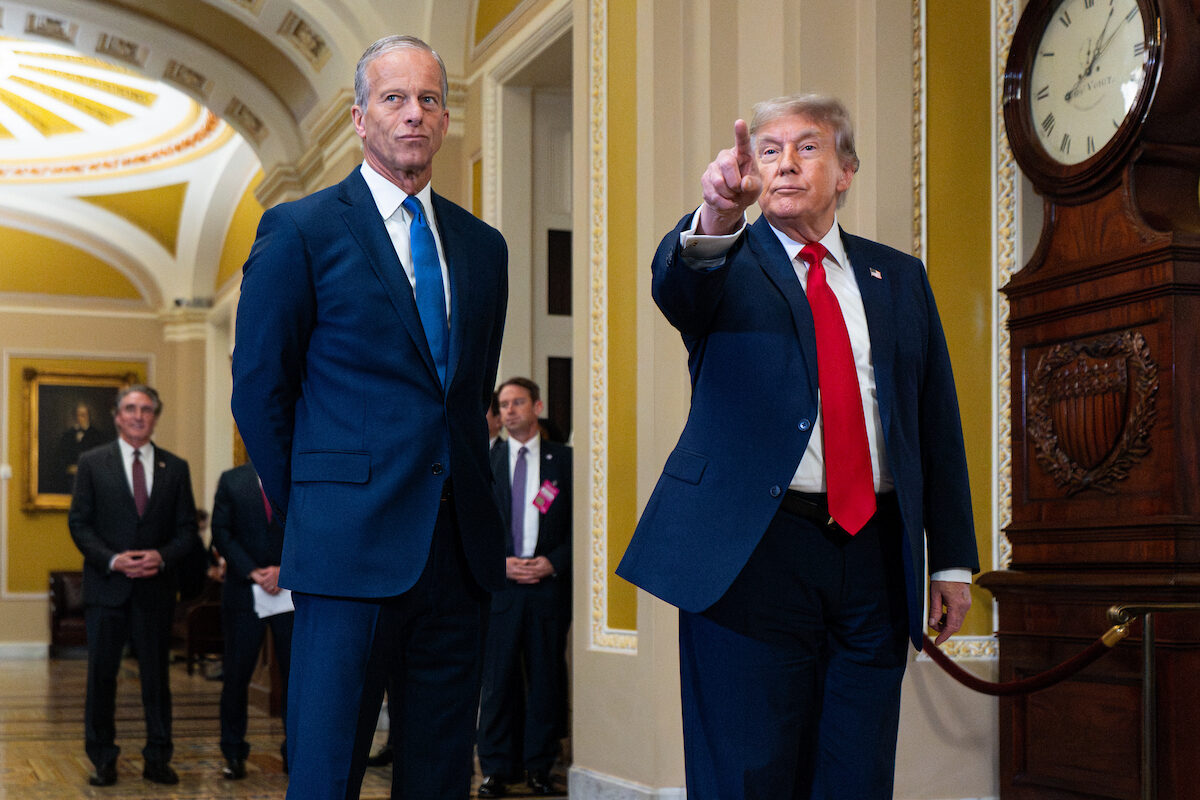
ANALYSIS — The good news for Republicans is that President Donald Trump’s job approval rating isn’t getting any worse. The bad news is that many of the issues that drove his rating down in the first place are making their way back into the news, with the midterm elections creeping closer with each passing day.
After beginning his second term with a 52 percent job approval rating, according to Nate Silver’s national average, Trump embarked on a steady downward slide, slipping to a low of 38 percent near the end of May. Since that low point, the president has seen modest improvement to 40 percent, as of Monday.
And GOP strategists have been encouraged by some improvement for their party in the generic congressional ballot, which asks respondents whether they plan to vote for the Republican or Democratic candidate for Congress. They specifically point to the latest Washington Post-Ipsos poll, which had Democrats with a 3-point advantage, even though Silver’s average has shown Democrats with a consistent 6-point edge for the past five months.
Republicans, who are defending narrow majorities on Capitol Hill, are looking for any bits of hope, given the traditional midterm headwinds they face and Trump being in worse shape now compared with his first term. At his lowest point, in mid-2017, Trump was upside down by 20 points on his job approval rating, but he bounced up to being 13 points underwater ahead of his first midterm, when Republicans lost a net of 40 House seats (and netted two Senate seats).
This time around, Trump is underwater by 22 points, according to G. Elliott Morris’ polling average, and is almost six months behind from when he started his 2018 rebound. And even though the president appears to have halted his slide, another downturn looks more likely than a rebound.
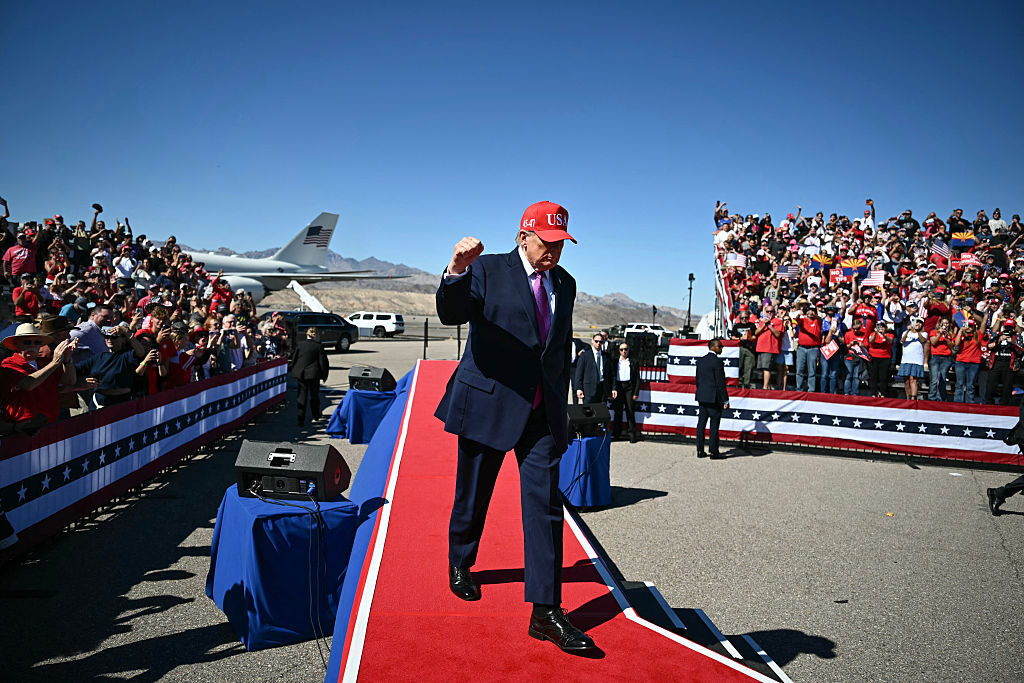
Trump is at risk of squandering the goodwill and enthusiasm from hosting the World Cup and the “America 250” celebration with a series of policy decisions that contributed to his initial political decline.
Despite multiple claims of ceasefires and agreements, the conflict with Iran is back on. Three more U.S. servicemembers have died over the past week, two as a result of a missile attack on an air base in Jordan and one during an Iranian drone detonation at a northern Iraq air base. That has brought the total number of service members killed since the war began in February to 17 as of Tuesday afternoon. And uncertainty over the Strait of Hormuz has pushed the national average price of gas back up to $4 per gallon, according to AAA as of Tuesday.
Two more people were fatally shot by Immigration and Customs Enforcement agents in Texas and Maine, prompting the agency to largely suspend vehicle stops. But Trump promptly reversed that policy reversal. “[We] must be strong, tough, and smart, and we CANNOT give up one of I.C.E.’s most important and effective Crime Fighting tools, THE TRAFFIC STOP!” Trump posted on Truth Social.
And, unfortunately, more violence related to immigration enforcement appears likely, based on the agency’s track record.
Last week, the president chose to utilize a prime-time address to relitigate his 2020 election loss. Trump’s focus on vote-counting in Georgia has frustrated some Republicans, right from the immediate aftermath of the 2020 election when his fixation contributed to the GOP losing both of Georgia’s Senate seats in January 2021 runoffs. And the president on Monday signed proclamations imposing 50 percent tariffs on certain goods from Canada, a longtime ally that also incurred Trump’s wrath over wildfire smoke drifting from across the northern border.
In total, it almost reads like the greatest hits of Trump’s most unpopular political positions.
The uncertainty around Trump’s standing comes at a critical moment. Not only are the midterm elections a little more than three months away, but both parties are polling in earnest in dozens of races, calibrating their fall strategies. So even if Republicans are feeling cautiously optimistic about the latest data, that could turn out to be a mirage if the president’s job approval rating takes another turn for the worse. And seats that look solid for the GOP today may not be in a month or two from now.
But Republicans aren’t waiting on Trump to get dramatically more popular. Rather than the election being a referendum on the president, they’re intent on it framing November as a choice between the two parties. More specifically, Speaker Mike Johnson described it as a “contrast between common sense and crazy” at a recent campaign event for Omaha City Council Member Brinker Harding, who’s trying to succeed Republican Don Bacon in Nebraska’s battleground 2nd District.
It’s a good strategy considering that the national Democratic Party isn’t popular either. Overall, Republicans believe Democrats are making the wrong choices in key primaries around the country.
Some of the minority party’s highest-profile primary winners have been affiliated with the Democratic Socialists of America. Even though the seats they won aren’t the most competitive, Republicans plan to portray them as the de facto leaders of the Democratic Party.
Back in 2018, Republicans held onto Nebraska’s 2nd District, 51 percent to 49 percent, in the face of a Democratic wave after the more progressive candidate won the Democratic primary. But Bacon, a retired Air Force brigadier general, was an established incumbent that cycle, while Harding is trying to win an open seat. The district has also become more Democratic over the past decade. Trump would have finished ahead of Hillary Clinton by 2 points in the 2016 election, under the district’s current lines, while Kamala Harris finished ahead of Trump by 5 points in 2024.
In the end, the outcome of the midterm elections likely comes back to the president’s standing and how voters feel about the direction of the country. And while it looked just a few weeks ago like Trump and the Republicans were poised for a modest bump, the president who can’t seem to get out of his own way could be headed for another downward turn once again.