FCC opens door to larger local broadcast ownership groups
Critics say agency lacks authority to lift national ownership cap
Local television ownership groups could grow after the Federal Communications Commission took a controversial vote to remove the national ownership cap.
The FCC voted, 2-1, at its August open meeting Thursday to lift the cap, which limited individual broadcasters’ ownership to stations that in aggregate reached no more than 39 percent of households, replacing it with a case-by-case review process.
Supporters say the move will funnel more resources to local news. Critics say the ownership cap supported viewpoint diversity and that the FCC lacks authority for the change.
Those critics include Senate Commerce Chairman Ted Cruz, who in July said in a statement he was “skeptical” that the FCC could change the cap without an act of Congress.
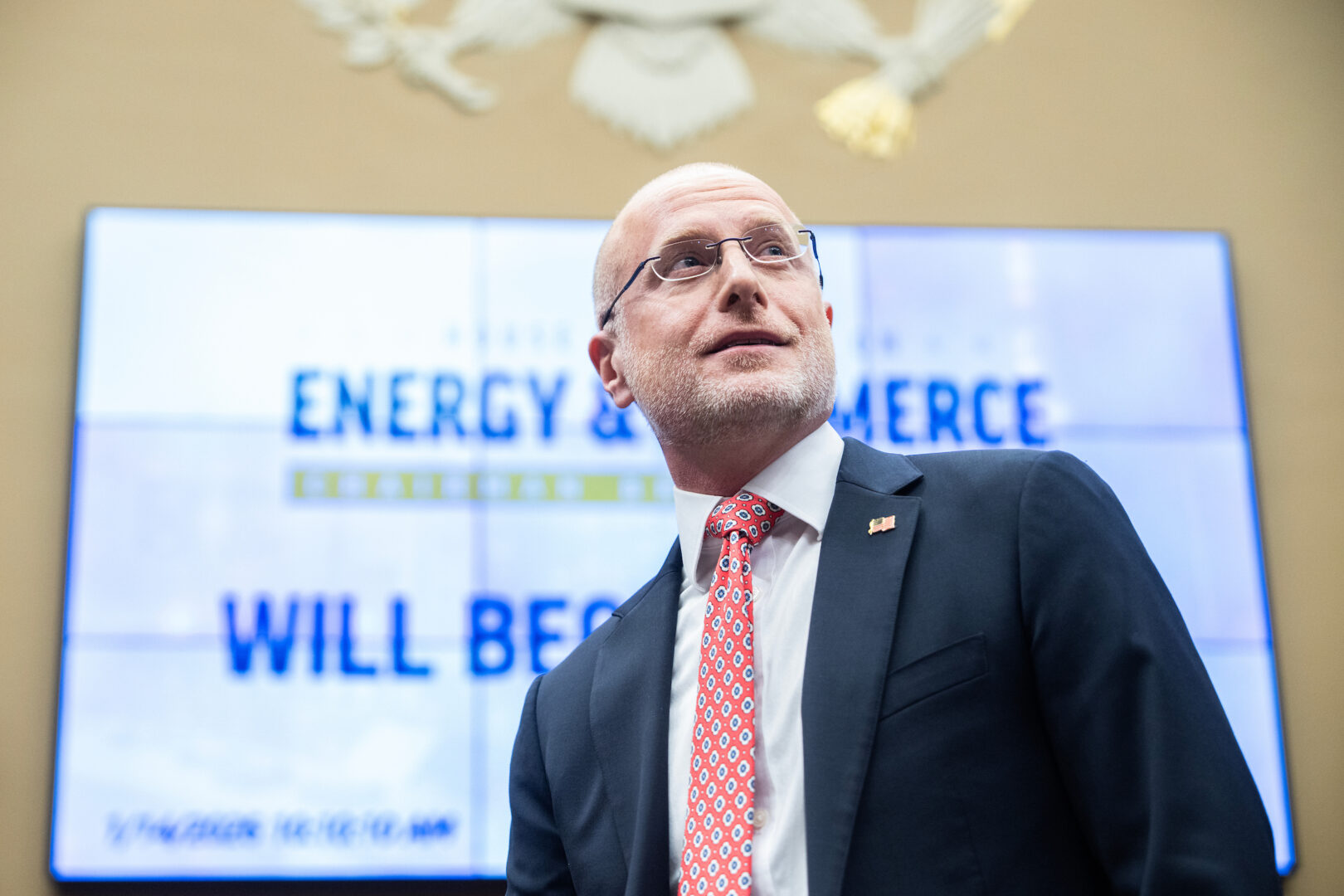
FCC Chairman Brendan Carr compared local TV to digital cable, streaming and social media, which are not subject to FCC caps. He said that removing the cap would allow the FCC to consider mergers based on their merits.
“Maybe a deal that exceeds the 39 percent cap is a good one. Maybe it is a bad one,” Carr said. “Today’s decision lets the parties make their case, allows all stakeholders to be heard, and ensures that the agency will then decide, consistent with our public interest review.”
The FCC’s public interest standard relies on the ideas of localism, competition and viewpoint diversity.
Chad Guo, deputy division chief of the FCC Media Bureau’s Industry Analysis Division, urged the FCC to lift the cap because he said it no longer serves the public interest.
“The national cap constrains the ability of broadcast television station owners to attract capital and generate revenue through achieving greater scale,” Guo said. “Eliminating the national cap would remove these restrictions and provide leverage to owners of local broadcast television stations against national networks.”
Minority objection
Commissioner Anna Gomez, the lone Democrat on the commission, said that authority to change the cap lies with Congress. She also underlined the civic importance of local broadcasting and news and said that lifting the cap “invites further consolidation” in TV ownership.
“It strengthens negotiating leverage for large national owners while doing nothing to ensure that the gains from consolidation translate into increasing community-focused reporting or improving emergency communications,” Gomez said.
The FCC currently has two vacant seats.
Sen. Ben Ray Luján, D-N.M., ranking member of the Commerce Subcommittee on Telecommunications and Media, said the FCC lacks authority for the decision.
“Chairman Carr’s move to get rid of the ownership cap is a move to circumvent Congress’s authority and further consolidate media power in the hands of a handful of massive broadcast conglomerates,” Luján said in a statement. “I strongly oppose this decision to circumvent Congress and will continue fighting to protect localism, competition, and the public interest.”
Rep. Doris Matsui, D-Calif., the ranking member of the Energy and Commerce Subcommittee on Communications and Technology, said in a statement Thursday that the FCC’s decision was unlawful and would harm independent voices.
“The FCC should be protecting those voices, not giving the nation’s largest station owners and the Trump Administration more power over them. Replacing a clear limit that Congress set by law with case-by-case decisions based on this FCC’s interpretation of the public interest would hand the Trump Administration even greater power over who owns and controls the news Americans receive,” Matsui said.
Carr argued that the FCC has authority to modify the cap, pointing to a 2002 decision from the U.S. Court of Appeals for the District of Columbia Circuit, in which the court said that Congress, in setting the cap at 35 percent in the 1996 communications law, “determined only the starting point from which the Commission was to assess the need for further change.”
In explaining her dissent, Gomez said that decision came before the current cap was set.
Congress set the ownership cap at 39 percent in 2004 as part of a consolidated appropriations law. That law directed the FCC to review its ownership rules every four years, but noted that “This subsection does not apply to any rules relating to the 39 percent national audience reach limitation.”
Commissioner Olivia Trusty, a Republican, said that the law directed the FCC to set the 39 percent level “but it did not permanently strip the commission of the authorities Congress otherwise granted to revise that rule when doing so serves the public interest.”
However, Trusty added that “reasonable minds can differ” about interpreting the law, and that “a final decision like the one we adopt here can enable legal clarity on this issue through the court review.”
Curtis LeGeyt, president and CEO of the National Association of Broadcasters, celebrated the elimination of the cap, which he called “outdated” in a statement.
“We applaud Chairman Carr and the Commission for recognizing that rules adopted decades ago should not constrain local broadcasters’ ability to invest in journalism, innovation and service to their communities,” LeGeyt said.
Carr’s FCC has already shown a willingness to set aside the 39 percent cap.
In March, the commission approved the merger of broadcasters Nexstar and Tegna, a decision which required waiving the cap.
DirectTV and a group of states sued to stop the merger on antitrust grounds. The District Court for the Eastern District of California issued a temporary restraining order and then a preliminary injunction in the case, preventing further integration of the TV giants.
Carr himself has frequently drawn attention for his framing of the FCC’s public interest standard for broadcasters.
He has floated the idea of using the public interest standard to review licenses of broadcasters who air programming that the Trump administration finds objectionable.
Earlier this year, the FCC required eight stations owned by Disney to file for early renewal of their broadcast licenses. Carr has complained about Disney/ABC programs “Jimmy Kimmel Live!” and “The View.” The FCC has sought comment on whether “The View” is a news program not subject to the commission’s equal time rule.
Critics, including fellow Republicans, have said that the FCC under Carr is acting to censor views it disagrees with.
At a Senate Judiciary Committee nominations hearing on Wednesday, Sen. John Kennedy, R-La., questioned D. Adam Candeub, current general counsel for the FCC and a nominee for assistant attorney general, about the FCC’s authority to “regulate freedom of speech.”
“Doesn’t that scare you? What … if the FCC is in the hands … of someone whose politics you disagree with?” Kennedy said, going on to say that the FCC is “getting into the foothills of violating [the] First Amendment.”
Prior to the meeting, protestors stood outside the FCC building, handing out fliers against what they called the “federal censorship commission.”
Cruz has also been critical of Carr in the past, including comparing Carr’s comments on Kimmel and the possibility of reviewing the licenses of stations broadcasting his show to mafia intimidation.