At the Races: No breaks for Dems

Welcome to At the Races! Each week we bring you news and analysis from the CQ Roll Call campaign team. Know someone who’d like to get this newsletter? They can subscribe here.
The courts have not been Democrats’ friend when it comes to the redistricting wars this year.
A Maryland judge on Wednesday ruled that Democrats in the state legislature did not follow their own process for submitting constitutional amendments when they sent a redistricting-related measure to the November ballot earlier this month. He also found that Democratic lawmakers used “intentionally misleading” language in the ballot question.
That ruling, which the judge paused pending a likely appeal before the Maryland Supreme Court, was just the latest court decision against Democratic redistricting efforts across the country.
In Missouri earlier this month, a judge upheld the Republican secretary of state’s move to block from the November ballot a referendum seeking to overturn the new GOP-drawn congressional map. The Missouri Supreme Court is set to hear the appeal next week. The Colorado Supreme Court struck a blow to Democrats in June when the justices said a series of ballot measures aimed at revisiting the congressional map violated the state constitution. And this spring, the Virginia Supreme Court overturned a new voter-approved map that would have given House Democrats four pickup opportunities.
Redistricting has been one of the most significant storylines of the 2026 midterms. Since President Donald Trump urged the Republican-led Texas legislature to redraw the state’s congressional lines last summer, both parties have sought to gain advantages in the fight for the House by revisiting maps in states across the country.
It’s a process that’s likely to continue into the 2028 election cycle, though Democrats may again have fewer options as they try to catch up with Republicans. Democrat-controlled New York has taken steps toward redrawing its map after this year’s elections. More Republican-led states could also try to redistrict, including South Carolina and Indiana, where map-remaking efforts were stymied over the past year.
For now, the court rulings in Maryland and Missouri will need to come relatively quick with limited time remaining for states to finalize their November ballots.
In Indiana, the state Supreme Court agreed to hear oral arguments next month over six ballots that were rejected in a recount of a pivotal Republican primary. State Sen. Spencer Deery, who opposed redistricting, trails his Trump-endorsed challenger, Paula Copenhaver, by three votes.
Starting gate
What do Democrats want? Next week’s primary for an open House race in a deep-blue district north of Boston poses the question: Are Democrats seeking a change agent who pledges to shake up the system or are they looking for someone with experience and establishment ties?
Trump’s good Tuesday: The president picked up two big wins this week: In South Carolina, appointed Sen. Darline Graham capitalized on his strong support to win the Republican primary runoff to replace her late brother, Lindsey Graham, on the November ballot. And in Oklahoma, the president’s preferred gubernatorial candidate, former state Sen. Mike Mazzei, narrowly prevailed in a primary runoff against state Attorney General Gentner Drummond.
Special winners: House Republicans will soon see their razor-thin majority shrink further when a pair of Democratic special election winners are sworn in. In California, state Sen. Aisha Wahab won a bitter special election for the Bay Area seat of the disgraced former Rep. Eric Swalwell. And in Georgia, former local school board chair Everton Blair was elected to succeed Rep. David Scott, defeating the late congressman’s daughter in a Tuesday runoff.
Double Dan Sullivans: Dan Sullivan, a retired teacher and Trump critic, has finished third in Alaska’s all-party Senate primary, enough to earn him a spot on the November ballot with incumbent Sen. Dan Sullivan and former Rep. Mary Peltola. Under Alaska law, the top four finishers in the primary advance to the general election, which is decided by ranked choice voting. As of Thursday morning, the fourth slot had yet to be called by The Associated Press.
Choosin’ Texas: Trump is slated to headline a Republican National Committee fundraiser in Houston on Thursday to boost Texas Senate candidate Ken Paxton. The president recently touted his flush-with-cash political operation, but, as our colleague John T. Bennett reports, he’s faced some intraparty criticism for not deploying that war chest toward competitive races.
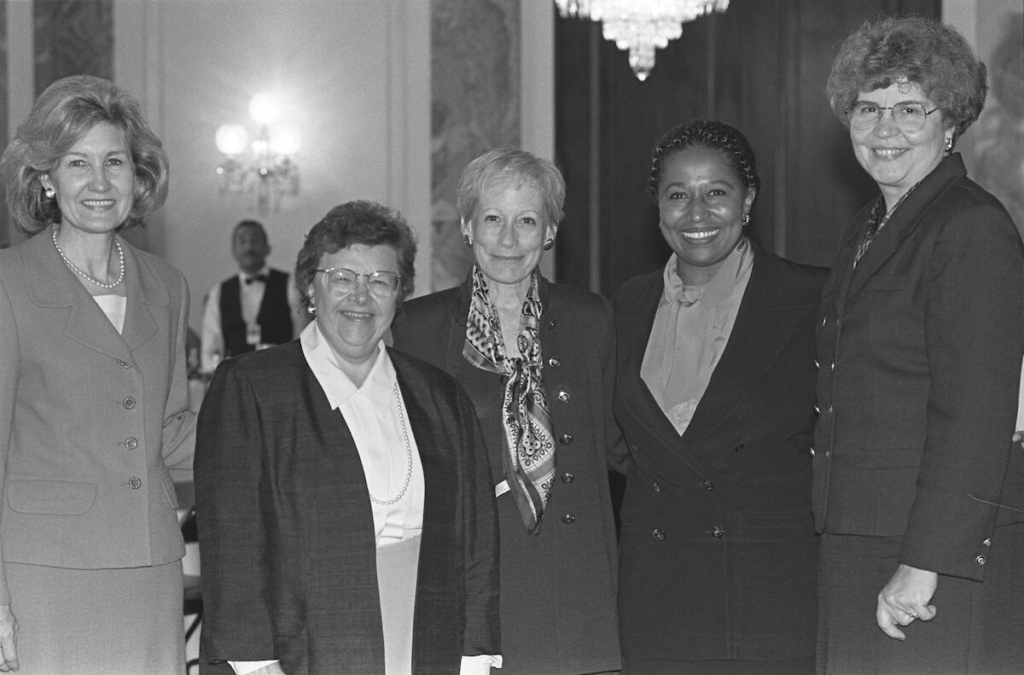
RIP: Former Sen. Nancy Kassebaum Baker, who was the first woman to lead a major Senate committee, died last week at age 94, our colleague Nick Eskow reports. Kassebaum served three full terms in the Senate, at times breaking with the Republican Party on issues such as gun control and abortion, while taking more conservative stances on fiscal matters.
ICYMI
Court the vote: The fight over mail-in voting saw several major developments this week, including about a dozen Democrat-controlled states challenging the Trump administration’s attempts to restrict voting by mail. That followed a Supreme Court ruling Monday that allowed the administration to move forward with some of its vote-by-mail limits.
Democratic endorsements: Leaders We Deserve, the political group founded by Gen Z activist David Hogg, is backing 31-year-old anthropologist Angela Gonzales-Torres in her race to unseat fellow Democrat Jimmy Gomez in California. The House Ethics Committee is investigating allegations that Gomez violated House rules by engaging in inappropriate sexual contact with a staffer. New Hampshire Sen. Maggie Hassan endorsed former Portsmouth City Councilor Stefany Shaheen, the daughter of fellow Sen. Jeanne Shaheen, in the Democratic primary for the state’s 1st District. And in the crowded Democratic primary for Massachusetts’ open 6th District, Reps. Ayanna S. Pressley and Lori Trahan are backing state Rep. Tram Nguyen.
Republican endorsements: Maggie’s List, which backs conservative female candidates, rolled out four new House endorsements: North Carolina state Rep. Jennifer Balkcom in the state’s open 11th District; businesswoman Didi Okpareke in New Mexico’s 1st; Air Force veteran Monique DeSpain in Oregon’s 4th; and Deschutes County Commissioner Patti Adair in Oregon’s 5th. The group is also backing two gubernatorial contenders: state House Speaker Lisa Demuth in Minnesota and state Sen. Christine Drazan in Oregon.
Reaching for it: Reproductive Freedom for All is backing 17 House candidates as part of a $23.5 million midterm campaign, including a few hopefuls on the periphery of the battleground such as independent Bill Hill, who is running for Alaska’s At-Large District; Cape May Mayor Zach Mullock, who is challenging GOP Rep. Jeff Van Drew in New Jersey’s 2nd; former Nevada Assembly Majority Leader Teresa Benitez-Thompson, who is running for the state’s open 2nd District; and Army National Guardsman Chris Gallant, who is challenging Rep. Nick LaLota in New York’s 1st.
Debates over debates: In Maine, Republican Sen. Susan Collins has accepted invitations to participate in four televised debates with Democratic rival Troy Jackson, according to the Portland Press Herald. But in North Carolina, Democrat Roy Cooper and Republican Michael Whatley have yet to agree to a debate schedule, The Assembly reports. If the two cannot reach an agreement, it would be the first time in almost three decades that the major-party Senate contenders in the Tar Heel State did not meet for a debate.
#NESEN: The Senate candidate of the Legal Marijuana NOW party in Nebraska has dropped out and endorsed independent Dan Osborn. Mike Marvin’s name, though, will remain on the November ballot unlike former Democratic nominee Cindy Burbank, an Osborn supporter who exited the race last month ahead of a deadline to appear on the fall ballot. An attempt to force Democrats to replace Burbank was dismissed by a district judge Wednesday. Osborn is making his second straight Senate bid, this time challenging GOP Sen. Pete Ricketts.
Nathan’s notes
Roll Call elections analyst Nathan L. Gonzales delves into the latest House race ratings changes by Inside Elections. All of them were in Democrats’ favor, further proof of how the minority party continues to hold the advantage in the fight for the chamber, according to Nathan.
What we’re reading
We will always love her: The Washington Post explores how superstar Dolly Parton, who died Tuesday at 80, transcended politics, appealing to Republicans and Democrats alike. “In a divided nation, Dolly Parton brought people together,” the Post writes, from Trump to the Democratic Socialists of America.
Fight club: New York magazine profiles political consultant Rebecca Katz, “a ball of New York neurosis and chaotic energy whose self-appointed task is saving the Democratic Party from itself.” Fight Agency, the firm she co-founded, has counted Pennsylvania Sen. John Fetterman, former Maine Senate candidate Graham Platner, Michigan Senate nominee Abdul El -Sayed and New York Mayor Zohran Mamdani among its clients.
Flocking to an issue: The Wall Street Journal chronicles the growing political backlash against AI-enabled surveillance cameras, such as those produced by Flock Safety. Sen. Josh Hawley announced an investigation into the company’s “collection, retention, and dissemination of the data,’’ while other lawmakers have introduced legislation placing limits on the technology.
Out of the limelight: Rep. Thomas H. Kean Jr. has historically been one to eschew the cameras, but Politico reports that the New Jersey Republican’s disappearance from public life earlier this year to seek treatment for depression has put a spotlight on that approach in the face of a strong fall challenge from Navy veteran Rebecca Bennett.
The count: $2.8 billion
That’s roughly the estimated annual value of the tariff duties now hanging over trade between Canada and Maine, Ohio and Michigan — among the most tariff-exposed states relative to their size, and home to three of the cycle’s most competitive Senate races.
The figure combines tariffs from both directions: Goods coming into each state from Canada that Washington began taxing at 50 percent on Aug. 22 and each state’s exports that face Ottawa’s 15 percent to 50 percent countertariffs due to kick-in Sept. 8. The calculations are applied to 2025 trade figures, per a Roll Call analysis of the Census Bureau’s international trade data, assuming trade levels held steady.
With Canada’s retaliatory tariffs announced this week, Maine’s stake is the most concrete. More than $200 million a year in live lobster shipments to Canada now face a 25% duty, alongside tariffs on the state’s salmon and paper exports.
Collins, Maine’s senior senator and one of the most endangered Republicans this cycle, said on the campaign trail Saturday that imposing tariffs on Canada was a “mistake.”
“If the Administration proceeds with these tariffs, they will increase costs for Maine families,” she said in a statement from her Senate office.
Collins has broken with her party in voting to end tariffs on Canada. But the campaign of her Democratic opponent, Troy Jackson, is nonetheless attempting to tie her to the tariffs, pointing to her vote last year against an amendment that would have established a reserve fund to offset the increased costs of trade barriers ultimately borne by consumers.
– by Roll Call’s Ryan Kelly
Key race: #MA08
Candidates: Democratic Rep. Stephen F. Lynch, 71, has held the Boston-area seat since 2001, but this year he faces a strong primary challenge from Patrick Roath, 39, a lawyer and voting rights activist who worked for former Massachusetts Gov. Deval Patrick.
Why it matters: The Sept. 1 primary will once again test Democratic voters’ appetite for generational change. Roath is among a cadre of younger challengers taking on older members in deep-blue districts across southern New England. Seven House Democrats have lost primaries this year, among them Connecticut Rep. John B. Larson, 78.
Cash dash: Roath has consistently outpaced Lynch in fundraising. As of Aug. 12, the challenger had brought in $1.3 million to the incumbent’s $910,000, though Lynch had more cash on hand ($642,000 to $220,000) heading into the final sprint to election day.
Backers: Roath has the support of Leaders We Deserve and several large teachers’ unions. This week, he also collected the endorsement of The Boston Globe editorial board, which dismissed Lynch as a legislative “backbencher.” Lynch, a former union ironworker, is backed by the Massachusetts AFL-CIO, Teamsters Local 25 and the Massachusetts Building Trades Unions, among other labor groups.
What they’re saying: Lynch grew up in a public housing development in South Boston and has contrasted his working-class background and deep roots in the district with Roath’s past as a corporate lawyer raised in Connecticut. The incumbent has also touted his seniority and his record of bringing federal funding home to Massachusetts. Roath has pledged to bring a sharper focus on fighting the Trump agenda and says Lynch’s at-times moderate voting record – including his support of the Trump-backed immigration measures known as the Laken Riley Act – is out of step with the politics of the district.
Terrain: Known as the Dragon District for its resemblance to a mythical fire-breathing creature, the 8th includes a slice of Boston before sweeping to incorporate a string of suburbs to the south and west. Economically diverse, it includes the preppy coastal town of Hingham along with older post-industrial cities such as Quincy, a former quarry mining hub, and Brockton, once home to the nation’s largest shoe manufacturers. Inside Elections rates the race Solid Democratic.
Wild card: Changing demographics. Historically populated by working-class Democrats with culturally conservative values, the district has grown younger and more ethically diverse in recent years. Housing costs are soaring, and both candidates have pledged to address the issue.
Coming up
Primary season enters its seventh and final month next week, with Massachusetts leading the way Tuesday. That’s also when the House is expected to be back from its August recess.
Photo finish
The entry for “The Count” in the Aug. 13 edition of At the Races misstated the maximum number of states and territories that by early next year could have a governor who previously served in Congress. It is 20.
Subscribe now using this link so you don’t miss out on the best news and analysis from our team.