Panel punts kids’ social media ban for data consent mandate
House Energy and Commerce subcommittee advances Republican bill after revision
Legislation that would require parental consent for social media platforms to process data for users under 16 advanced out of a House panel on Tuesday, after it was amended to remove a proposed ban on social media accounts for kids.
The bill, as amended, won approval by voice vote in the House Energy and Commerce Subcommittee on Commerce, Manufacturing and Trade despite opposition from subcommittee Democrats.
The bill would also allow parents to revoke consent, as well as requiring new consent if the platform makes big design changes.
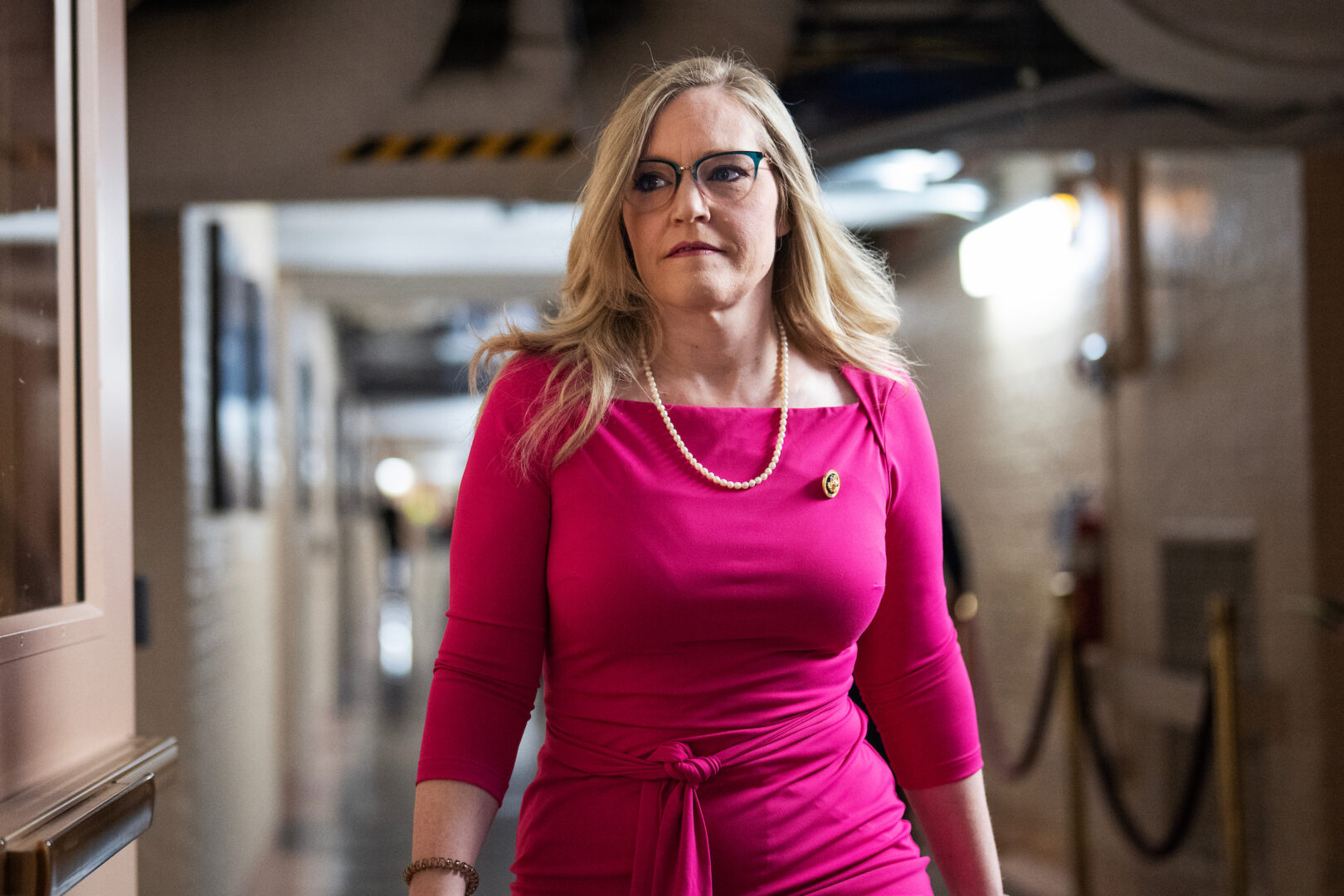
Rep. Erin Houchin, R-Ind., sponsored the data consent bill, dubbed the Governing Underage Access and Requiring Data Consent In All Networks or GUARDIAN Act, and the substitute amendment that took out the under-16 ban. She said that she meant the amended bill to close “loopholes” in House-passed social media legislation.
“It puts parents in charge,” Houchin said. “No platform may process a child’s personal data without a parent’s consent, and parents can take that consent back at any time … as easily as they gave it, with the account closed and the data deleted.”
Houchin didn’t rule out returning to a ban in the future.
“I still believe there is real validity in exploring that standard,” she said. “Australia has adopted it. Other countries are following, and I’m not closing the door on that today. But I do want to be practical. I want to legislate where consensus exists.”
Earlier this summer, the chairman of the full committee, Rep. Brett Guthrie, R-Ky., and the committee’s ranking member, Rep. Frank Pallone Jr., D-N.J., announced they’d reached agreement on an amended kids online package, known as the Kids Internet and Digital Safety Act, that would require platforms to put in place reasonable policies to protect minors from harms including violence and sexual abuse.
The amended version included data privacy protections for older teens, a national registry of data brokers and preemption of a narrower set of state laws.
The bill passed the House in June and has not yet been taken up by the Senate.
Pallone said he was “dismayed” to see the data consent bill included in Tuesday’s markup and that he was concerned the bill could move work on children’s safety online backwards.
“Not because we shouldn’t always be thinking of how we can improve protections for kids,” Pallone said. “We should, but the amended RESET Act text offered today directly contradicts the bipartisan KIDS Act.” The bill was formerly named the Reducing Exploitative Social Media Exposure for Teens Act.
The amended bill would also allow parents, if they choose to have their child’s account deleted, to download a full record of the child’s data.
Pallone said that provision could endanger children in unsupportive or unsafe homes, including LGBTQ+ youth looking for support online.
“I worry that this bill risks isolating teens in unsupportive households by giving their parents control of their online access and exposing teens in bad home situations to harm if their private conversations are revealed to their parents,” Pallone said.
Democrats, including Pallone and Rep. Kathy Castor, D-Fla., raised questions about the potential privacy impact if the bill’s requirements led to widespread age verification online, including potentially the use of government ID or facial scans.
In response, Houchin pointed to the bill’s data security requirements for platforms processing personal data to determine a user’s age.
The bill’s requirements would not take effect for 18 months after enactment. It gives enforcement powers to the Federal Trade Commission and states and includes a five-day cure period.
The bill would preempt some state social media laws, but only those that conflict with the bill.
Work on the data consent bill comes after social media giant Meta agreed last week to a settlement with state attorneys general under which it plans to implement a rash of new safety measures, including time limits for young users and age verification.