Social media debate shaken up by Meta settlement
Competing House and Senate bills diverge over ‘duty of care’ provision
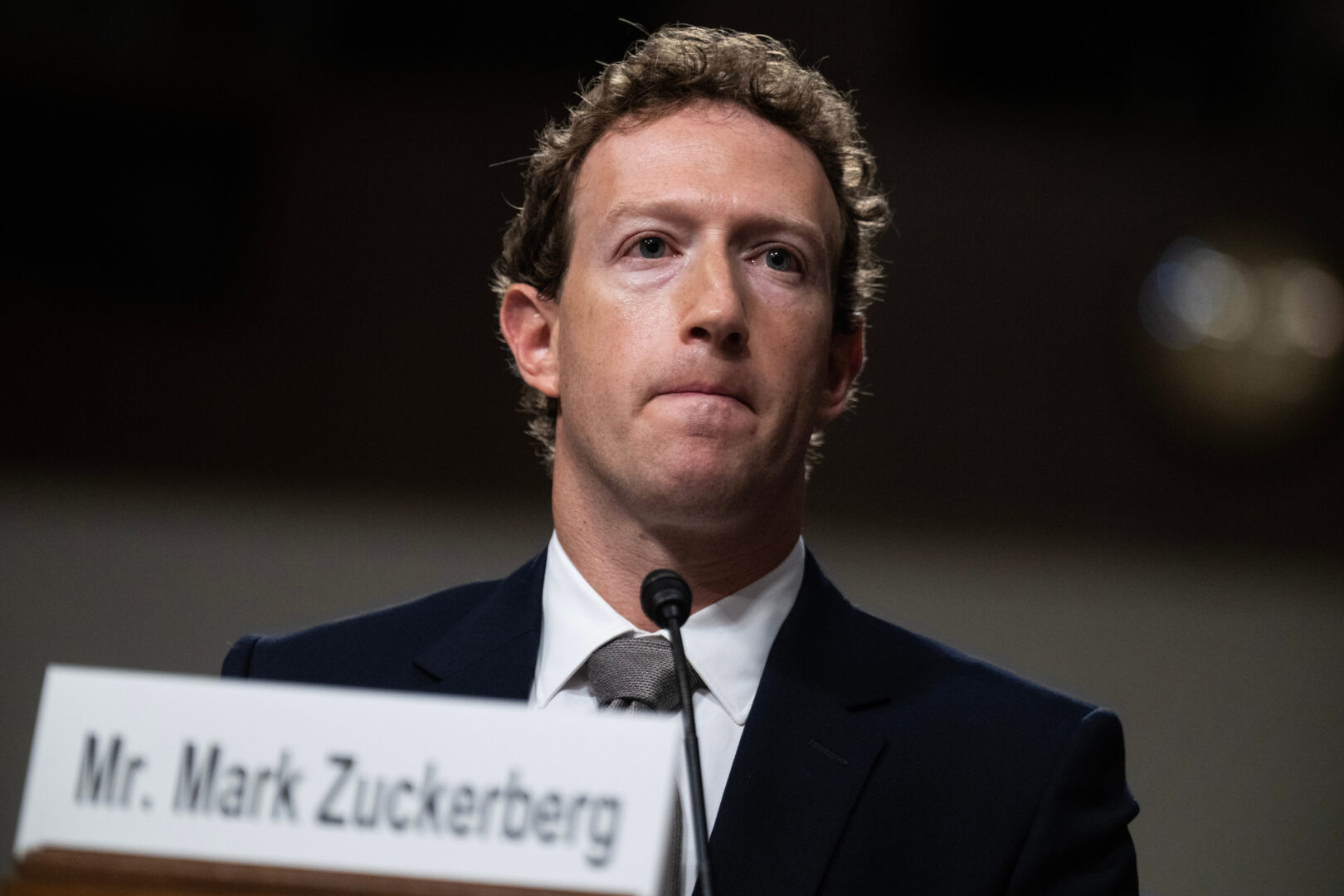
Those who’ve fought on Capitol Hill to rein in social media platforms see last week’s settlement between Meta and state attorneys general not as a final destination, but as a roadmap to what’s possible. Privacy and First Amendment advocates are worried they’re right.
The settlement comes as the House and Senate have taken divergent paths toward regulating young people’s use of the internet, and it looks likely to inform future conversations about the balance among safety, parental control and young people’s rights in any consensus bill.
Meta agreed to a rash of new controls on Facebook and Instagram: age verification, the option for kids to see a non-personalized feed and a default two-hour time limit for teens. But those new safety standards, which come with an up-to $18 billion payout to states, will only apply to Meta and only for 10 years.
In some cases, like age verification, the settlement goes further than Congress currently seems willing. Legislation and the settlement cover similar ground on personalized algorithms and features associated with greater use, like push notifications, though the settlement is more specific. And, perhaps most controversially, the settlement does not place a “duty of care” on Meta to prevent harm to its young users.
Supporters of the bill dubbed the Senate Kids Online Safety (KOSA) Act, which advanced out of the Senate Commerce Committee last month, see that provision as key to the bill’s strength. But drafters of the House-passed alternative bill, titled the Kids Internet and Digital Safety (KIDS) Act, left it out, in part due to concerns the standard couldn’t stand up in court.
“We shouldn’t consider the outcome, though, of a court case as a reason to stop our work,” Rep. Erin Houchin, R-Ind., said at a House Energy and Commerce subcommittee markup on Tuesday of her bill that would impose a parental data consent mandate on social media companies. “One company acting under the pressure of litigation is not enough. A settlement binds one defendant, but it sets no standard for an industry.”
[Related: Panel punts kids’ social media ban for data consent mandate]
Houchin was not alone in her calls for Congress to keep a foot on the gas in work to regulate social media.
Rep. Kathy Castor, D-Fla., said at the same markup that the settlement was a “call to action to make sure that whatever comes out of the Congress is the strongest possible.”
“There may be some things to codify that are contained in that settlement, so it doesn’t just apply to Meta, it applies to all platforms,” Castor said.
Last week, the Energy and Commerce Committee, led by Chairman Brett Guthrie, R-Ky., tweeted that the settlement “makes clear the gravity of the dangers facing our children and underscores the need for comprehensive legislation to protect them from online harms.”
“Without further legislation, the threats facing our kids will continue,” he wrote.
Duty of care
Dani Pinter, chief legal officer and director of the National Center on Sexual Exploitation’s law center, said that Congress should feel “confident” in starting with the Senate bill to set an industry-wide standard.
“KOSA is like the very, very, very… lowest denominator. It’s asking for the very bare minimum, a duty of care,” Pinter said.
The duty of care standard, which would require providers to design their platforms to prevent harms like anxiety and depression or eating disorders, is largely opposed by the technology industry and by speech groups, who say it could lead platforms to remove large swaths of speech to avoid liability.
Pinter said the settlement could help clarify for lawmakers what role platforms like Facebook and Instagram play.
“Maybe the members were not sure … was it the platform’s responsibility or is it sort of [an]… inevitable byproduct of the internet age?”
Rather than a duty of care, the Meta settlement is specific about limits to design features like push notifications, which it would stop by default at night and during school.
The House and Senate legislation would both require platforms to provide safeguards, set by default to the most restrictive setting, to allow teens to limit certain features associated with “compulsive usage.”
Cody Venzke, an attorney in the ALCU’s Speech, Privacy, and Technology Project, praised the settlement’s requirement that teens or their parents be able to opt young users out of personalized algorithms. Both bills in Congress also include the opt-out.
“Those are all driven by our personal information, and if we have the ability to control our information and protect our privacy, it will really go a long way to ensuring that people’s experiences online are not in the hands of Big Tech, but themselves.”
Age verification
But Venzke was largely critical of the settlement and the possibility that it could become a wish list for lawmakers focused on social media.
“One of our chief concerns is that the government … being the 52 attorneys general that signed on to the settlement here, is seeking to do through a settlement agreement what they could not do through legislation,” Venzke said.
He also noted that “some policymakers have been eager to try to avoid hard age verification because of the potential privacy implications.”
Privacy advocates have raised concerns over age verification leading to large collections of government IDs or facial scans.
Kate Ruane, director of the Center for Democracy and Technology’s Free Expression Project, which advocates for speech protections online, said verification would put burdens on speech.
“Applying age assurance to all of their users in order to access certain speech on the platform, I think goes beyond what the Constitution could require,” she said.
Rather than requiring age verification, the House and Senate bills would apply their requirements to users that platforms “know” are minors, though they differ in their knowledge standards.
Several states have passed laws requiring age verification to access social media, but almost all have been enjoined from enforcing the laws on First Amendment grounds.
Ruane added that courts have also found legally mandated curfews, time limits and blocking young users from seeing the like counts on their posts to be “constitutionally problematic.”
The settlement includes all three. Teen users would by default be blocked from Facebook and Instagram between midnight and 6 a.m. They would also be limited to two hours per day total on the platforms.
Ruane also noted a provision of the settlement in which Meta agreed to continue its current content moderation policies to decide what content is appropriate for teens. She said those policies are Meta’s own exercise of speech rights, but there’s still room for concern.
“But what’s unclear is the degree to which the government is now going to have control over Meta’s interpretation of its own content policy,” she said.
When states or Congress pass laws that limit speech, users and platforms have the ability to sue for violations of their rights. With a voluntary settlement, recourse for users could be a little more complicated.
Ruane said that teens would first need to demonstrate their standing to sue and then demonstrate that an injury to their speech can be traced to the government’s actions through the settlement, rather than just to Meta.