Texas Democrats see opportunity in potential GOP-drawn ‘dummymander’
New majority-Hispanic, Trump-voting seat is surprise addition to House battleground
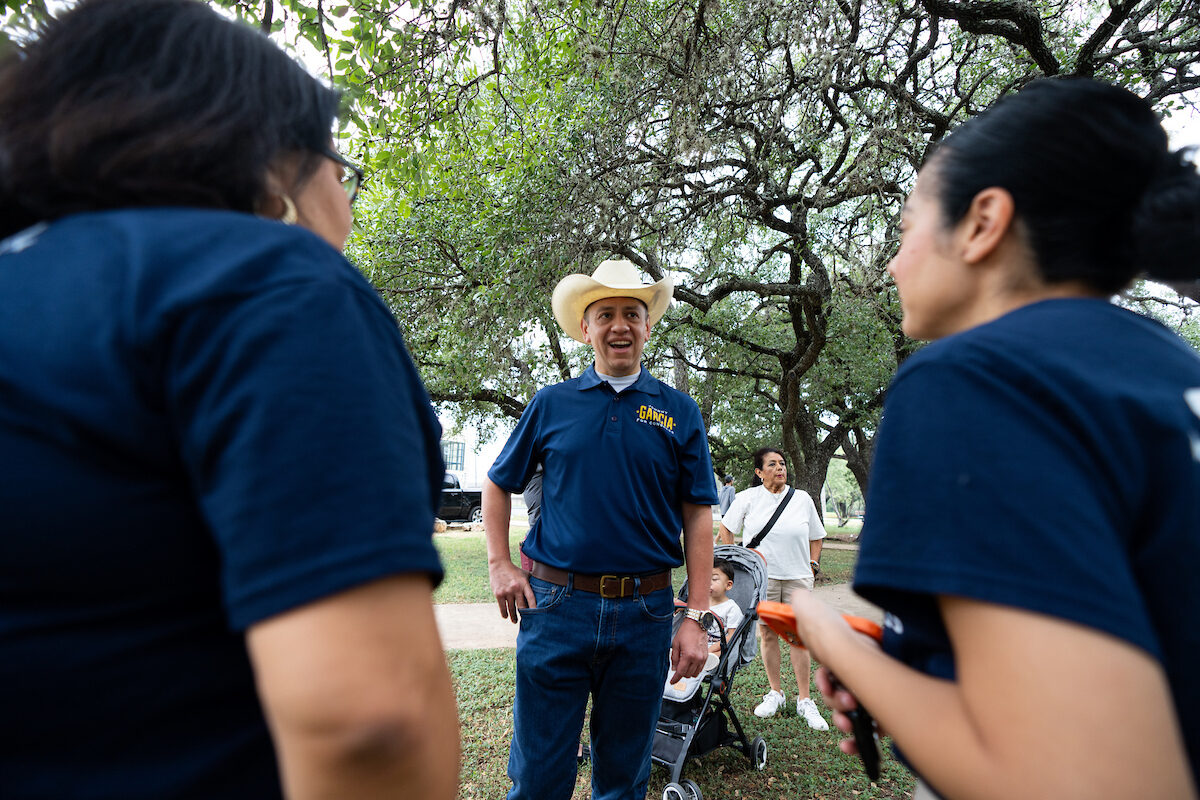
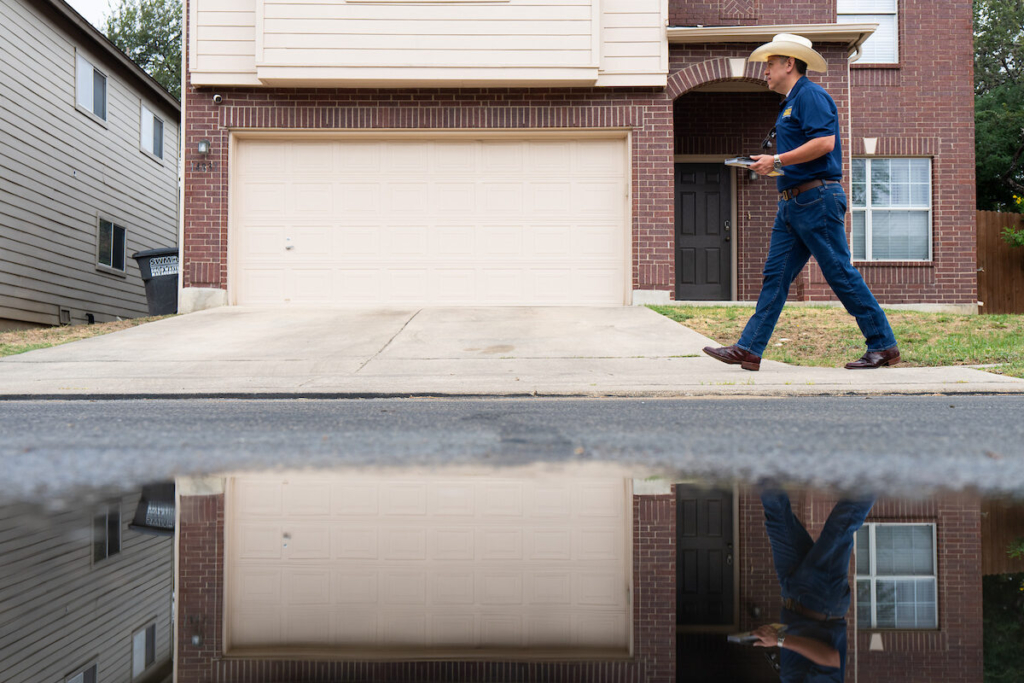
SAN ANTONIO — Johnny Garcia donned his signature cowboy hat, grabbed a stack of candidate brochures and hit the neighborhoods of northern Bexar County on a sweltering Saturday morning.
Campaigning for a House seat redrawn to favor Republicans, the Texas Democrat approached Matthew Naef and launched into his pitch.
“I worked at the sheriff’s office for nearly two decades,’’ Garcia said. “We care about public safety [and] law and order here in Texas. That’s where I come from.”
Naef, who is 42 and works in the oil and gas industry, is generally skeptical of Democrats, many of whom, he said, “are pushing too far into socialism.” But his neighbor worked with Garcia at the Bexar County Sheriff’s Office and says he’s the kind of Democrat guys like them can feel good about supporting.
Garcia is going to have to convince more voters like Naef to cobble together a win in the 35th District, a majority-Hispanic seat that state Republicans created last year to bolster their party’s chances of retaining the House.
The new Texas map — approved by the state legislature on orders from President Donald Trump — gives Republicans a shot at flipping five seats in all.
On paper, the contest between Garcia and Republican Carlos De La Cruz shouldn’t be that competitive: The new district, which traded parts of liberal Austin for three rural red counties east of San Antonio, would have voted for Trump by 10 points in 2024, according to calculations by Inside Elections with Nathan L. Gonzales. The president made historic gains with Hispanic voters that year, and the map was designed to capitalize on the shift.
But in the final sprint to November, the race for a district calibrated to give the GOP a decisive advantage has evolved into a costly dogfight. Polls show many Hispanic voters are souring on the president they voted for two years ago. And spiking prices and angst over the war in Iran could potentially push a Democratic moderate with a blue-collar background to victory.
“This is going to be the gerrymander that turns into a dummymander,’’ Garcia predicted.
A test for Republicans
The high-stakes tenor of the contest became clear last month, when Speaker Mike Johnson visited a VFW hall in San Antonio to stump for De La Cruz, telling the crowd how important the race was to determining which party would control the chamber.
Meanwhile, Garcia has drawn his own high-profile support, from the centrist Blue Dog PAC to former Transportation Secretary Pete Buttigieg, who plans to attend a rally here on Garcia’s behalf this weekend.
The Texas GOP’s redistricting gambit relied on optimistic assumptions and a limited amount of data, according to Joshua Blank, research director of the Texas Politics Project at the University of Texas at Austin, and many of those assumptions “are being tested.”
“Donald Trump’s election was taken to be a reflection of some kind of a permanent state of affairs,” Blank said, but “after more than a year of governing and continued concerns about the economy, the reality [is] that Hispanic voters and suburban voters seem to be much more attuned to performance.’’
De La Cruz, 47, expressed confidence, though, that those voters would stick with Republicans, despite the economic pain many are feeling right now.
“We’re going to have to energize those on the right that maybe feel a certain way about how things have been going in our country lately,’’ said the Air Force veteran, whose sister, GOP Rep. Monica De La Cruz, is currently seeking her third term in the 15th District to the south. “The top concerns right now are definitely [related to] the cost of living.”
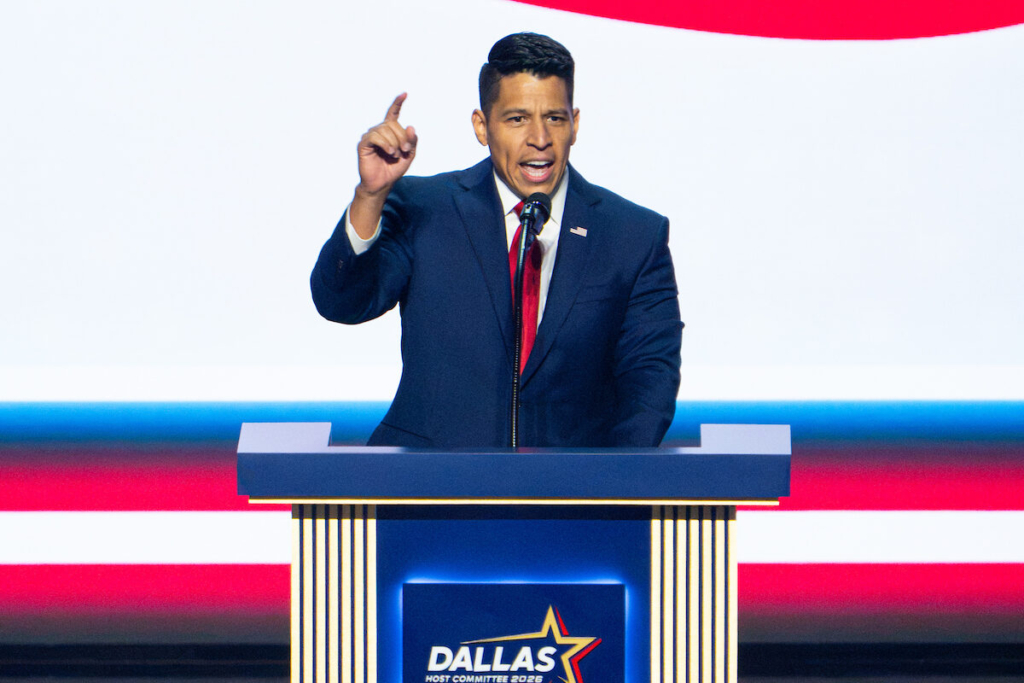
De La Cruz’s comments in a recent interview echo his remarks last week at the Republican midterm convention in Dallas, where Trump and his allies tried to motivate the party faithful and implored them not to sit out the election.
But the focus on the president risks turning off voters like James Lewis, who leans Democratic but says he’s also willing to cross party lines and vote Republican.
“The Trump agenda is more about money in a tax bracket that I’m not in,’’ said the 47-year-old web designer, who was out walking his dog while Garcia knocked on doors in his neighborhood.
Garcia, 39, said his background as a sheriff’s deputy will help him win over voters who have been drifting away from the Democrats in the Trump era.
“I let pundits figure out where to place me on the political scale,’’ he said. “My job is to make sure to reach the voters and talk about the issues.”
Chief among those issues is affordability, the cycle’s top buzzword, encompassing everything from rising rents to the price of a gallon of gas.
Garcia puts a South Texas spin on the subject, telling voters at the doors that Republican policies have pushed up the cost of two local culinary staples — barbacoa and Big Red, braised beef cheeks in a chipotle-spiked sauce and sweet, fizzy crimson-colored soda.
De La Cruz doesn’t disagree that rising costs are at the top of voters’ minds this year, though he blames former President Joe Biden.
“The cost of energy keeps climbing, the cost of gas is always a concern,’’ he said. “It’s not quite the concern it was under the Biden administration, where we saw [gas] above $5 a gallon, but still it’s got some room to come down. …And groceries, my wife and I see it all the time. We go to the grocery store almost every week, and we feel the pinch as well. We … understand the squeeze that people are feeling.”
A law-and-order election
De La Cruz bills himself as a Texas Trump conservative. He’s a first-time candidate who served 20 years in the Air Force, including deployments to Iraq and Afghanistan, before he and his wife opened a kickboxing gym. He defeated state Rep. John Lujan, a more moderate Republican, in the GOP primary after picking up the president’s endorsement.
De La Cruz has emphasized his military background in a district with an outsize population of veterans.
“Hispanics, we punch well above our weight when it comes to joining the military, and there’s a lot of patriotism within the Hispanic community,” he said in an interview at a Black Rifle Coffee Company shop off I-35, where members of the military are offered a discount and American flag emblems adorn much of the merchandise.
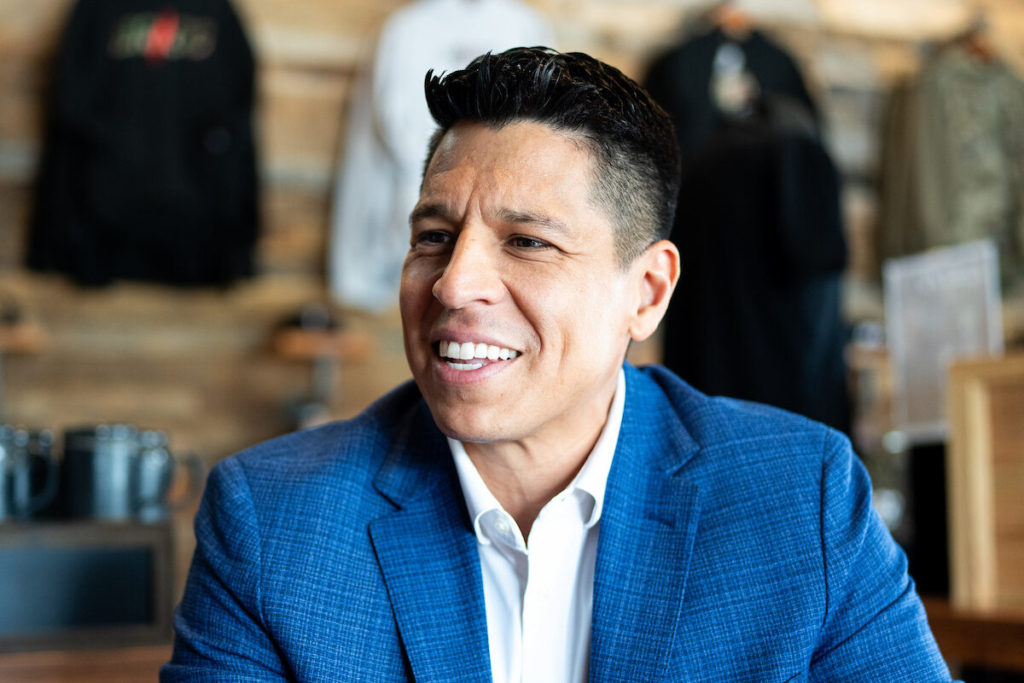
Garcia, despite his law enforcement credentials, would be a rubber stamp for liberal House Democrats determined to reverse Trump’s immigration crackdown at the border, according to De La Cruz.
“I don’t blame him for [calling himself a moderate,]” the Republican said. “But he’s campaigned with the likes of [Texas Senate candidate James] Talarico and some of the far-left extremists in his party, so he’s going to have to answer to that. … And if he gets elected, he’s going to … vote in line with the most extreme people in his party.”
Garcia said his law enforcement experience — he’s worked as a hostage negotiator as well as a spokesman for the police department — “offers a clear check on the attack that Democrats are soft on crime.”
“I am for law and order, but we gavel with a conscience,’’ he said. “We treat people humanely, with dignity and respect. We follow policies and procedures.”
In a sign of the 35th District’s growing competitiveness, Inside Elections shifted its race rating a notch toward the Democrats earlier this month, from Likely Republican to Lean Republican.