Arkansas duo goes to bat for small investment brokers
Bill seeks to relieve small broker-dealers from tough audit requirements
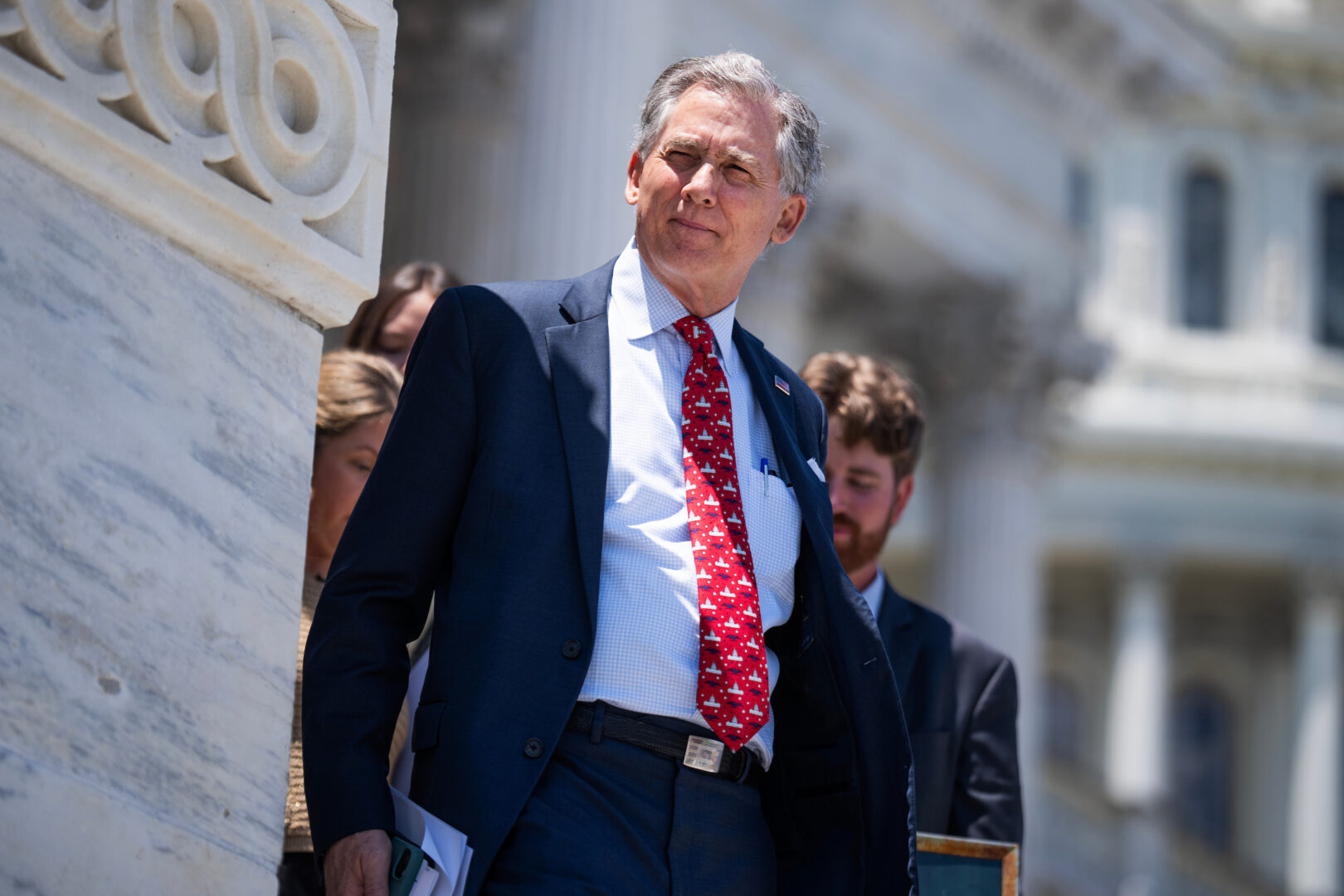
House Financial Services Chairman French Hill, R-Ark., often calls for easing regulatory burdens on community banks. Now he and a home-state Senate colleague are turning their attention to small investment brokers handling clients’ trades and dealers trading on their own behalf.
Hill and Sen. Tom Cotton, R-Ark., have drafted legislation that would relieve small, privately held broker-dealers from tough audit requirements dating back to the 2002 Sarbanes-Oxley Act, enacted in the wake of the Enron and WorldCom accounting scandals.
Sarbanes-Oxley created the Public Company Accounting Oversight Board and required stricter and more complex audits, conducted by firms registered with the new agency, for publicly-traded firms.
Later, the 2010 Dodd-Frank Act, law enacted after the Great Recession-era banking crisis expanded Sarbanes-Oxley’s audit rule to cover all broker-dealers registered with the Securities and Exchange Commission, public or private — a response to the $65 billion investor fraud perpetrated by Bernard Madoff.
But small brokers have complained for years since that the PCAOB audits are significantly more costly than those that had been performed under generally accepted auditing standards.
‘Struggling to survive’
The measure would absolve small broker-dealers from having to hire an audit firm registered with the PCAOB for annual inspections of their financial statements, regulatory compliance and capital, which some say can cost tens of thousands of dollars annually.
The legislation applies to firms with fewer than 150 employees and don’t hold clients’ assets, like Lieblong & Associates, a four-person shop based in Little Rock, Ark., that first brought the matter to Cotton’s attention in 2017. The firm’s owner reported compliance costs totaling about $40,000 a year.
“The legislative and regulatory burden for small businesses in our industry is substantial and small firms are struggling to survive,” some 300 small broker-dealers wrote in a 2018 letter to Senate Banking Committee leaders in support of the bill. “Currently, a 3-person, non-public small business is held to the same standards as Merrill Lynch; this is not right, fair or reasonable.”
The latest push from the Arkansas lawmakers comes after getting practically nowhere since first introducing the measure in 2018, save for a successful House Financial Services markup later that year.
Cotton and Hill have continued to hear from small broker-dealers in Arkansas that are “fed up with accounting fees,” said a senior Senate aide.
Hill is no stranger to the industry, having founded and run his own broker-dealer and community bank, Delta Trust & Banking Corp., before selling it in 2014 after winning his congressional seat.
Hill introduced the latest House version on Sept. 17, with Cotton set to introduce the companion Senate bill early this week.
In several other bills this year, Hill has sought to change oversight of community banks so that they can comply to regulations that are “tailored” to their size and business risk rather than being subject to the same regulations as big banks.
“Small, privately held broker-dealers deserve that same attention,” Hill said in a statement. “These firms serve as a gateway to the capital markets for Main Street businesses, yet they remain burdened by costly, one-size-fits-all audit requirements.”
Regulators “wrote this rule for Wall Street and then applied it to small firms on Main Street,” Cotton said in a statement. The bill would “ensure investment firms in Arkansas are no longer punished for their size and are instead given the chance to grow and succeed in a friendlier business environment.”
Madoff-era roots
The bill’s immediate prospects are unclear. It has no Democratic co-sponsors and is probably unlikely to move during a lame duck session after the elections, according to the Senate aide.
If the House flips to Democratic control in November, past opponents of the measure would be in position to reclaim the majority on the House Financial Services Committee, however.
When the bill came before the committee in 2018, just four Democrats joined Hill and all the panel’s Republicans to support it, and two of those are no longer in Congress. Remaining backers on the committee include Reps. Vicente Gonzalez, D-Texas, a longtime co-sponsor of the bill, and Jim Himes, D-Conn., whose district north of New York City is home to numerous financial industry constituents.
Ranking member Maxine Waters, D-Calif., other committee Democrats and investor advocates opposed the measure, arguing that heightened audit standards were meant to prevent rip-offs like Madoff’s Ponzi scheme.
The bill “would exempt some of the worst-performing auditors in our capital markets from federal scrutiny,” Financial Services Committee Democrats wrote in the committee report accompanying the 2018 bill.
They said that about 80 percent of firms would fall below the employment threshold that allows for the audit exemption, and that non-custodial firms often are cited for audit deficiencies.
The Consumer Federation of America and Americans for Financial Reform asserted at the time that the bill lacked adequate investor protections. They also said the legislation is unnecessary because the PCAOB already has the ability to tailor audit requirements based on firm size.