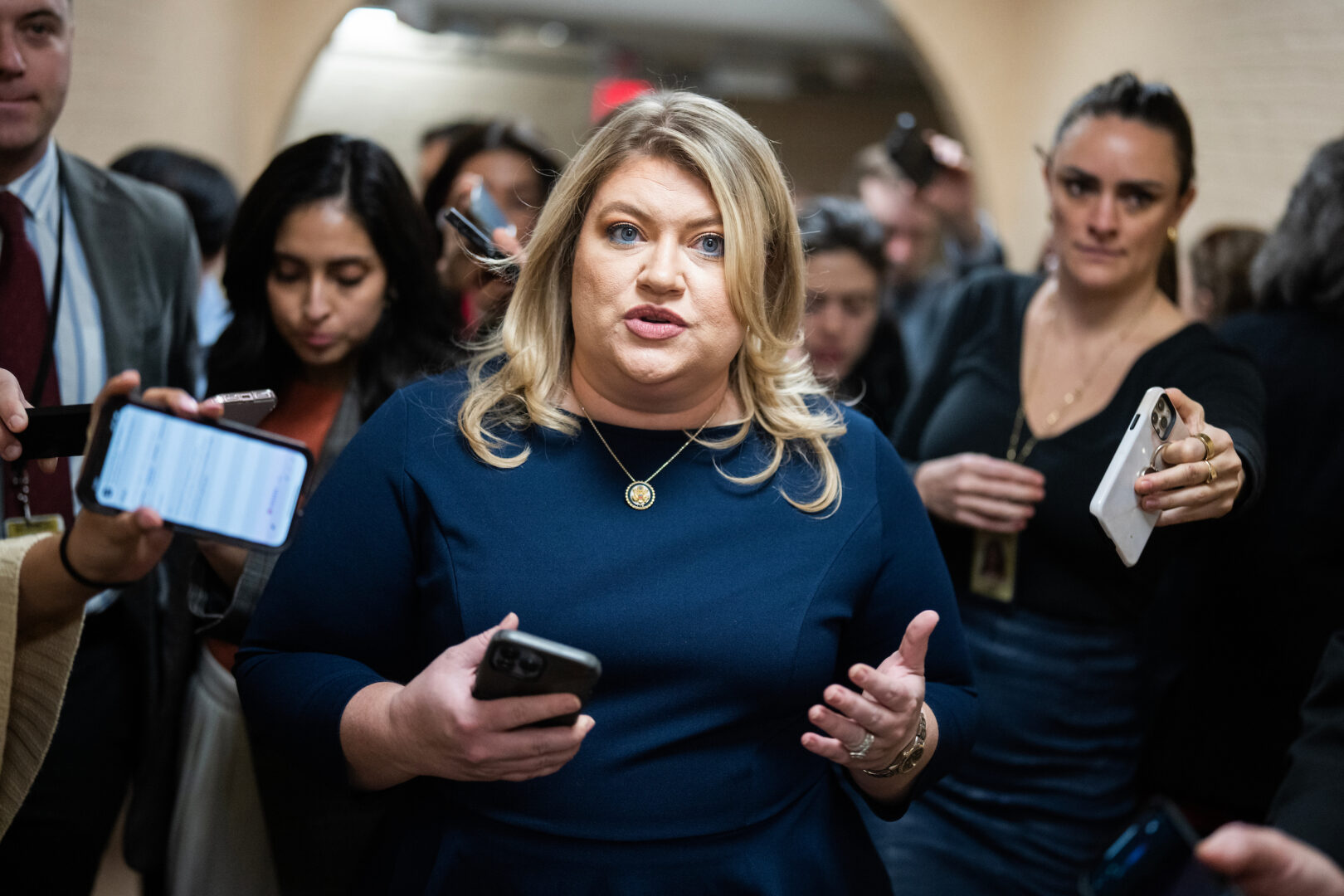
A key supporter for an age minimum on social media is not giving up hope that such a provision could be included in a potential compromise online safety package after the midterm elections. Rep. Erin Houchin, R-Ind., whose original age-minimum bill was amended in committee to replace the age minimum with a related parental consent requirement, told reporters Friday she continues to work with Rep. Jake Auchincloss, D-Mass., to push for the age minimum and parental consent for older teens. “Jake and I have been working on trying to get a framework in the conversation,” she said, going on to add, “We're going to be working those conversations to try to get that in whatever the final bill package is for kids online safety.” Related: Panel punts kids’ social media ban for data consent mandate Houchin noted that neither a House-passed bill dubbed the Kids Internet and Digital Safety (KIDS) Act nor the Senate committee-forwarded bill, known as the Kids Online Safety Act or KOSA, include those provisions now. Asked whether negotiations on the subject were going on during the pre-midterms recess, Houchin said, “Not to my knowledge.” She added, however, that she was aware that staff of the House Energy and Commerce Committee have met with Senate counterparts on multiple issues, speculating that kids online safety legislation “is probably one of them.” Houchin's bill that advanced in the committee in early September originally included a full under-16 ban, but was amended so that it would require parental consent for social media platforms to process data for users under 16. Later that month, she introduced a bill, which Auchincloss co-sponsors, that would ban social media accounts for users under 16 and require platforms to delete younger users’ accounts and personal data. Houchin is also co-sponsor on an Auchincloss bill to require app stores to send “age signals” to apps and allow parents to prevent their minor children from downloading apps. That legislation was forwarded by an Energy and Commerce subcommittee in December, but left out of its eventual KIDS Act package. While advocates for restrictions for minors on social media had hoped for passage prior to the midterms, the debate remains split between the chambers. Just before the current recess, Sen. Richard Blumenthal, D-Conn., asked unanimous consent that the Senate pass KOSA, which would place a duty of care requirement on social media platforms to prevent certain harms to minor users. Sen. Rand Paul, R-Ky., objected. The bill has drawn significant pushback from free-speech advocates and the tech industry. The duty of care provision also represents the largest gap between KOSA and the KIDS bill in the House, with members in each chamber pointing to the issue as a red line.