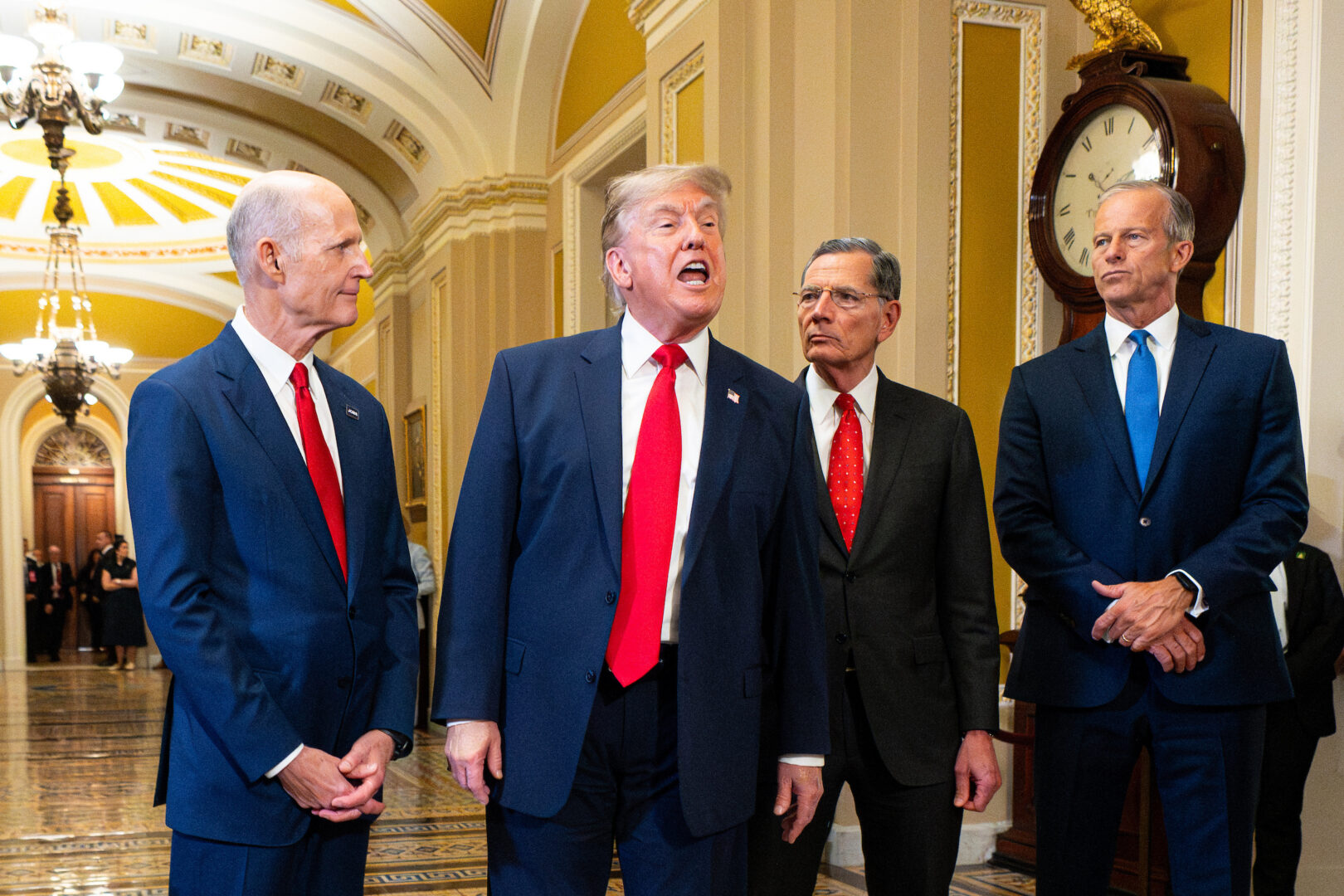
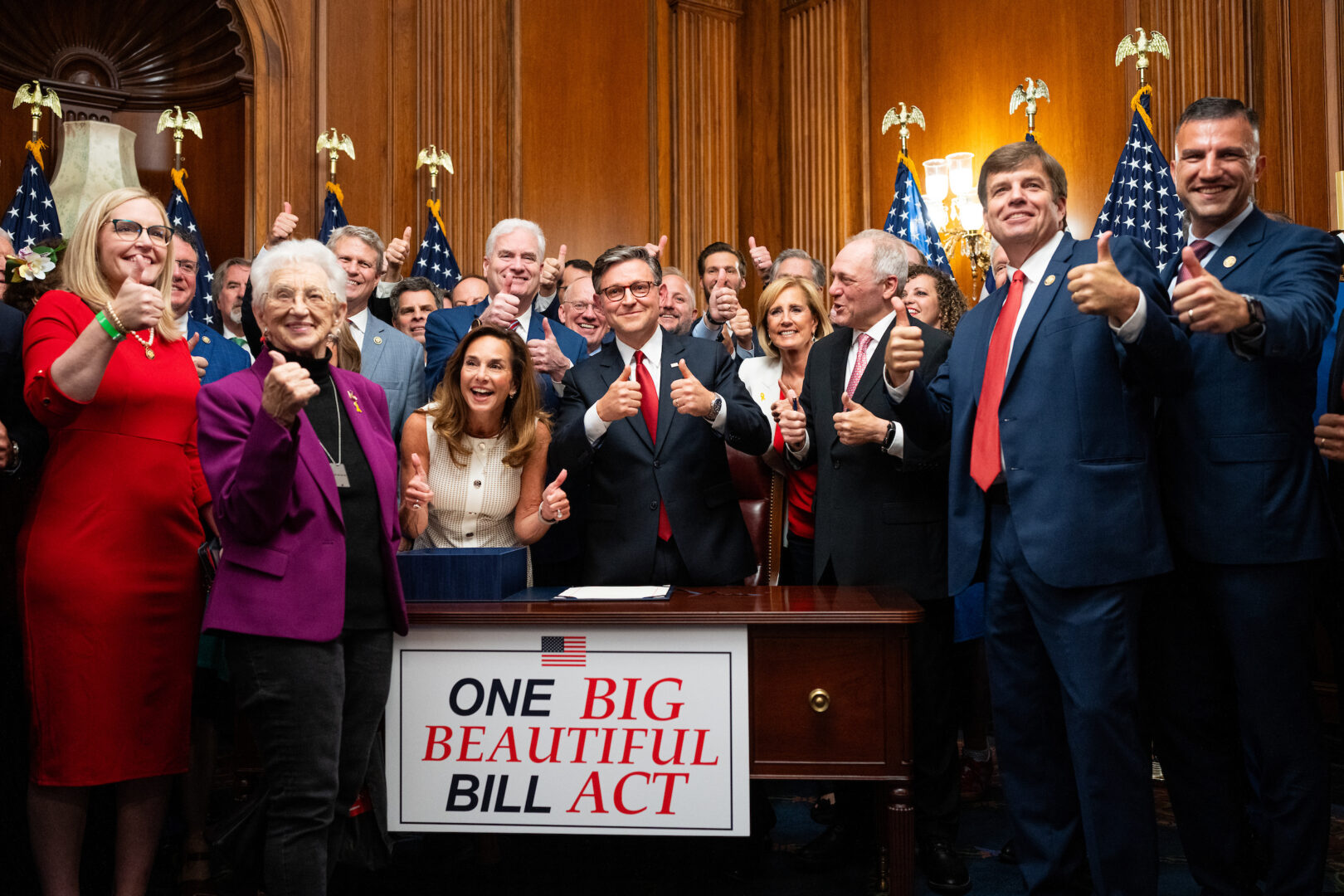
There are plenty of variables when writing campaign strategies. But one thing that you can’t control is time. How often have we heard losing candidates complain, “If we’d only had another week?” But Election Day is fixed and finite and every politician must adhere to that reality — including the president. Right now, looking at the polls, time isn’t on the side of the GOP with slightly more than 100 days left to make their case to the voters for keeping Congress in Republican hands. President Donald Trump’s address to the nation last week, focused mostly on passing the SAVE Act, stepped on his administration’s improved economic story. Instead of talking about economic progress and updating voters on the state of the Iran war, President Trump chose an issue dear to his heart, but not anywhere near the top of most voters’ priorities. The grumbling that we’re beginning to hear from congressional Republicans, staff and strategists could have been avoided if Trump had spent more time on the economy and less on past grievances and political losses. The truth is that the SAVE Act isn’t likely to pass this year, and even if it did, most of its provisions couldn’t be implemented in time for the 2026 congressional elections. Trump missed the opportunity to help voters understand the economic progress that has been made because of last year’s Big Beautiful Bill extension of the 2017 tax cuts (Tax Cuts and Jobs Act) for individuals and small businesses that put money back in the pockets of most Americans. He could have helped them understand how their sacrifices at the pump will help make the country safer today and for future generations that won’t have to live with the threat a nuclear Iran poses. He had plenty of data to back up those claims. Just two days before last week’s speech, the June Consumer Price Index report (CPI, or the rate of inflation) was released. It was good news. Since February, prices had been going up significantly, driven by rising gas prices as a result of the Iran war. But in this report, we saw an actual decrease in the price of gas, which led to an overall decrease in consumer prices. This, combined with continued steady wage growth, was a welcome improvement over the May report. During President Joe Biden’s tenure, prices outpaced wages by 4.8 percent, which represented a significant reduction in household disposable income, and there were many months when that margin was more than 6 percent. That 4.8 percent is what he handed off to Trump, and by January of the following year, Trump had reduced it to 2.7 percent, the lowest margin since December 2021. Unfortunately, the war in Iran, a difficult policy decision, brought with it higher gas prices. By May, the margin between prices and wages had increased for four consecutive months to 5.3 percent. But the June BLS numbers showed solid improvement as the number dropped to 4.4 percent, better than the last Biden number and heading in a positive direction. The CPI and other encouraging economic data gave Trump a great opening but, inexplicably, he chose instead to talk about election integrity, important but not what voters wanted to hear. It isn’t that the majority of voters don’t favor many of the SAVE Act’s provisions like requiring an ID to vote. They do but it isn’t a top priority for them. The No. 1 issue for voters remains the cost of living and the economy. Rather than talking to voters about their top concern and showing empathy for a public tired of war, inflation and promises from both sides of better times ahead, the president seems to be playing a “long game in a short game” moment. But we’ve seen the president focus on the wrong issue before. In 2018, the Friday before the midterm election, a remarkably good BLS unemployment report was released and should have been the perfect closing message for Republicans. It was so good that Jared Bernstein, who chaired the United States Council of Economic Advisers from July 2023 until the end of Biden’s presidency, described it as “pretty much everything you could want in a monthly jobs report.” This was the validation of the Tax Cut and Jobs Act, and just days before the election. Trump, however, decided to focus on another issue, in this case, the “caravan” of immigrants coming through Mexico heading to the United States. Even when pressed by his political team to end the campaign with a message on the economy, he ignored that advice. On Election Day, Republicans lost 41 seats, down 19 points with women and 12 with independents. Democrats won 235 seats despite the fact that the percentage of the electorate who thought the economy was good or excellent (according to the exit polls) increased from 36 percent in 2016 to 68 percent in 2018. The economy should have been a winning issue for Republicans, but Trump’s focus on immigration made it the No. 2 issue for the electorate, pushing the economy down to third place. This let Democrats get health care to the top of the list —a negative issue for Republicans. Last week’s presidential address felt a bit like 2018 all over again. Important issue — election integrity — but the wrong issue for a major speech with gas going up and the war — the driver of gas prices — expanding. The president is almost out of runway if he wants a soft landing this fall. Time to talk to voters about their concerns and better explain the dynamics of the Iran war and its impact on the economy. Otherwise, if Democrats win in November, we are likely headed toward endless investigations and impeachment over the next two years, rather than continuing to build on the private sector successes that the BBB has started to put into motion. With all due respect, my advice to the president is to make the voters’ No. 1 issue, the economy, his No. 1 issue. The base alone won’t win the election for you this year any more than it did in 2018 or even 2020. More to the point, they are already with you; women and independents are not. The president has a positive economic story to tell if he would just tell it. The bully pulpit is a terrible thing to waste. David Winston is the president of The Winston Group and a longtime adviser to congressional Republicans. He previously served as the director of planning for Speaker Newt Gingrich. He advises Fortune 100 companies, foundations and nonprofit organizations on strategic planning and public policy issues, as well as serving as an election analyst for CBS News.