For one very brief moment, a king unites a divided Congress
Inside the chamber were pomp, circumstance and unity. Outside was a different story.
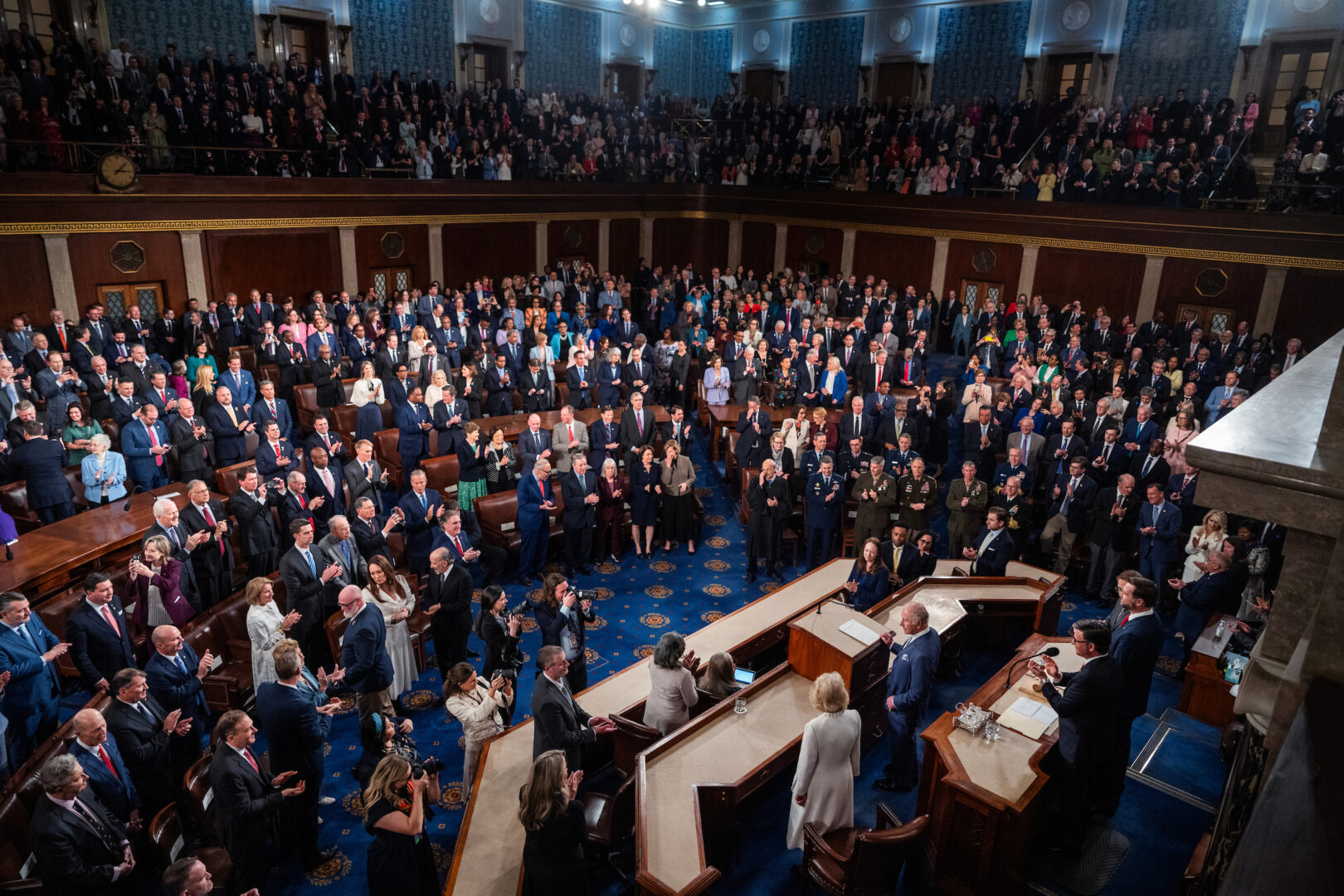
Inside the House chamber for King Charles III’s historic address to Congress was all the pomp and circumstance expected of a royal visit, including a ceremonious entrance, standing ovations and even a George Washington impersonator in the galleries.
But while U.S. leaders put on an appearance of unity during the king’s visit commemorating America’s 250th anniversary of independence, behind-the-scenes, the colonies — er, lawmakers — were fighting.
In the hours before and after Charles III’s visit to the chamber, lawmakers squabbled over a rule overseeing floor debate on a patchwork of high-stakes measures, including a bill to authorize agriculture programs, a budget resolution aimed at ultimately funding part of the Department of Homeland Security and the renewal of a key government surveillance authority due to expire Thursday.
The king’s visit also occurred just days after a gunman attempted to breach the White House Correspondents’ Association dinner, adding an extra layer of stress to an already chaotic week.
A Monday night Rules Committee hearing got extended to late Tuesday afternoon, then evening as lawmakers struggled over the rule for a bundle of must-pass bills. A scheduled 4:30 p.m. House vote was delayed as the Rules Committee debated amendment after amendment, then kicked to Wednesday at 10:30 a.m. as the committee kept talking.
“It is a mistake for @SpeakerJohnson to put FISA, the farm bill, and reconciliation all under the same rule,” tweeted Rep. Anna Paulina Luna, R-Fla. “Separate them out.”
During his remarks, Charles called Congress a “citadel of democracy created to represent the voice of all American people to advance sacred rights and freedoms” and the House chamber as one “of debate and deliberation.”
But as soon as Charles exited the chamber, the citadel went back to bickering.
Rep. Aaron Bean, R-Fla., said “we knew [the king] was gonna be here for a long time” before the speech. “And in Congress, we have to chew gum and walk at the same time.”
“We’ve got 535 members that all have a different timeline. They have different thoughts. They have different likes, and so we have to consolidate them and work things out,” he continued. “When the King comes, who are we to say no to the King?”
The dysfunction has become palpable between the chambers as well.
Senate Majority Leader John Thune of South Dakota said he was “sympathetic” to Speaker Mike Johnson, R-La., managing his slim and fluctuating majority.
“He’s got to manage his challenges there and we have to manage our challenges here,” Thune said.”But one way or the other, we’ve got to get these agencies funded and of course, we’ve also got to make sure that FISA doesn’t go dark.”
“We’re trying as best we can to coordinate strategy with the House, but, you know, it’s just a unique situation. We’ve got very narrow margins and people with real strong opinions,” he added. “It’s going to take, obviously, I think the heavy involvement of the White House to bust some of these things loose.”
Democrats, meanwhile, said they preferred the break.
Rep. Teresa Leger Fernández, D-N.M., posted to social media that Republicans “want to listen to the King instead of govern? Given what they want to do, I kind of prefer listening to the King.”
Charles’ address focused largely on the shared relationship between the two countries and their influence on the world, highlighting the work of NATO in the aftermath of the 9/11 terror attacks.
“Today, Mr. Speaker, that same, unyielding resolve is needed for the defense of Ukraine and her most courageous people — in order to secure a truly just and lasting peace,” Charles said. “Our defense, intelligence and security ties are hardwired together through relationships measured not in years, but in decades.”
Reminders of the weekend’s attempted violence were evident in the bike rack fencing surrounding the Capitol, erected in the hours leading up to the address.
“Whatever our differences, whatever disagreements we may have, we stand united in our commitment to uphold democracy, to protect all our people from harm, and to salute the courage of those who daily risk their lives in the service of our countries,” Charles said, vowing “such acts of violence will never succeed.”
Charles’ address was the second ever by the royal head of state of the United Kingdom. The first was a 1991 speech by his mother, Queen Elizabeth II.
The king, along with Queen Camilla, earlier met with the president and first lady Melania Trump at the White House. They planned to attend a State Dinner at the White House Tuesday night.
Valerie Yurk contributed to this report.