At the Races: Hitting the gas

Welcome to At the Races! Each week we bring you news and analysis from the CQ Roll Call campaign team. Know someone who’d like to get this newsletter? They can subscribe here.
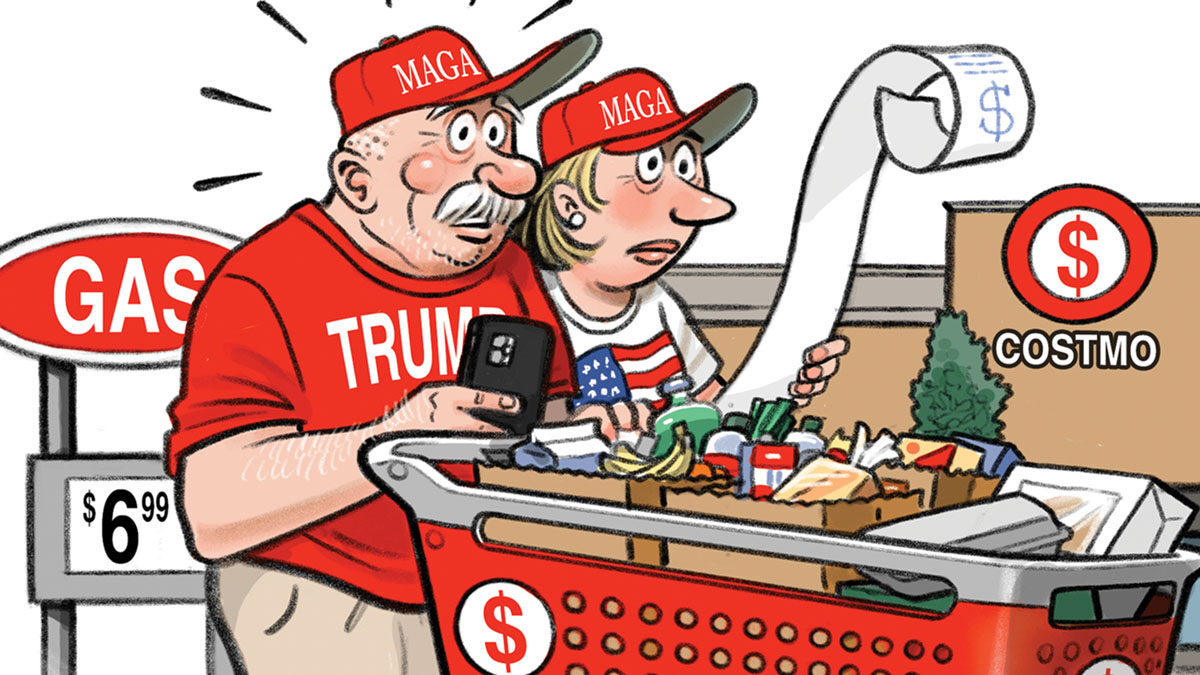
As the Iran war continues to roil global oil markets, rising gas prices across the country offer a real-life example of how foreign policy can actually matter at the ballot box, and politicians seem to be aware of that.
Democratic Reps. Eugene Vindman of Virginia and Don Davis of North Carolina introduced a bill Tuesday to provide for a diesel fuel tax holiday, joining the ranks of members in both parties pushing various efforts to try to ease the pain at the pump.
“The Diesel Prices Relief Act would suspend the federal diesel tax through the end of the year, putting money back into the pockets of the hardworking people who grow our food, move our goods, and keep America running,” Davis, whose seat became more Republican in redistricting last year, said in a statement.
As of Thursday morning, the average price for a gallon of regular unleaded gasoline was about $4.53, according to AAA, with diesel fuel running about $5.67 a gallon.
The Davis-Vindman bill is just one example. In the Senate, Missouri Republican Josh Hawley introduced his own bill to suspend the federal gas tax for three months, after President Donald Trump threw his support behind the idea, as our colleague Kelly Livingston reported. Trump said in an interview with CBS News, “We’re going to take off the gas tax for a period of time, and when gas goes down, we’ll let it phase back in.”
But as our former colleague Justin Papp at CNBC also reported, the construction and trucking industries are among the skeptics of the idea.
Meanwhile, as the Iran war continues to exert significant pressure on the economy, a recent quote from Trump could find a way into Democratic ad campaigns this year.
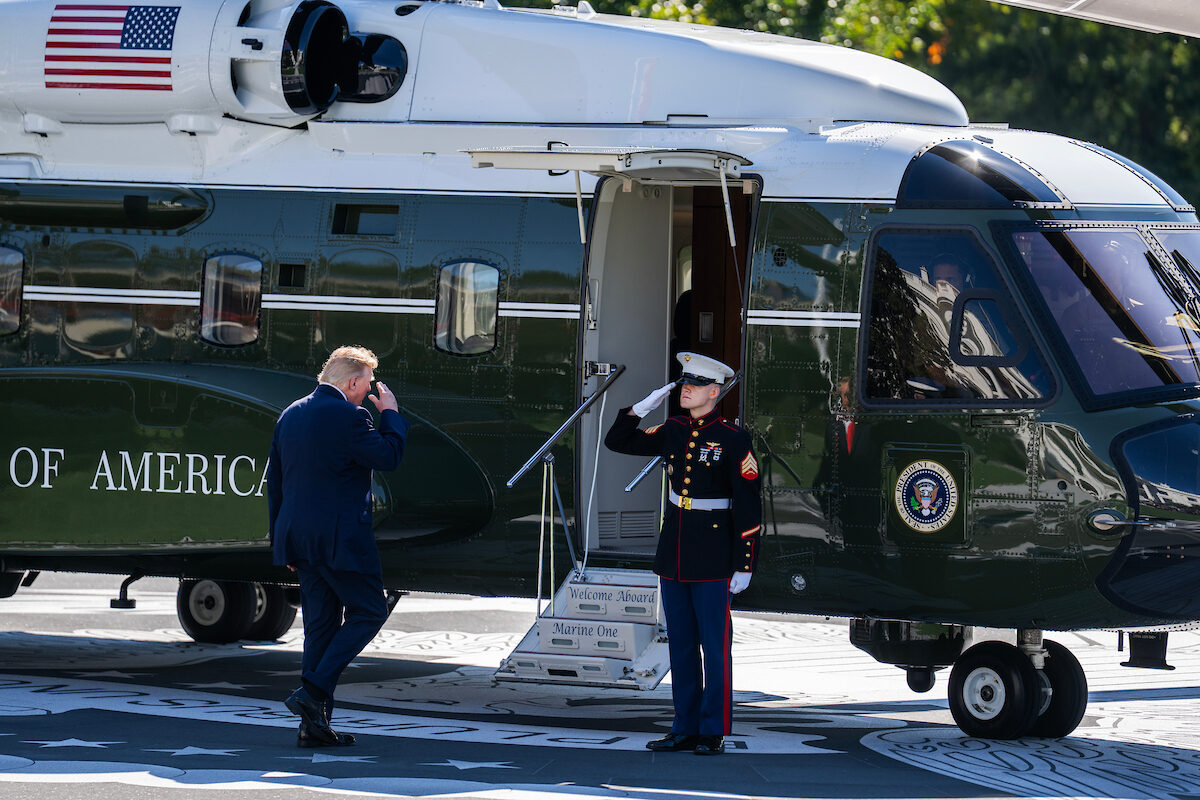
Asked before he left for China how much Americans’ financial situation was motivating him to make a deal with Iran, the president responded: “Not even a little bit.”
“The only thing that matters when I’m talking about Iran, they can’t have a nuclear weapon. I don’t think about Americans’ financial situation,” the president said.
Starting gate
Most vulnerable: Louisiana Sen. Bill Cassidy, who has a tough Republican primary on Saturday, tops the latest version of our list of the Senate’s most vulnerable incumbents. Cassidy, who voted to convict Donald Trump at his 2021 impeachment trial, faces challenges from Rep. Julia Letlow, who has the president’s endorsement, and state Treasurer John Fleming.
Results recap: Political activist Denise Powell won the Democratic nomination in Nebraska’s 2nd District, a key swing seat that both parties see as a must-win in November. Powell will next face Omaha City Council Member Brinker Harding in the race to succeed moderate Republican Rep. Don Bacon, who is retiring. Meanwhile, Cindy Burbank won the Democratic nomination for Senate in Nebraska, a result that clears the way for a fall matchup between GOP Sen. Pete Ricketts and independent Dan Osborn. Burbank has pledged to drop out once Osborn turns in enough signatures to make the November ballot.
Redistricting roundup: The Missouri Supreme Court cleared the way for the state to use a new House map this year, a decision that puts Democratic Rep. Emanuel Cleaver II in a tough position for reelection. In South Carolina, the state Senate appeared to deal a blow to redistricting efforts earlier this week, although Gov. Henry McMaster reportedly plans to call a special session to revisit the state’s congressional map. In Alabama, Gov. Kay Ivey set an August special primary election for four House districts that appear likely to see their boundaries changed after the Supreme Court potentially cleared the way for the state to use an earlier GOP-drawn map. And in Virginia, Democratic leaders have asked the U.S. Supreme Court to overturn the commonwealth’s Supreme Court’s recent decision to invalidate a voter-approved House map.
More retirements, more problems: This year marks the highest number of House members not running for reelection since 1992, prompting questions about why so many incumbents don’t want to return to the chamber, Roll Call’s Valerie Yurk and Savannah Behrmann report.
#VA02: Several House Democrats called on Virginia Rep. Jen Kiggans to resign after the Republican seemed to agree with a conservative radio host’s description of House Minority Leader Hakeem Jeffries as having “cotton-picking hands,” Yurk reports. Kiggans, who represents one of the swingiest seats in the nation, said she did not condone the specific language used by the host.
ICYMI
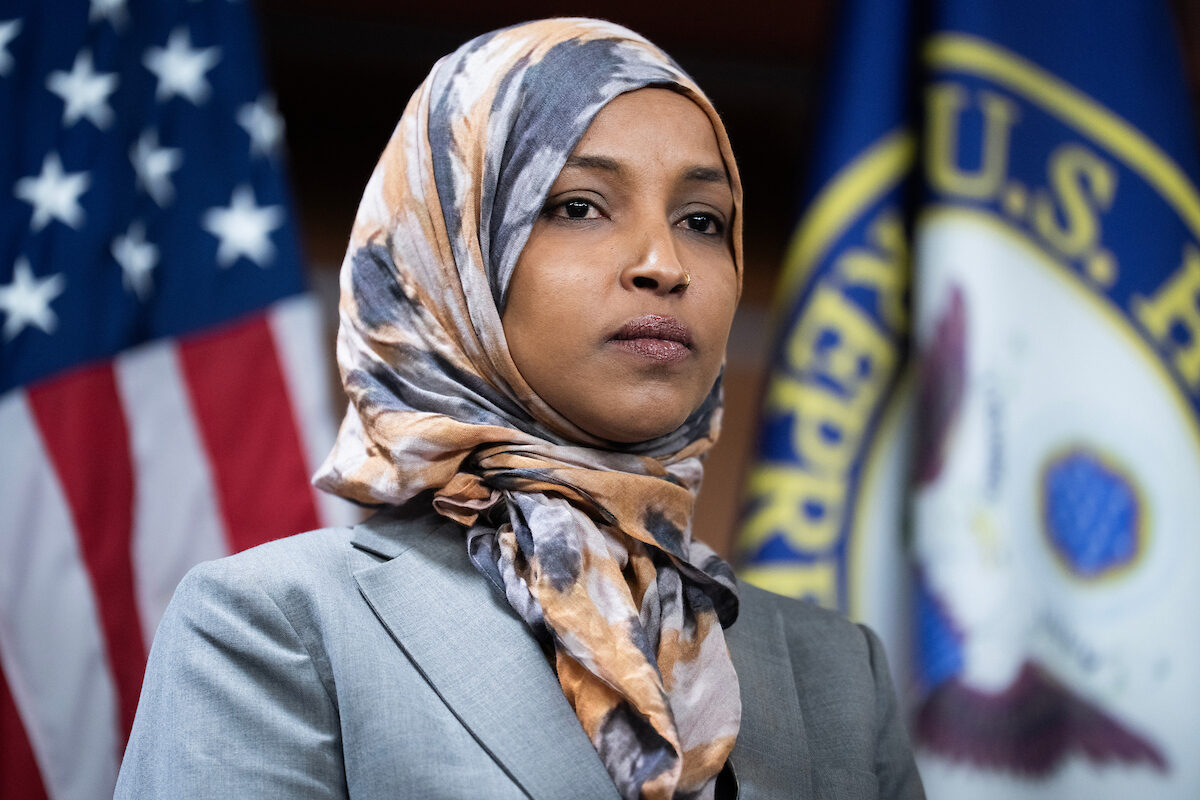
Endorsement tracker: Minnesota Rep. Ilhan Omar endorsed Lt. Gov. Peggy Flanagan for Senate over fellow Rep. Angie Craig, who is also seeking the Democratic nomination. Former Michigan Rep. David Bonior, who served as Democratic whip in the ’90s and early 2000s, is supporting Abdul El-Sayed in the state’s Democratic primary for Senate. New York Rep. Alexandria Ocasio-Cortez has endorsed smokejumper Sam Forstag in the Democratic primary for Montana’s open 1st District. The Committee to Protect Health Care, a coalition of physicians, released its first slate of endorsements, backing more than 80 candidates in House and Senate races.
Coming to a screen near you: Senate Majority PAC, the top Senate Democratic super PAC, announced ad reservations in four states, committing $31 million for North Carolina, $20 million for Michigan, $13.4 million for Iowa and $10 million for Alaska.
More maps: Georgia Republican Gov. Brian Kemp announced a special legislative session in June to redraw the state’s congressional map … for the 2028 election. Meanwhile, Mississippi Gov. Tate Reeves canceled an upcoming special session on redistricting, but he said plans to eliminate the state’s lone Democrat-held seat were on the table and would happen within the next year and half.
Rumble in the Rockies: EMILY’s List’s Women Vote is launching a seven-figure ad buy in support of former state Rep. Shannon Bird in Colorado’s 8th District. Bird is battling state Rep. Manny Rutinel in the Democratic primary to take on Republican freshman Gabe Evans.
Nathan’s notes
A series of redistricting victories have boosted Republican optimism about holding their House majority this year, Roll Call elections analyst Nathan L. Gonzales of Inside Elections writes.
But two batches of recent GOP surveys suggest such an outcome would still be tough to pull off, according to Nathan.
What we’re reading
Kemp’s clout: Brian Kemp, Georgia’s popular Republican governor, has built a political identity outside of the Trump orbit. The Atlanta Journal-Constitution examines whether Kemp’s political brand can pull former football coach Derek Dooley across the finish line in a competitive three-way Republican Senate primary.
Redistricting reax: The Congressional Black Caucus faces a moment of crisis in the wake of last month’s Supreme Court ruling weakening the Voting Rights Act, which threatens to eliminate districts long held by Black members, NBC News reports.
Rising strain: The Texas Tribune tracks the rise of anti-Indian sentiment in the Dallas suburb of Frisco, which has been at the center of the GOP’s efforts to win over Indian American voters. “Over the last few months, Frisco has become the unwilling backdrop for a larger conflict between Republicans’ nascent relationship with Indian American voters, and the party’s rising nativist strain, which rejects anyone not born here, including naturalized citizens,” the Tribune reports.
Cash flow: An analysis by NOTUS finds that hundreds of people are still giving to the dormant political committees of Kari Lake and Tulsi Gabbard.
The count: 7
That’s the number of senators who’ve lost primaries or nominating contests this century, according to this analysis by Louis Jacobson for Sabato’s Crystal Ball.
The most recent was Alabama Republican Luther Strange, who was appointed to fill a Senate vacancy in 2017 but then lost his bid for the party nomination in a special election later that year.
The most recent senator to lose a regular primary was Indiana Republican Richard J. Lugar, who lost a 2012 primary to state Treasurer Richard Mourdock.
Recent polling shows that Republican Sen. Bill Cassidy risks joining the list this weekend in his difficult quest for reelection in Louisiana in a primary against Trump-endorsed Rep. Julia Letlow and state Treasurer and former Rep. John Fleming.
Key race: #ALSEN
Candidates: Six Republicans are seeking the party’s nomination for the open Senate seat that Alabama Sen. Tommy Tuberville is vacating to run for governor. The three leading GOP candidates are Rep. Barry Moore, state Attorney General Steve Marshall and Jared Hudson, a former Navy SEAL and nonprofit founder. Democrats Kyle Sweetser, Dakarai Larriett, Mark Wheeler II, Lamont Lavender and Everett Wess are all seeking their party’s nomination in the deep-red state.
Why it matters: The winner of the Republican primary is expected to sail through the general election in November and could potentially hold the seat for years to come. Still, with polls showing a high number of undecided voters, many expect Tuesday’s contest to go to a June 16 runoff with no candidate taking a majority of the vote.
Cash dash: Moore has led the fundraising race, bringing in $2.5 million through April 29, when he had $475,000 on hand. Hudson raised $1.5 million over the same period and had $542,000 available for the final stretch of the campaign, while Marshall hauled in $1.4 million and had $475,000 banked at the close of the pre-primary period. Outside groups have also invested heavily in the Republican primary, with Moore being the biggest beneficiary. Defend American Jobs, an affiliate of the crypto-backed super PAC Fairshake, spent more than $6.7 million to support Moore, while Alabama Freedom Fund, which is affiliated with the conservative Club for Growth, spent $2.5 million to boost his campaign and to oppose Marshall. Meanwhile, American Values First has been boosting Marshall and opposing Hudson, who has his own support from a super PAC called Alabama Conservatives.
Backers: Moore has the all-important Trump endorsement and is also backed by Senate Majority Leader John Thune and the NRSC. Marshall has the support of the political arm of the Alabama Farmers Association, the Associated Builders and Contractors of Alabama and the Automobile Dealers Association of Alabama.
What they’re saying: Generally, there are few policy differences between Moore, Marshall and Hudson. Moore, a third-term congressman, has emphasized his endorsement from Trump and experience on Capitol Hill. Hudson, whose previous political experience includes an unsuccessful run for Jefferson County sheriff, has pointed to his military background and talked about issues such as illegal immigration and housing costs. Marshall has touted his work as the state’s top prosecutor, recently pushing for Alabama to adopt a congressional map that would favor Republicans in all seven House districts.
Terrain: The winner of the Republican primary will be highly favored in November in a state Trump won by 31 points in 2024. The GOP has lost just one Senate election in Alabama in the past 30 years.
Wild card: There could be some confusion around Alabama’s primaries next week after the Republican governor set up special primary elections for four House seats in August as the state seeks to reinstate a congressional map originally drawn in 2023.
Coming up
Primary season rolls on with Louisiana holding non-House primaries on Saturday and then six states – Alabama, Georgia, Kentucky, Pennsylvania, Idaho and Oregon – deciding their midterm party nominees on Tuesday.
Photo finish
Subscribe now using this link so you don’t miss out on the best news and analysis from our team.