Congress faces its own summer heat dome
With pressure trapped in the Capitol, leaders look for ways to release it

The sweltering Fourth of July weekend is over, but for both parties in House and Senate leadership, the heat is still cranked up.
Both chambers are likely to return next Monday to the same sweat-inducing tangle of legislative problems that left them stumped as they headed out of town at the end of June.
Speaker Mike Johnson, R-La., is looking for a solution so “irresistible” that his fellow Republicans will have to accept it — but the numbers are working against him.
For one thing, August is fast approaching, leaving just a couple weeks in Washington before lawmakers depart for an even longer summer break. And as Senate Majority Leader John Thune, R-S.D., has said all along, mathematical realities can’t be changed in the Senate, even when it comes to the White House-backed voter ID bill dubbed the SAVE America Act.
Johnson can’t afford to have a repeat of last week, when GOP holdouts in the House ground the floor to a halt, seeking to pressure senators into passing the measure. They voted down a procedural rule to advance a massive fiscal 2027 defense authorization package and the National Security-State spending bill, despite attempts from Johnson to placate them.
Left with an immobilized floor and a looming holiday weekend, Johnson sent the House home hardly 24 hours after the chamber gaveled in for the week — not exactly the look he was going for as America prepared to celebrate its 250th birthday.
The House breakdown followed a period of similar pandemonium in the Senate last month, which was capped off with President Donald Trump refusing to sign an unrelated housing bill until the Senate clears the voter ID package, even cancelling a high-profile ceremony on Capitol Hill at the last minute. The housing bill will still become law unless Trump chooses to veto it by July 10.
But Thune has said repeatedly that he does not have the 60 votes to advance the sweeping election package to Trump’s desk or the support within his conference to sidestep the filibuster. And that math equation hasn’t changed, though Trump’s supporters online and on the Hill continue to push for other tactics, like trying a “talking filibuster” in the Senate or relying on the budget reconciliation process to get the job done.
On Sunday, Johnson told Fox News the House would “try one more time” to pass SAVE via the budget reconciliation route — although that strategy didn’t work in April, when the Senate voted down attempts to attach certain voter ID provisions to a previous reconciliation bill. There are also concerns the broader election package wouldn’t survive a “Byrd bath” scrub.
“I think that will be the way to get it through the Senate, and finally, to the president’s desk. So, that’s forthcoming,” Johnson said, adding that he thought Trump would be willing to scrap his larger ambitions to ban many types of mail-in voting and instead stick to the smaller outlines of the voter ID measure the House already passed. The Senate’s “lack of belief” in doing a reconciliation bill, he added, “is based on what they think may be in it.”
“What we’re planning to do is send over a bill that will be irresistible for any Republican,” he said.
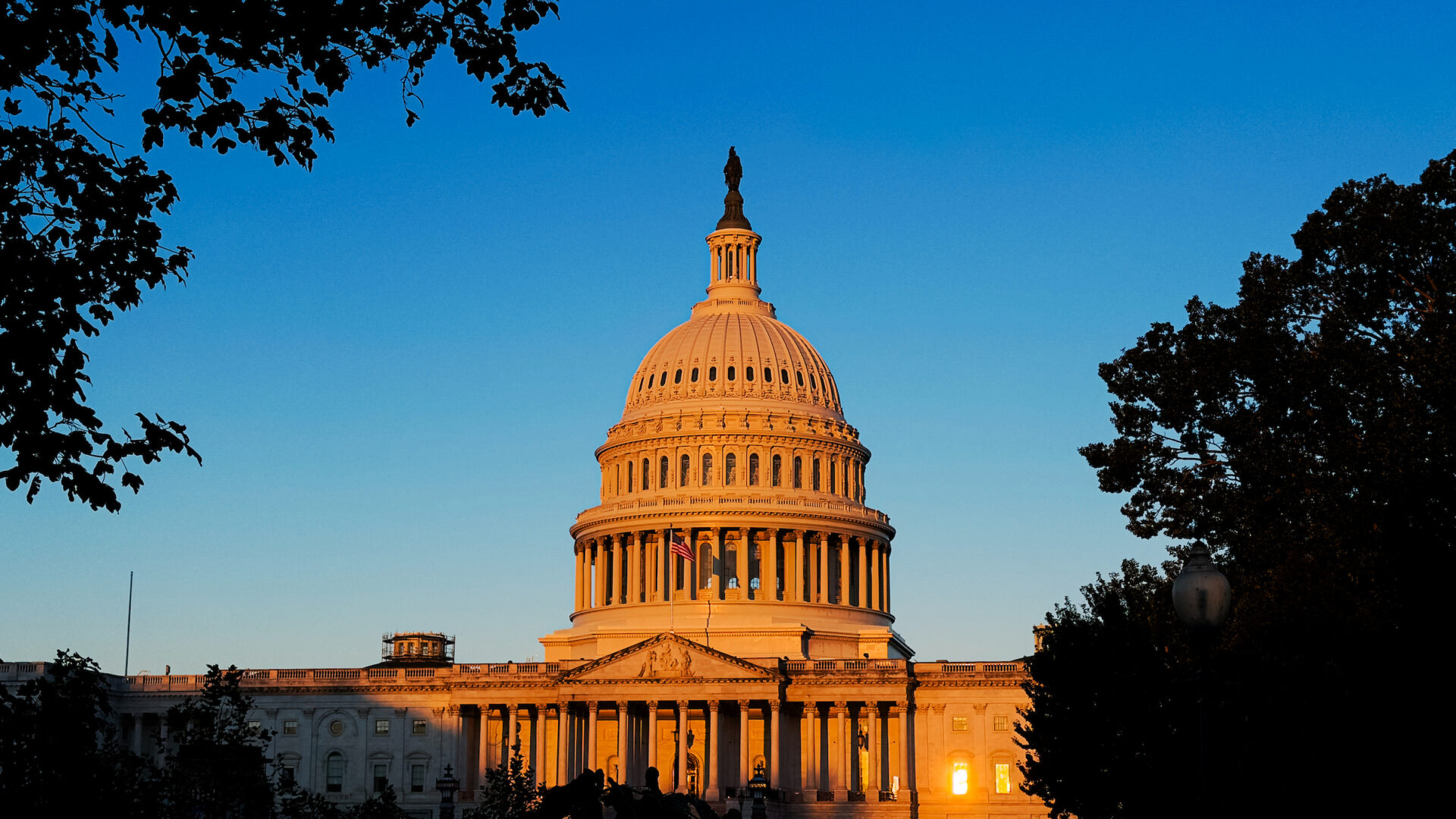
What’s also irresistible? The siren song of August recess, which beckons lawmakers with the promise of time at home or on the campaign trail. But even that urgency may not be enough to alleviate the pressure trapped under the Capitol dome.
Not alone in the hot seat
Meanwhile, Senate Minority Leader Charles E. Schumer, D-N.Y., and House Minority Leader Hakeem Jeffries, D-N.Y., have their own problems.
Instead of watching gleefully as Republican infighting tripped up their colleagues on the other side of the aisle, they had one eye on the Democratic Party’s slide to the left. Last week, democratic socialist Melat Kiros dislodged 15-term Rep. Diana DeGette, D-Colo. The progressive group Justice Democrats and the Democratic Socialists of America backed two candidates who ousted a pair of House members from New York — Democrats Dan Goldman and Adriano Espaillat — earlier in June.
At least a dozen other long-established Democrats in safe seats face serious intraparty threats in the coming weeks, including tough primary races for members representing districts in Hawaii, Connecticut, Massachusetts and more.
The victories could make it more challenging for Schumer and Jeffries to sell more moderate candidates to key swing districts — especially as Trump and Republicans have latched on to labeling Democrats as “communists.”
Beyond the midterm elections, a growing political spectrum in the Democratic Party threatens more divisions on tricky issues that leadership is already struggling to straddle, such as Israel’s war against Gaza. And Republicans are ready to make the most of it as the summer drags on.
“It’s becoming a communist party. These are not social ‘Dumocrats,’ these are hardcore, godless communists,” Trump said earlier in June. “All communists are godless. They don’t believe in God.”
Daniela Altimari, Mary Ellen McIntire and John T. Bennett contributed to this report.