White House ballroom must be approved by Congress, court rules
Trump says administration will appeal to Supreme Court
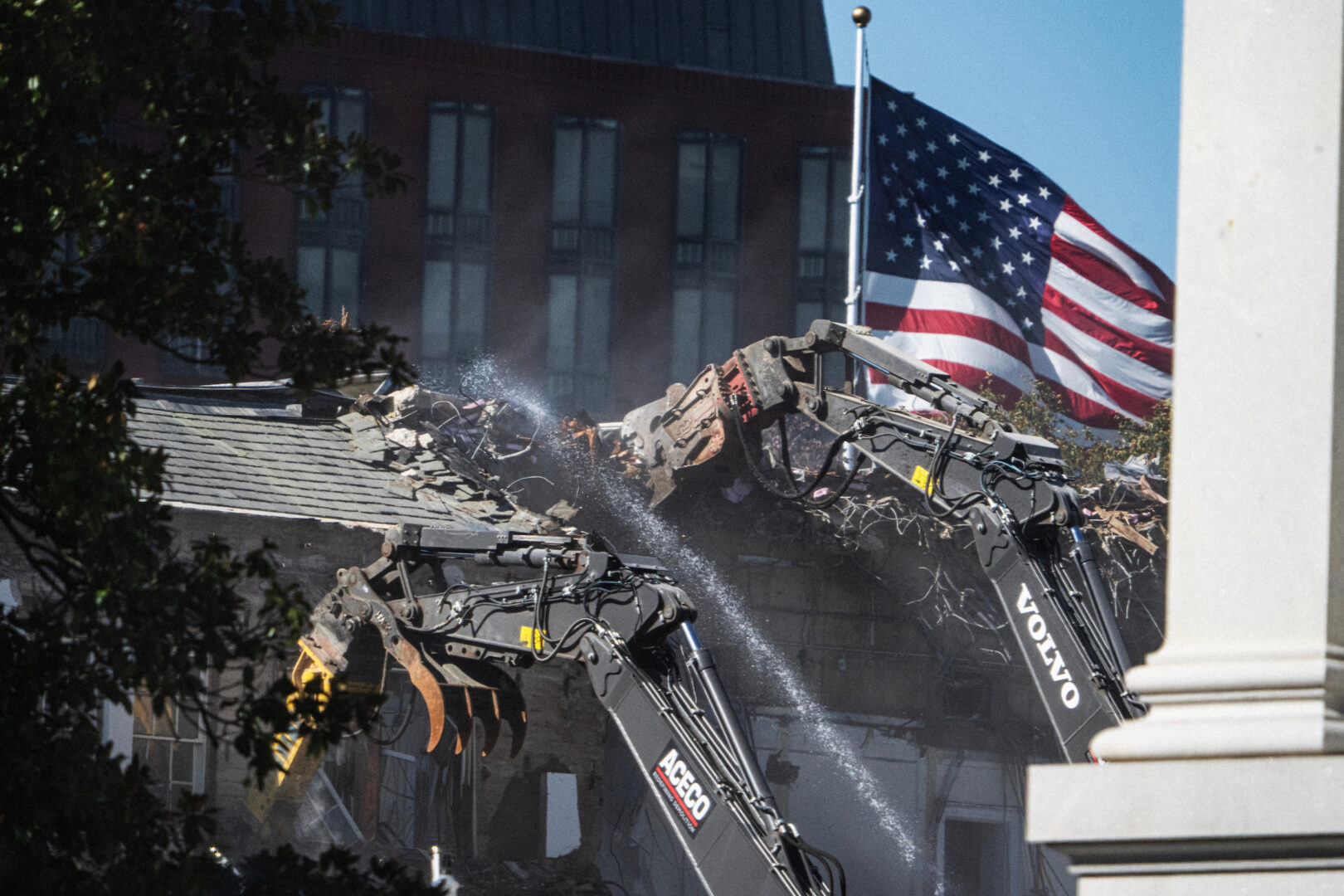
The U.S. Court of Appeals for the District of Columbia Circuit on Friday upheld a ruling that the Trump administration must receive congressional approval before it continues construction on a ballroom on the former site of the White House’s East Wing.
The 2-1 ruling affirmed the preliminary injunction granted in March by Judge Richard J. Leon of the U.S. District Court for the District of Columbia.
That ruling includes an exemption for certain activities to address safety and security while the injunction is in place, which Leon later narrowed to specify that no above-ground construction could occur. The site would have security facilities, including a bunker, underneath the ballroom.
The National Trust for Historic Preservation, which filed the lawsuit on Dec. 12, 2025, argued that the Trump administration violated the Administrative Procedure Act and National Environmental Policy Act by demolishing the East Wing and moving forward with construction of the ballroom without consulting with the National Capital Planning Commission or the Commission of Fine Arts, without conducting an environmental assessment and without getting approval from Congress.
Judges Patricia Millett, an Obama appointee, and Brad Garcia, a Biden appointee, wrote Friday’s joint majority opinion.
The opinion said that “at this preliminary stage, the National Trust has shown, compellingly, that Congress has not ceded unfettered authority to the Executive Branch to dramatically redesign, reshape, and reconstruct the White House — the People’s House — to fit a particular President’s desires.”
“Whether or not a massive ballroom should be constructed is for Congress to decide and is not a matter for Executive self-help,” the opinion said.
“This is a great day for our country and for the American people’s right to voice their opinions about the historic places they cherish, including the White House,” Brent Leggs, president of the National Trust for Historic Preservation, said in a statement. “From the beginning, our position has been clear and consistent: the law states that only Congress can authorize the construction of a ballroom at the White House.”
The appellate court said it would stay its own ruling to allow the administration to appeal to the Supreme Court. While the pause on construction would continue, the underlying case would proceed, and the opinion noted that the ruling does not “necessarily mean that the Defendants may not ultimately construct the ballroom.”
President Donald Trump in a social media post Friday said the administration would indeed appeal to the high court. “The Military and Secret Service are viewing this horrendous, politically motivated, and unlawful ruling as a National Security threat to our Nation in that the entire Complex is being built for the protection of our Country and, additionally, all future Presidents,” he said.
Judge Neomi Rao, a Trump appointee, dissented, writing that the trust, a congressionally chartered nonprofit, did not have standing to sue. She added that the White House’s security needs and desire to have a space for hosting large presidential events outweigh the concerns raised by the trust.
The Trump administration has argued that the president has sweeping authority to approve changes to the White House grounds. The Commission of Fine Arts, filled with Trump allies, unanimously approved the project on Feb. 19. The National Capital Planning Commission, which is chaired by one of Trump’s former lawyers, gave final approval to the project on April 2.
Trump said the 90,000-square-foot ballroom would be privately funded by donations, with donors including Amazon, Palantir, Lockheed Martin and Coinbase. The estimated cost of the project has grown to $400 million.
After the initial ruling pausing construction and the shooting at the White House Correspondents’ Association dinner on April 25, congressional Republicans introduced legislation to authorize the ballroom, but they have not moved forward.
The case is National Trust for Historic Preservation v. National Park Service.